
Utility Infrastructure Resilience and Grid Modernization: A Growing Investment Imperative


 Aime Summary
The LADWP Outage: A Catalyst for Change
In late 2025, a tropical storm overwhelmed LADWP's grid, causing widespread outages and exposing vulnerabilities in its infrastructure. While LADWP emphasized its 24-48 hour response window and customer alert systems, the incident highlighted the growing risks posed by extreme weather events linked to climate change, according to a Henry Beaver analysis. Southern California's grid, like many in the U.S., was designed for a different era-one without the electrification demands of today's EV boom, data centers, or renewable energy integration.
This outage is not an isolated incident. Southern California Edison (SCE), another key player in the region, has faced similar challenges, including wildfires and aging equipment. In response, SCE has announced a $28 billion to $29 billion capital plan through 2028, prioritizing wildfire mitigation, grid reliability, and infrastructure upgrades to meet rising demand, as reported by Utility Dive. The utility's strategy includes $680 million annually for grid modernization, reflecting a broader industry shift toward proactive resilience-building.
Grid Modernization: A $28.36 Billion Opportunity by 2030
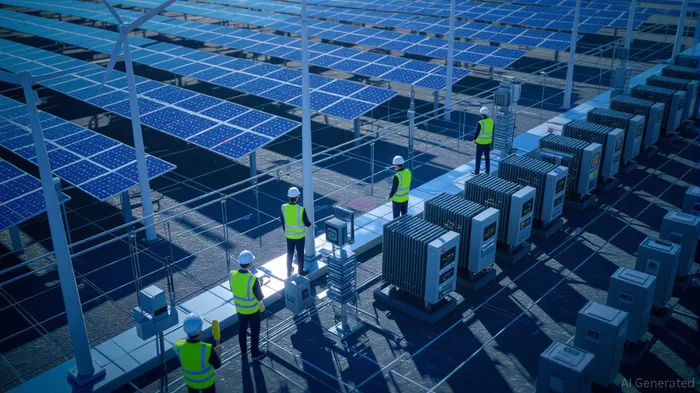
The LADWP outage and SCE's response align with a global trend of accelerating grid modernization. The circuit breaker market, a critical component of grid reliability, is projected to grow from $21.61 billion in 2025 to $28.36 billion by 2030, driven by utilities adopting advanced technologies to prevent outages and integrate renewables, according to a Mordor Intelligence report. This growth is fueled by the need to electrify transportation, expand manufacturing, and support data centers-all of which require robust, adaptive infrastructure.
American Gridwork Partners, a key player in this space, recently acquired PMT Site, a firm specializing in underground utility services, to expand its national grid modernization capabilities, as reported by Pulse2. This acquisition underscores the sector's potential, as companies position themselves to rebuild aging systems with smart grids, advanced metering, and distributed energy resources.
Policy Gaps and the Need for Federal-State Collaboration
While Southern California utilities are taking decisive action, federal and state policy responses remain fragmented. California's expanded wildfire fund offers some liability relief for utilities, but broader resilience policies-such as standardized grid hardening requirements or federal funding for climate adaptation-are still underdeveloped, as noted in the Utility Dive report. This gap creates both risk and opportunity: investors must weigh the potential for regulatory tailwinds against the uncertainty of policy delays.
However, state-level initiatives are gaining traction. California's push for 100% clean electricity by 2045, combined with incentives for battery storage and microgrids, is driving demand for infrastructure that can withstand disruptions. These policies, though not yet comprehensive, signal a long-term commitment to modernization.
Investment Implications
The convergence of climate risks, electrification, and policy momentumMMT-- is reshaping the utility sector. For investors, the key opportunities lie in:
1. Grid Modernization Firms: Companies like American Gridwork Partners and those supplying advanced circuit breakers, smart meters, and transmission equipment.
2. Renewable Integration Technologies: Firms enabling the integration of solar, wind, and storage into decentralized grids.
3. Resilience-Focused Utilities: Utilities like SCE, which are proactively investing in infrastructure upgrades and wildfire mitigation.
The LADWP outage serves as a stark reminder: without modernization, the cost of inaction-measured in economic losses, safety risks, and regulatory scrutiny-will far outweigh the cost of upgrading. As Southern California's grid evolves, so too will the investment landscape, favoring those who recognize resilience as the new baseline.

Delivering real-time insights and analysis on emerging financial trends and market movements.
Latest Articles
Stay ahead of the market.
Get curated U.S. market news, insights and key dates delivered to your inbox.






Comments
No comments yet