
Utility Infrastructure Resilience in Earthquake-Prone Regions: Investment Implications of PG&E's Grid Vulnerabilities


 Aime Summary
The recent spate of power outages in San Francisco, attributed to PG&E's aging grid infrastructure, has reignited scrutiny over the vulnerability of utility systems in earthquake-prone regions. With California's seismic risks compounding the challenges of climate resilience, investors must assess both the risks and opportunities tied to utility infrastructure upgrades. PG&E's 2024 Electric Annual Reliability Report reveals a system under strain, with a System Average Interruption Duration Index (SAIDI) of 276.4 minutes per customer and a System Average Interruption Frequency Index (SAIFI) of 1.832 outages per customer in 2024
according to the report. These metrics, submitted to the California Public Utilities Commission (CPUC), underscore a grid struggling to meet reliability standards amid rising demands and environmental stressors.
PG&E's Grid Vulnerabilities and Seismic Risks
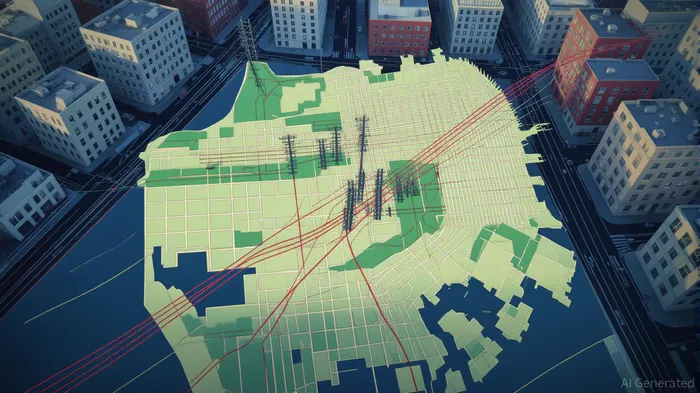
PG&E's challenges are not isolated to operational inefficiencies but are deeply intertwined with seismic risks. While specific earthquake-related vulnerabilities in PG&E's infrastructure remain underreported, the company's 2027-2030 General Rate Case proposal highlights proactive measures to address these gaps. These include undergrounding 307 miles of powerlines in high-risk fire areas-a strategy that also mitigates earthquake damage by reducing exposure to seismic fault lines
according to the proposal. Additionally, PG&E plans to replace 164 miles of gas distribution pipelines and deploy advanced mobile leak detection technology, aiming to extend infrastructure lifespans and minimize methane emissions
as detailed in the proposal.
However, these initiatives face headwinds. Undergrounding powerlines, while effective in reducing outage risks, is capital-intensive and logistically complex.
A 2025 UCLA report notes that such projects remain vulnerable to seismic shifts, particularly in regions like San Francisco, where fault lines intersect with dense urban infrastructure. This duality-where investments in one resilience domain (wildfire mitigation) may inadvertently address another (earthquake preparedness)-highlights the interconnected nature of utility risks in California.
Regulatory Frameworks and Compliance Pressures
California's regulatory landscape is evolving to enforce stricter seismic safety standards.
The 2025 Safety Certification Guidelines, adopted by the Office of Energy Infrastructure Safety, mandate enhanced wildfire and seismic risk mitigation for utilities, though they do not absolve companies from liability. Concurrently,
the 2025 Title 24 California Code updates emphasize seismic evaluations for hospitals and critical infrastructure, with compliance deadlines tightening for non-urban facilities. These regulations create both compliance costs and opportunities for utilities to secure funding through programs like the Community Energy Reliability and Resilience Investment (CERRI) initiative, which
prioritizes projects benefiting disadvantaged communities.
For PG&E, the regulatory environment is a double-edged sword. While compliance with seismic standards could drive necessary upgrades, the company's 2024 reliability report suggests that current performance metrics fall short of CPUC expectations. This gap raises questions about the adequacy of existing investments and the potential for regulatory penalties or rate adjustments, which could impact shareholder returns.
Investment Opportunities in Resilience Infrastructure
Despite these challenges, California's focus on seismic resilience presents compelling investment opportunities.
Federal and state programs, such as the Earthquake Brace + Bolt (EBB) grant and the Walnut Drive Utility Earthquake Recovery Project, are expanding funding for infrastructure upgrades. For instance, the EBB program now covers rental properties, broadening its reach to 1,100 ZIP codes and incentivizing private-sector participation in retrofitting older homes and utilities
as reported. Similarly, the San Francisco Public Utilities Commission (SFPUC) is prioritizing earthquake-resistant ductile iron pipe replacements, ensuring continuity of service to critical facilities like hospitals
according to recent announcements.
Investors should also consider the role of technological innovation.
PG&E's adoption of advanced metering infrastructure (AMI) and AI-driven grid monitoring tools aligns with broader industry trends toward predictive maintenance, which could reduce outage frequencies and repair costs. However, the high upfront costs of these technologies-particularly for undergrounding and seismic retrofitting-necessitate careful evaluation of long-term returns.
Conclusion: Balancing Risk and Resilience
PG&E's grid vulnerabilities and California's seismic risks collectively signal a critical inflection point for utility infrastructure investment. While the company's 2024 performance metrics highlight systemic fragilities, its proposed resilience initiatives and the state's regulatory push for seismic upgrades offer a roadmap for long-term stability. For investors, the key lies in distinguishing between short-term liabilities-such as compliance costs and outage-related penalties-and long-term gains from infrastructure modernization. As California's 2025 Title 24 code and federal resilience programs gain momentum, utilities that proactively align with these mandates will likely outperform peers in a risk-conscious market.

Stay ahead of the market.
Get curated U.S. market news, insights and key dates delivered to your inbox.






Comments
No comments yet