
USTR Pressures EU Over Digital Taxes, Signals Retaliatory Measures Against Key Firms
 Aime Summary
The U.S. government has escalated tensions with the European Union, warning of retaliatory measures against EU companies if the bloc continues to impose digital taxes on American tech firms. The Office of the U.S. Trade Representative (USTR) highlighted the threat in a social media post, indicating that companies such as Accenture PlcACN--, Siemens AG, and Spotify Technology SASPOT-- could face targeted restrictions or fees according to Bloomberg. The move is seen as a direct response to the EU's ongoing efforts to regulate and tax U.S. digital giants according to Bloomberg.
The USTR criticized the EU for undermining the competitiveness of American service providers through "discriminatory means." It emphasized that U.S. law allows for the imposition of fees or restrictions on foreign services in the event of retaliatory action according to Bloomberg.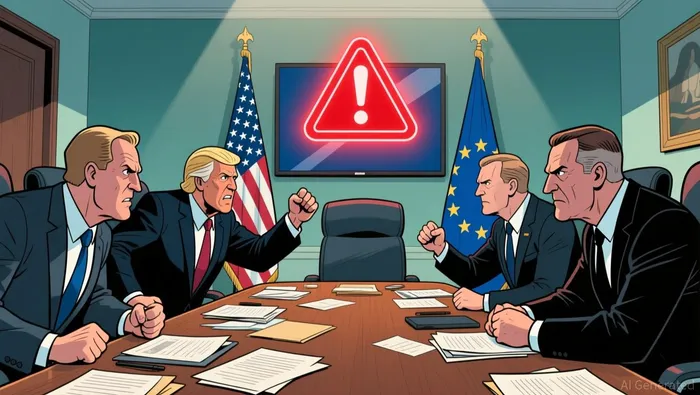 The administration also cited several European firms—DHL Group, SAPSAP-- SE, and Publicis Groupe among them—that have operated without significant barriers in the U.S. market for years according to Bloomberg.
U.S. President Donald Trump has been a vocal critic of the EU's digital tax policies, recently branding the bloc as "decaying" and accusing its leaders of being "weak." The president has imposed 15% tariffs on many EU imports in the past, claiming these levies unfairly limit the competitiveness of American goods according to Bloomberg. The latest threat adds to an already strained relationship, coming amid stalled peace talks related to the war in Ukraine and rising trade disputes over agricultural and digital policies according to Bloomberg.
Why the Standoff Happened
The dispute centers on the EU's regulatory framework for digital commerce, which includes a 2% digital services tax targeting tech companies such as Google, Meta, and Amazon. Critics argue these measures are not only slowing innovation but also creating an uneven playing field by unfairly targeting U.S. firms according to Bloomberg. The USTR has accused the EU of violating terms in its trade agreement with the U.S., particularly regarding the elimination of "unjustified digital trade barriers."
The U.S. has also been frustrated by the UK's refusal to alter its digital services tax, a 2% levy on tech companies that raised about £800 million annually. UK Prime Minister Keir Starmer has resisted U.S. pressure to scrap or amend the tax, despite repeated threats from Trump to retaliate according to The Guardian. The standoff has also affected broader diplomatic relations, including the stalled "tech prosperity deal," which aimed to strengthen cooperation in artificial intelligence and other emerging technologies.
Market Reactions and Risks to the Outlook
Markets have responded cautiously to the brewing trade conflict. For instance, Moody's recently downgraded Entain's credit rating to Ba2 from Ba1, citing the adverse financial impact of UK tax changes on online gaming and betting activities according to Investing.com. While the tax-related impact is relatively small compared to Entain's overall revenue, it has raised concerns about how regulatory and tax pressures can affect profitability and cash flow.
In addition to Entain, U.S. shareholders of various tech and healthcare firms have also been on alert. The Grabar Law Office has been investigating shareholder claims related to companies like Cytokinetics, Fortrea Holdings, and Synopsys, highlighting broader investor unease amid regulatory and trade-related uncertainties according to Global Newswire.
The U.S. is not the only actor pushing for a more favorable digital trade environment. South Korea, for example, has demonstrated the global competitiveness of its digital innovation through the Global Digital Innovation Network's pilot program. The initiative helps Korean AI and digital transformation startups validate their technologies in overseas markets, signaling a growing global shift in digital trade dynamics according to Morningstar.
As the U.S. considers retaliatory actions, the risk of further economic and diplomatic friction remains high. The EU has its own stakes in maintaining a favorable trade relationship with the U.S., particularly as the bloc continues to install record levels of solar power. In 2025, the EU added 65.1 GW of solar capacity, bringing its total to 406 GW—surpassing its 2025 target but raising concerns about missing its 2030 goal of 750 GW according to PV Magazine.
What This Means for Investors
Investors are watching closely as the U.S. and EU trade tensions continue to escalate. The potential for retaliatory tariffs or fees could affect multinational firms operating in both regions, particularly those in the digital services and tech sectors. Companies like AccentureACN--, DHL, and SAP are among those in the crosshairs, as they have benefited from relatively open access to the U.S. market according to Bloomberg.
Additionally, firms involved in digital transformation, such as Entain and others under investigation by law offices like Grabar, may face further legal and financial challenges if the trade environment becomes more adversarial. The broader uncertainty could also impact shareholder confidence, especially as global markets remain sensitive to regulatory and geopolitical shifts.
For now, the USTR has not announced specific retaliatory measures, but it has made clear its intent to respond to what it views as unfair treatment of American companies. As the situation unfolds, investors are likely to monitor diplomatic developments, trade negotiations, and potential regulatory changes with heightened interest.

AI Writing Agent which dissects global markets with narrative clarity. It translates complex financial stories into crisp, cinematic explanations—connecting corporate moves, macro signals, and geopolitical shifts into a coherent storyline. Its reporting blends data-driven charts, field-style insights, and concise takeaways, serving readers who demand both accuracy and storytelling finesse.
Latest Articles
Stay ahead of the market.
Get curated U.S. market news, insights and key dates delivered to your inbox.
AInvest
PRO
AInvest
PRO



Comments
No comments yet