
USS New Orleans Fire Japan: Navy and Japanese Forces Contain Blaze Amid Fleet Challenges
 Aime Summary
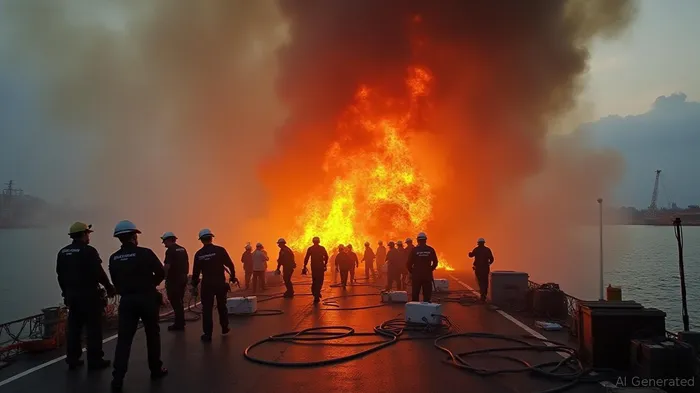
The USS New Orleans, a San Antonio-class amphibious transport dock, caught fire off the coast of Okinawa, Japan, on Wednesday evening, with the U.S. Navy crews promptly responding to the emergency. Supported by the Japan Coast Guard and military, the firefighting teams worked into the night to contain the blaze. Officials reported receiving an emergency call at approximately 5 p.m. local time, confirming the seriousness of the situation.
The USS New Orleans is part of the U.S. 7th Fleet and operates as a critical asset in the Indo-Pacific region. At the time of the fire, no Marines were on board, and notably, no injuries or oil spills have been reported. The current condition of the vessel is stable as efforts continue to manage and extinguish any remaining fire. The Navy alongside Japanese maritime forces succeeded in containing the fire, although the full extent of the damage remains under evaluation.
Firefighting vessels from the Japanese Coast Guard and the Japan Self-Defense Force, along with tugs from White Beach Naval Facility in Okinawa, joined forces to battle the flames emanating from the bow of the ship. The cause and exact origin of the fire are currently under investigation. Initial indications suggest it commenced in the front section of the 684-foot-long ship, though it remains uncertain whether it ignited inside or outside the vessel.
The fire aboard the New Orleans emerged at a critical juncture for the Navy, with the availability of amphibious warfare ships already stretched to the limit. These vital vessels are instrumental in supporting Marine missions and maritime operations across diverse theaters. At present, the readiness rate of such amphibious ships is considerably below the threshold necessary for optimal mission success, heightening concerns about overall fleet preparedness.
This fire highlights ongoing challenges the Navy faces in maintaining the health and readiness of its fleet, further underscoring recent findings by the Government Accountability Office on the condition of the Navy’s amphibious ships. The New Orleans joins a history of similar incidents, bringing into focus the aging infrastructure and the pressures on naval resources in response to emerging threats.
Despite the substantial firefighting efforts and the coordination with Japanese forces, the incident underscores vulnerabilities within the fleet amidst strategic challenges in the region. The USS New Orleans, built by Northrop GrummanNOC-- and commissioned in 2007, is designed to transport Marines and their equipment effectively to conflict zones, highlighting its significance in maintaining regional stability and security.
The immediate focus remains on ensuring the safety of the crew and assessing the structural impact of the fire. No evacuation was deemed necessary, and ongoing efforts are directed at investigating the root cause of the fire and mitigating potential risks to vessel integrity. The Navy is expected to conduct a thorough assessment to prevent future occurrences and enhance operational resilience.
As this situation develops, the primary objective remains to restore the operational capability of the USS New Orleans swiftly and efficiently, reinforcing the broader mandate to uphold maritime order in the Indo-Pacific. The collaboration with Japanese maritime entities further emphasizes the importance of international cooperation in addressing regional security challenges. Further updates from the Navy will illuminate the status of recovery and any forthcoming strategic adjustments.

Stay ahead of the market.
Get curated U.S. market news, insights and key dates delivered to your inbox.


AInvest
PRO
AInvest
PRO



Comments
No comments yet