
Does USPS's Legal Shield Protect Intentional Mail Delays? SCOTUS to Rule


 Aime Summary
The U.S. Supreme Court is set to address a pivotal legal challenge to the U.S. Postal Service's (USPS) immunity from lawsuits over mishandled mail, following a two-year dispute involving Texas landlord Lebene Konan. The case, which has drawn significant attention from legal experts and policymakers, centers on whether the postal exemption under the Federal Tort Claims Act (FTCA) applies when postal employees allegedly intentionally fail to deliver mail. Konan, a real estate agent and insurance professional, claims that two USPS employees in Euless, Texas, deliberately withheld her mail for 24 months, citing racial and property-ownership biases. The ruling could redefine the scope of federal agency liability and reshape the legal landscape for postal service accountability.
The crux of the case lies in the interpretation of the FTCA's postal exemption, which shields the USPS from lawsuits over "loss, miscarriage, or negligent transmission" of mail. Konan's legal team argues that the exemption does not cover intentional misconduct, such as the alleged deliberate marking of her mail as "undeliverable" or "return to sender." A federal district court initially dismissed her claims under the exemption, but the U.S. Court of Appeals for the Fifth Circuit reversed that decision in 2024, ruling that the case involved an intentional act rather than a routine mishap. The appellate court emphasized that the exemption's language does not explicitly preclude claims arising from willful inaction by postal employees.
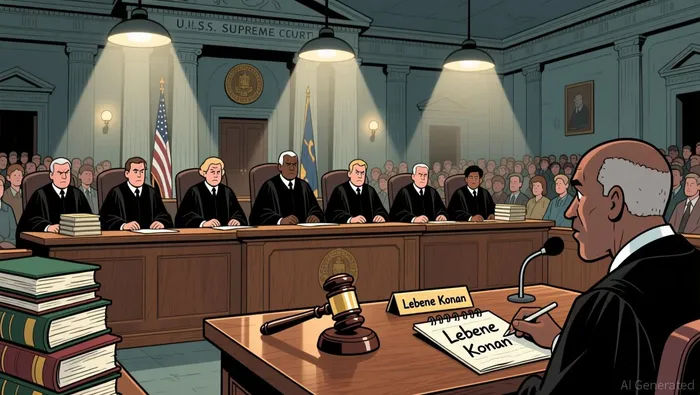 The USPS has raised concerns that a favorable ruling for Konan could open the floodgates to a surge of litigation over mail delays, even for minor or speculative grievances. Frederick Liu, assistant to the Solicitor General, warned during oral arguments that the government's position is not about "fearmongering" but about preventing frivolous lawsuits over everyday postal issues. He cited hypothetical scenarios - such as a carrier withholding mail due to a "rude comment" or a "big dog at the door" - to illustrate the potential for abuse. Justice Samuel Alito echoed these concerns, questioning whether a broad ruling might lead to exorbitant postage costs to cover legal risks.
Konan's legal team, however, disputes the notion of a "deluge" of lawsuits. Easha Anand, her attorney, argued that cases like hers are rare and that the USPS retains immunity for most postal-related harms even if the Supreme Court rules in her favor. The lawsuit, she noted, stems from extraordinary circumstances: Konan alleges systemic racial discrimination and financial harm, including lost rental income after tenants vacated properties due to undelivered mail. The case also highlights broader concerns about postal service accountability, particularly in an era of heightened reliance on mail for critical transactions such as medical supplies and legal documents.
The Supreme Court's decision, expected in early 2026, will have far-reaching implications for both USPS operations and private citizens. A ruling in Konan's favor could force the postal service to adopt stricter oversight measures for employee conduct, while a dismissal would reinforce the current legal framework shielding the agency from intentional misconduct claims. Legal analysts like Kevin Kosar of the American Enterprise Institute suggest the outcome may hinge on the Court's willingness to narrow the scope of the exemption, balancing the need for accountability with the risk of litigation overload.

Stay ahead of the market.
Get curated U.S. market news, insights and key dates delivered to your inbox.


AInvest
PRO
AInvest
PRO



Comments
No comments yet