
USPS Deal With Amazon: What It Means For Investors
 Aime Summary
The logistics landscape in the United States just shifted again as AmazonAMZN-- and the U.S. Postal Service (USPS) finalized a new agreement that keeps the majority of their business relationship intact. After months of tense negotiations where the e-commerce giant threatened to slash its reliance on the cash-strapped mail carrier, . This development is significant for investors because it stabilizes the financial outlook for a federal entity that has been struggling with cumulative losses and declining mail volumes for nearly two decades.
The agreement ensures that USPS will continue to handle approximately 80% of Amazon's existing delivery volume, . This retention of volume is a stark contrast to the earlier threats from Amazon, which had proposed cutting its delivery business by as much as two-thirds. , . Instead, the new deal allows the Postal Service to maintain its operational scale while Amazon secures necessary last-mile delivery infrastructure for its massive customer base.
Why Did Amazon And USPS Reach A New Delivery Agreement?
The negotiations leading to this agreement were driven by the divergent needs of both parties. Amazon faced mounting pressure to optimize its logistics costs and expand its proprietary delivery network, which has seen significant investment in recent years. The company had previously criticized USPS plans to auction off access to its , prompting fears that the retailer might decouple entirely. However, Amazon realized that completely replacing the Postal Service with its own network was not feasible in the short term, particularly for reaching remote areas like Alaska and Hawaii where the USPS network remains unmatched.
On the other side, the USPS has been grappling with deteriorating financial health, . The agency relies heavily on Amazon for revenue to offset these deficits and fund essential operations. By retaining 80% of Amazon's volume, the Postal Service secures a stable income stream that is crucial for its survival. The deal also reflects a strategic recognition that the USPS offers unique value in terms of universal delivery coverage, which is difficult and costly for any private entity to replicate.
How Does This Deal Impact The Financial Outlook For USPS?
For investors and stakeholders monitoring the financial health of the Postal Service, this agreement provides a lifeline. The guaranteed revenue from Amazon, , is a key component of the agency's ability to balance its books. Without this partnership, the Postal Service would have faced a severe revenue shortfall that could have accelerated its path toward insolvency. The deal also helps stabilize the agency's relationship with its largest single customer, reducing the uncertainty that has plagued the sector for years.
However, the agreement does not solve all of the Postal Service's structural challenges. The agency continues to face headwinds from rising fuel costs, which have prompted industry-wide price increases. Amazon, along with competitors like UPSUPS-- and FedEx, has implemented fuel surcharges to manage these expenses, and the Postal Service has introduced rate hikes for Priority Mail and plans to raise First-Class Mail stamp prices. These cost pressures remain a concern, and the long-term viability of the Postal Service will depend on its ability to adapt to changing market dynamics while maintaining its service obligations.
What Are The Strategic Implications For Amazon Logistics?
While the deal preserves the status quo for the majority of Amazon's deliveries, it does not signal an end to the company's efforts to build its own logistics capabilities. Amazon continues to invest heavily in its proprietary network, . This dual approach allows Amazon to leverage the USPS for cost-effective coverage in hard-to-reach areas while simultaneously developing the capacity to handle more deliveries independently over time.
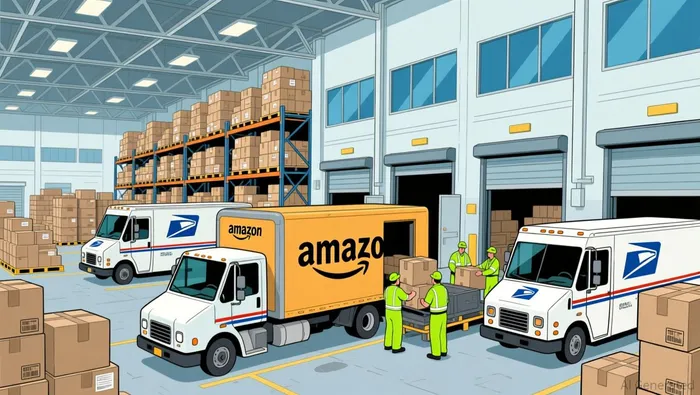
The agreement also underscores the broader trend of major e-commerce players seeking greater control over their supply chains. By retaining 80% of its volume with USPS, Amazon ensures it has the flexibility to scale its operations without being entirely dependent on a single carrier. This strategic balance mitigates immediate financial risks for the Postal Service while allowing Amazon to pursue long-term logistics independence. The deal is currently awaiting regulatory approval by the , which will determine the timeline for its official implementation.
As the dust settles on this negotiation, the focus shifts to how the Postal Service will navigate its future without the threat of a massive Amazon cutoff. The agreement provides a temporary reprieve, but the underlying financial pressures and the need for structural reform remain. For investors, the key takeaway is that the partnership between Amazon and the USPS is more resilient than previously feared, but the industry's evolution toward self-sufficiency continues to reshape the competitive landscape.
The resolution of this dispute highlights the delicate balance between public service mandates and private sector efficiency. Both parties have found common ground that allows them to move forward, but the long-term implications for the U.S. postal system and the e-commerce industry will unfold over the coming years. The deal serves as a reminder that even in a rapidly changing market, the interdependence between major players can lead to unexpected compromises that stabilize the status quo.

Stay ahead of the market.
Get curated U.S. market news, insights and key dates delivered to your inbox.


AInvest
PRO
AInvest
PRO



Comments
No comments yet