
USPS's $40 Billion Gamble: Can Infrastructure Investments Deliver?
The U.S. Postal Service (USPS) is in the midst of a historic transformation. After years of financial struggles, the agency has launched a $40 billion, 10-year modernization plan—Delivering for America—aimed at turning the tide through infrastructure investments, operational efficiency, and service upgrades. This isn't just about saving a struggling institution; it's a chance to build a leaner, greener, and more competitive postal service. Let's dive into the details and what it means for investors.
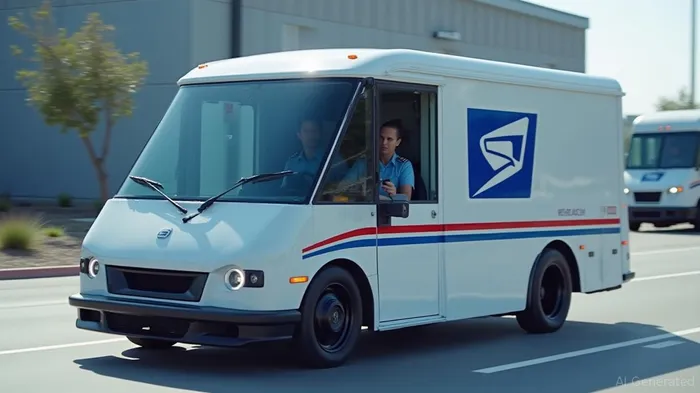
The Infrastructure Push: Trucks, Tech, and Facilities
USPS isn't just mailing itself a new future—it's building it. The cornerstone of its plan is a massive infrastructure overhaul:
- Electric Vehicles (EVs): The agency aims to replace its aging fleet with 106,000 delivery trucks by 2028, with 66,000 of them battery electric vehicles (BEVs). By 2026, 100% of new USPS vehicles will be electric. Already, over 29,000 vehicles have been deployed since 2024, making this the largest single-year vehicle rollout in USPS history.
- Sorting and Delivery Centers (SDCs): Over $7.6 billion will modernize facilities, including larger, centrally located hubs. These SDCs streamline processing, reducing costs and boosting delivery speed. Florida alone has seen over $389 million invested in 288 upgraded facilities and 19 new ones.
- Sorting Tech: $37 million has been poured into new package sorting machines in Florida alone, cutting processing time and boosting accuracy.
This isn't just about shiny new trucks—it's about slashing costs. Transportation expenses dropped by $116 million in Q2 2025 alone, with 10 million fewer work hours saved through efficiency gains.
EVs and Sustainability: A $3 Billion Boost from the Inflation Reduction Act
The EV push is backed by a $3 billion federal grant from the Inflation Reduction Act (IRA), enabling USPS to electrify its fleet and build charging infrastructure. This isn't just greenwashing—it's smart economics. EVs cost less to maintain and fuel than traditional trucks, and they'll help USPS cut its carbon footprint by 40% by 2030.
Service Improvements: Faster, Cheaper, Better
USPS isn't just modernizing its hardware—it's rethinking its services:
- USPS Ground Advantage: Launched in 2023, this affordable 2–5-day shipping product has simplified logistics for small businesses, offering free pickup and $100 insurance. Revenue here grew 0.7% in Q2 2025, proving its market appeal.
- On-Time Delivery: While winter storms in 2024 caused dips in performance, USPS has set a long-term goal of 95% on-time delivery for all products. By optimizing routes and reducing backlogs, it's making progress.
Financial Performance: Losing Less, Winning More
Despite a $3.3 billion net loss in Q2 2025, USPS is making strides toward sustainability:
- Controllable Loss: Excluding non-cash items like pension liabilities, this metric dropped to $848 million in Q2 2025, down from $2.2 billion in 2023.
- Revenue Stability: Total operating revenue held steady at $19.7 billion, with strategic price hikes offsetting declining mail volume.
Investment Opportunities: Where to Bet on USPS's Turnaround
While USPS isn't a public company, its transformation creates ripple effects for investors:
- EV Manufacturers: Companies like Tesla (TSLA) or Rivian (RIVN)—or even niche firms supplying delivery vans—could benefit from USPS's EV rollout.
- Infrastructure Contractors: Firms building SDCs or supplying sorting equipment (e.g., Caterpillar (CAT) for machinery) stand to gain.
- Logistics Tech: Companies like FedEx (FDX) or Amazon (AMZN) might partner with USPS on last-mile delivery tech, leveraging its universal network.
Action Alert: USPS's modernization isn't just about survival—it's a blueprint for dominance in a $100+ billion shipping market. Look for ETFs focused on logistics (e.g., PSCE) or green infrastructure plays to capitalize on this shift.
Risks and Reality Check
- Weather and Labor: Winter storms and union negotiations remain wildcards.
- Funding Gaps: While the IRA helped, USPS still needs legislative support to tackle unfunded pension liabilities.
Final Verdict: A Buy on the Long Game
USPS's $40 billion gamble is risky, but the payoff—a modern, efficient postal service—could be huge. For investors, the key is to play the ecosystem around USPS. Whether through EV stocks, logistics tech, or infrastructure funds, this is a story of resilience in action. Stay tuned—this delivery is just getting started.
Investment Takeaway: USPS's infrastructure pivot isn't just about saving a public institution—it's about reshaping the shipping industry. Investors who bet on the companies enabling this transformation could reap big rewards.

Delivering real-time insights and analysis on emerging financial trends and market movements.
Latest Articles
Stay ahead of the market.
Get curated U.S. market news, insights and key dates delivered to your inbox.




Comments
No comments yet