
USOR Network Projects Bitcoin Volatility in 2026 with AI-Driven Forecasts
 Aime Summary
AI models project a two-phase BitcoinBTC-- price movement in 2026, including a sharp decline and recovery, influenced by macroeconomic and market conditions according to AI-driven forecasts.
Nvidia's advancements in agentic AI and inference computing have sparked renewed interest in crypto tokens linked to AI and decentralized networks as reported.
DeFi protocols use deterministic price models and liquidity incentives to ensure token price appreciation, but face scrutiny over liquidity imbalances and algorithmic execution risks according to analysis.
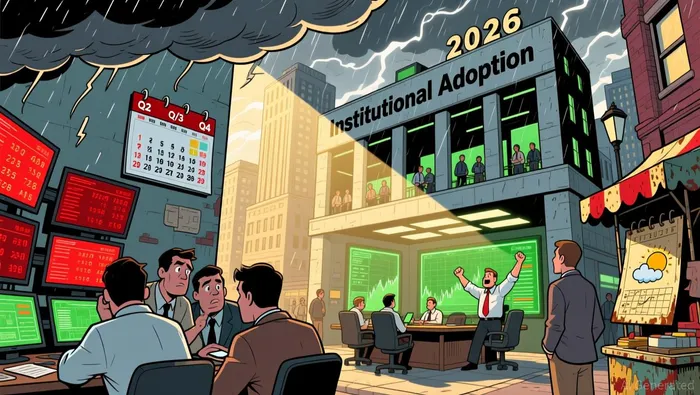
Bitcoin's price trajectory in 2026 is increasingly being analyzed through AI-driven forecasts, with DeepSeek predicting a sharp correction followed by a recovery. These projections are tied to macroeconomic shifts and institutional adoption trends, offering investors key reference points for decision-making. The AI model's accuracy, however, remains contingent on real-world market conditions aligning with its assumptions. Nvidia's strategic push into agentic AI has also generated momentum in crypto tokens tied to AI and autonomous systems. The company's expanded revenue forecasts and infrastructure roadmap have positioned it as a central player in the deployment of AI technologies, influencing broader market sentiment. Tokens like BittensorTAO-- (TAO), Render (RNDR), and FET have shown upward movement in response to this development.
DeFi innovation is reshaping capital efficiency through deterministic price models like the Auto-Ascending Liquidity Mechanism (ALM). These models aim to eliminate downward price pressure by recycling transaction fees into liquidity pools. While such mechanisms offer predictable returns, liquidity providers must remain cautious about potential imbalances and protocol failures that could lead to asset depreciation.
What Drives Bitcoin Volatility in 2026?
Bitcoin's volatility in 2026 is expected to be influenced by macroeconomic shifts and institutional adoption. AI models, like DeepSeek's, provide a framework for understanding this two-phase movement, with a Q2 or Q3 correction followed by a Q4 recovery. Investors are advised to monitor these timeframes and use the forecasts as one of multiple reference points for informed decision-making.
The AI-driven projections highlight the importance of macroeconomic indicators and market dynamics in shaping Bitcoin's trajectory. Institutional adoption is a key factor, as it can influence both supply and demand dynamics. These developments underscore the need for investors to remain adaptable in a rapidly evolving market environment.
How is Nvidia's Agentic AI Impacting the Crypto Sector?
Nvidia's advancements in agentic AI and inference computing have generated renewed interest in crypto tokens associated with AI and decentralized networks. The company's strategic focus on deployment and real-time systems has positioned it as a central player in the broader AI landscape. This has led to increased attention on tokens like Bittensor (TAO), Render (RNDR), and FET according to market reports.
The integration of agentic AI into decentralized networks is opening new avenues for innovation. By enabling autonomous agent capabilities, Nvidia's technologies are shaping the infrastructure roadmap for future AI deployments. This alignment has driven momentum in crypto markets, with investors and developers closely monitoring the sector's evolution.
What are the Risks in DeFi Liquidity Models?
DeFi protocols like UpOnly and EDGEX implement deterministic price models and liquidity incentives to ensure token price appreciation. These models aim to enhance capital efficiency by recycling transaction fees into liquidity pools, benefiting both liquidity providers and token holders. However, these mechanisms face scrutiny over liquidity imbalances and over-reliance on algorithmic execution as analysis shows.
Liquidity providers play a crucial role in maintaining stable pricing within DeFi protocols. They deposit assets into pools to facilitate trading and earn rewards through fees or airdrops. Despite these incentives, liquidity providers must remain cautious about sudden market shifts or protocol failures, which can lead to impermanent loss or asset depreciation.
Projects like EDGEX are further enhancing capital efficiency by offering token airdrops to liquidity providers. These incentives encourage participation and support a stable trading environment. Nonetheless, the risks associated with sudden market changes or protocol execution issues cannot be ignored, highlighting the need for due diligence in DeFi investments.

Blending traditional trading wisdom with cutting-edge cryptocurrency insights.
Latest Articles
Stay ahead of the market.
Get curated U.S. market news, insights and key dates delivered to your inbox.
AInvest
PRO
AInvest
PRO



Comments
No comments yet