
Why USO Stock Is Skyrocketing Amid Oil Price Surge to $100
 Aime Summary
, . - Recent Iranian drone strikes on Qatari liquefied natural gas (LNG) facilities and the closure of the have created a severe supply shock, pushing WTI and Brent crude to multi-month highs. - USOUSO-- tracks front-month WTI futures, and acute supply disruptions have pushed the futures curve into backwardation, temporarily boosting the ETF's performance.. states. - Investors should closely monitor the geopolitical situation, particularly the potential resumption of oil traffic through the Strait of Hormuz and the impact of oil prices on global growth.
With oil prices now surpassing $100 per barrel for the first time since 2022, the United States Oil FundUSO-- (NYSE: USO) has become a focal point for traders seeking exposure to crude's volatility. .
Geopolitical tensions between the U.S. and Iran have triggered a cascade of supply-side risks. The Strait of Hormuz, a critical artery for global oil exports, has seen traffic effectively halted due to Iranian threats, forcing Gulf Arab producers to cut output to manage storage limits. Meanwhile, Iran's new supreme leader and escalating drone attacks on regional energy infrastructure have only added to the uncertainty. In this environment, USO has become a liquid proxy for oil price swings, with its structure amplifying both the upside and downside potential in a rapidly shifting market.
Why Is USO Stock Rallying Amid the Oil Price Surge?
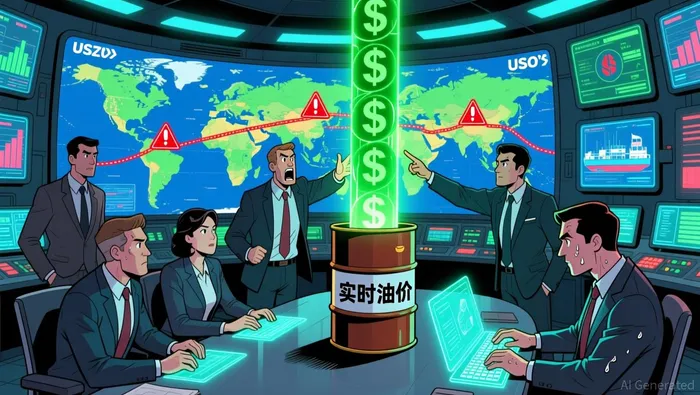
The United States Oil FundUSO-- (USO) is a physically backed ETF that tracks WTI crude oil prices through its investment in front-month futures contracts. Because it must roll these contracts monthly, it typically incurs roll costs under normal conditions. However, , where near-term contracts trade at a premium to longer-dated ones. This dynamic reduces roll costs and, in some cases, generates a tailwind for the fund's performance.
With the Strait of Hormuz closed and Qatari LNG production disrupted, global oil markets are facing one of the most acute supply shocks in recent memory. The result has been a rapid and sharp rise in oil prices, with . This has created a buying frenzy in oil-linked funds like USO, INDO, and BATL, which have seen significant inflows from both institutional and retail investors. Prediction markets suggest , further amplifying the urgency for investors looking to hedge against or profit from rising energy costs.
Should Investors Bet on USO or Diversify Their Oil Exposure?
While USO offers a direct and liquid way to trade crude oil prices, it comes with specific risks. Its sensitivity to the shape of the futures curve means its performance can diverge from spot prices, especially over longer timeframes. In contrast, like ProShares Ultra Bloomberg Crude Oil (UCO) and UltraShort (SCO) offer more aggressive exposure but come with even higher volatility and decay risk. For investors looking for broader energy sector exposure, funds like the Energy Select Sector SPDR Fund (XLE) and Fidelity MSCI Energy Index ETF (FENY) offer more diversified portfolios that include major oil producers like Exxon and Chevron.
For now, the market is pricing in prolonged supply risks. If the Strait of Hormuz reopens soon, oil prices could see a sharp correction. On the other hand, if geopolitical tensions worsen and production cuts persist, oil may remain at elevated levels for months. Either way, USO is positioned to reflect these movements in real time, making it a high-stakes but liquid tool for those navigating the current energy crisis.
What to Watch Next
Investors should keep a close eye on three key factors moving forward. First, the geopolitical situation in the Middle East—particularly Iran's next move and the U.S. response—will have a direct impact on oil prices. Second, the duration of the supply disruption through the Strait of Hormuz will determine whether this is a temporary spike or the beginning of a new price trend. Finally, central bank policy will play a critical role in how quickly markets can absorb the inflationary shock from higher energy prices. The Federal Reserve and ECB have already hinted at delaying rate cuts, but further data could force a more aggressive policy shift.
Until these uncertainties are resolved, USO is likely to remain in the spotlight. But for long-term investors, it's worth considering how these energy price swings will affect broader markets and consumer behavior. After all, while oil may be surging to $100, the long-term economic implications could be just as impactful.

Stay ahead of the market.
Get curated U.S. market news, insights and key dates delivered to your inbox.


AInvest
PRO
AInvest
PRO



Comments
No comments yet