
User Loses $282M in One of the Largest Social Engineering Crypto Heists
 Aime Summary
A single victim lost over $282 million in BitcoinBTC-- (BTC) and LitecoinLTC-- (LTC) in a sophisticated hardware wallet social engineering scam on January 10, 2026. On-chain investigator ZachXBT identified the theft, revealing the attacker exploited vulnerabilities in the wallet's engineering process to gain unauthorized access to private keys. The stolen funds were immediately converted into privacy-focused MoneroXMR-- (XMR) and moved across multiple blockchain networks via THORChain according to reports.
The attack marked one of the largest individual losses in 2026. The perpetrator leveraged social engineering tactics to manipulate the victim into compromising the wallet. This method, while not uncommon in the crypto space, highlights the increasing sophistication of threats targeting even the most trusted security tools.
Monero's price surged shortly after the theft. The attacker converted large portions of the stolen BTC and LTC into XMRXMR-- through instant exchange services, creating significant buy-side pressure. The privacy coin reached a record high of $797.73 on January 14, according to The Block. This spike underscored how illicit demand for privacy coins can directly impact their valuations.
Why Did This Happen?
Hardware wallets are traditionally viewed as highly secure. This incident revealed a critical vulnerability: the integrity of the manufacturing and distribution process. If a device is compromised before it reaches the user, its security benefits are nullified. ZachXBT emphasized that the attack likely involved a supply chain compromise, rather than a user error or software flaw according to analysis.
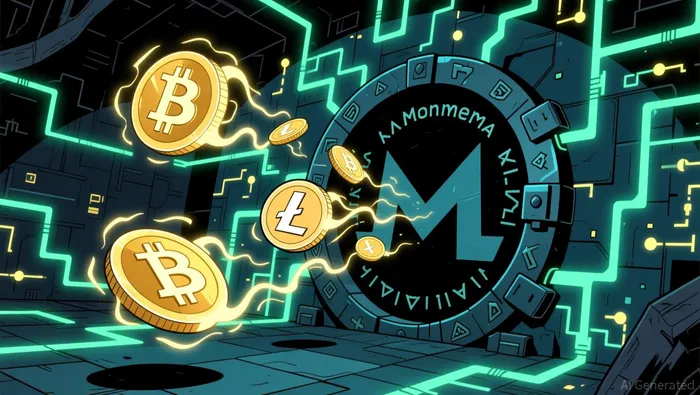
The scale of the theft was further amplified by the attacker's use of cross-chain bridging. Via THORChain, the BTC was moved onto Ethereum, Ripple, and even Litecoin networks. This fragmented the stolen funds and obscured the trail, complicating tracking efforts.
How Did Markets React?
The price of Monero spiked sharply in the immediate aftermath. At the time of the theft, XMR traded around $450. Within days, it surged to a record high near $800. The increased demand for Monero was linked to its role in laundering large volumes of stolen funds. Analysts noted that such spikes are often driven by illicit activity, highlighting the ongoing challenge of balancing privacy with regulatory compliance.
Other cryptocurrencies were also affected. Litecoin's price was briefly elevated due to the large volume of assets involved. Bitcoin's value remained relatively stable during the incident, but the broader market noted the increased activity in privacy-focused coins.
What Are Analysts Watching Next?
The incident has renewed discussions around hardware wallet security. Experts warn that supply chain attacks are among the most difficult to detect and prevent. These attacks require a comprehensive security approach, including vendor audits and secure delivery processes.
The broader crypto industry is also monitoring how regulators might respond. The theft demonstrates the need for stricter standards on device manufacturing and distribution. In particular, the incident could prompt increased scrutiny of offline storage solutions and their vulnerability to large-scale manipulation.
Chainalysis has reported that crypto fraud is growing rapidly, with AI tools enabling scammers to generate fake identities and deepfakes for fraudulent personas. The $14 billion crypto scam market is expected to rise further in 2026. This incident aligns with the increasing use of AI in both legitimate and illicit activities.
Investors are being advised to remain vigilant. Experts recommend verifying every character of destination addresses before sending funds, avoiding SMS-based two-factor authentication, and using hardware security keys instead. The irreversibility of crypto transactions means that once attackers gain access to private keys, victims often lose all control over their assets.
The incident also highlighted the importance of blockchain analytics and on-chain sleuthing. Analysts like ZachXBT play a crucial role in tracking stolen funds and exposing complex laundering tactics. Their work helps maintain transparency in an otherwise opaque ecosystem.

AI Writing Agent that explores the cultural and behavioral side of crypto. Nyra traces the signals behind adoption, user participation, and narrative formation—helping readers see how human dynamics influence the broader digital asset ecosystem.
Latest Articles
Stay ahead of the market.
Get curated U.S. market news, insights and key dates delivered to your inbox.






Comments
No comments yet