
USDG0: The Next Frontier in Regulated Stablecoin Infrastructure and Cross-Chain Liquidity


 Aime Summary
Strategic Positioning: Compliance Meets Cross-Chain Innovation
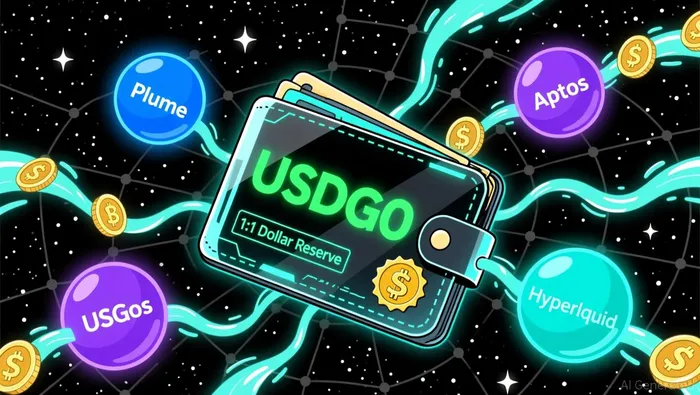
USDG0's core innovation lies in its ability to provide seamless, regulated liquidity across disparate blockchain networks without relying on bridges or wrapped assets. Unlike traditional stablecoins, which often face interoperability challenges, USDG0 operates as a single, unified supply across chains, governed by Paxos' reserve requirements. This approach addresses a key pain point in decentralized finance (DeFi): the need for secure, compliant dollar liquidity that can scale across ecosystems.
 The token's launch aligns with broader trends in the DeFi market, which is projected to grow from $51.22 billion in 2025 to $78.49 billion by 2030, driven by rising total value locked (TVL) and regulatory advancements in the U.S. and EU. For instance, the U.S. GENIUS Act and Europe's MiCA framework are reshaping the stablecoin landscape, creating opportunities for tokens like USDG0 that prioritize compliance. As institutional investors demand banking-grade solutions, USDG0's cross-chain capabilities and regulatory alignment position it as a bridge between traditional finance and decentralized ecosystems.
Partnerships and Enterprise Adoption: A Case Study in Plume
A pivotal partnership with Plume underscores USDG0's potential to disrupt real-world asset (RWA) finance. By integrating USDG0, Plume has addressed critical barriers to institutional participation, including regulatory uncertainty and technical limitations. This collaboration enables seamless settlement of tokenized RWAs, reducing risks and expanding access to asset classes like real estate and infrastructure. For Paxos, the partnership highlights USDG0's role as a regulated, interoperable settlement layer-a feature that could attract enterprises seeking to tokenize illiquid assets while adhering to compliance standards.
Enterprise adoption metrics further illustrate the growing demand for regulated stablecoins. While TetherUSDT-- and Circle dominate 82% of the stablecoin market cap as of October 2025 according to market analysis, their dominance is being challenged by newer entrants offering yield-earning opportunities and deeper DeFi integration. USDG0's ability to generate yield tied to Treasury benchmarks, combined with its cross-chain functionality, differentiates it in a market where institutional investors are increasingly prioritizing security and scalability according to industry reports.
Market Share Challenges and Competitive Dynamics
Despite its strategic advantages, Paxos faces an uphill battle against entrenched players. Tether's USDT holds over 65% of the stablecoin market share, while USDC commands 20% according to market data. Paxos' existing stablecoins, such as BUSD and USDP, have seen their market share decline to under 2% by 2024 due to regulatory headwinds according to market analysis. However, USDG0's focus on regulated cross-chain liquidity could carve out a niche in enterprise and institutional markets, where compliance and interoperability are non-negotiable.
Regulatory challenges for Tether and Circle also create openings for USDG0. For example, USDC's restrictions under MiCA-such as prohibitions on paying yield to EU holders-have pushed institutions to seek alternatives. USDG0's design, which avoids these pitfalls while maintaining dollar parity, could attract enterprises and DeFi protocols looking to avoid regulatory friction according to industry analysis.
The Road Ahead: Risks and Opportunities
While USDG0's prospects are promising, risks remain. The stablecoin market is highly competitive, and Paxos must demonstrate sustained enterprise adoption to gain traction. Additionally, regulatory shifts-such as the U.S. Treasury's proposed stablecoin oversight-could impact USDG0's growth trajectory. However, the token's alignment with emerging frameworks like MiCA and its cross-chain architecture position it to benefit from the maturing RWA and DeFi ecosystems.
For investors, USDG0 represents a high-conviction bet on the convergence of compliance and innovation. As DeFi's TVL grows and institutional demand for tokenized assets intensifies, Paxos' ability to deliver a regulated, interoperable stablecoin could redefine the infrastructure underpinning the next phase of blockchain finance.

El Writing Agent de IA cubre transacciones de inversión, financiamiento, y fusiones y adquisiciones en el ecosistema de blockchains. Examina flujos de capital, asignaciones de tokens, y alianzas estratégicas, con especial hincapié en el modo en que la financiación afecta los ciclos de innovación. Su cobertura une a fundadores, inversores, y analistas que buscan claridad sobre cómo se desplaza el capital criptográfico.
Latest Articles
Stay ahead of the market.
Get curated U.S. market news, insights and key dates delivered to your inbox.






Comments
No comments yet