
USDC Expands Use in Financial Ecosystems, Strengthening Market Position
 Aime Summary
USDC is increasingly being adopted in enterprise financial operations and AI ecosystems, with 98% of autonomous AI transactions conducted using the stablecoin.
Thunes and other platforms are bridging traditional finance and digital assets by enabling real-time stablecoin payments via existing infrastructure like Swift.
Regional banks are launching blockchain-based payment rails, such as the Cari Network, to challenge non-bank stablecoins like USDCUSDC-- while maintaining FDIC insurance and compliance.
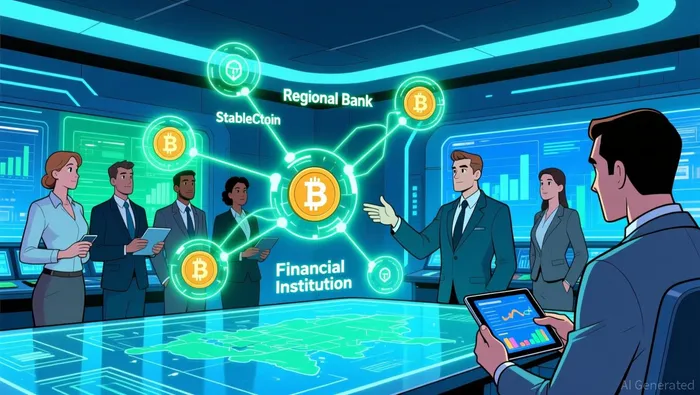
USDC's integration into AI and enterprise financial operations is deepening, with 98% of autonomous AI transactions using the stablecoin as the primary medium. This trend underscores the growing utility of stablecoins in high-frequency, low-latency environments, particularly as platforms like Coinbase leverage them to support AI operations. Meanwhile, Circle's enterprise partnerships are expanding the use of USDC into real-world financial processes, including payments, treasury management, and settlement. Traditional financial institutions are also moving to challenge the dominance of non-bank stablecoins. The Cari Network, a ZKsync-based blockchain built by five major U.S. regional banks, enables instant settlement of tokenized deposits while maintaining FDIC insurance and regulatory compliance. This development represents a strategic effort to reclaim the settlement layer from private stablecoin issuers like TetherUSDT-- and CircleCRCL--. Additionally, Thunes has launched a solution enabling 11,500 Swift-connected institutions to send real-time payments to stablecoin wallets, expanding the accessibility of USDC and USDT .
Investors should also consider the broader regulatory landscape and competitive dynamics shaping USDC's trajectory. The SEC and CFTC have officially recognized 16 crypto assets as digital commodities, signaling regulatory progress in the space. However, staking and DeFi strategies remain inaccessible to many due to high entry barriers and operational risks. Meanwhile, Bakkt and other institutional players are shifting toward core crypto infrastructure, with some planning to invest in BitcoinBTC-- and other digital assets.
Why Is USDC Gaining Prominence in AI and Enterprise Financial Systems?
The adoption of USDC by AI platforms and enterprise financial operations is a key indicator of its growing utility. As autonomous AI systems process vast volumes of transactions, the need for a stable, predictable medium of exchange becomes critical. USDC provides this stability, enabling seamless execution of transactions without the volatility inherent in other crypto assets. Additionally, Circle's partnerships with major firms like Visa and Intuit are expanding USDC's role in real-world financial operations, including cross-border payments and treasury management. This diversification of use cases enhances the stablecoin's long-term viability and scalability.
How Are Traditional Financial Institutions Competing with USDC and Other Stablecoins?
The Cari Network represents a direct challenge to private stablecoin issuers like Tether and Circle by offering a regulated, FDIC-insured alternative. Built on ZKsync's "Prividium" technology, the network allows banks to issue tokenized deposits that settle instantly while remaining liabilities of the issuing bank. This approach aligns with broader efforts by traditional financial institutions to integrate blockchain technology within regulatory frameworks, ensuring compliance while leveraging the benefits of digital assets. Similarly, Thunes' solution bridges fiat and digital ecosystems by enabling banks to send stablecoin payments directly to wallets using existing infrastructure. These innovations highlight the evolving competitive landscape in which stablecoins must operate.
What Regulatory and Investment Trends Are Shaping USDC's Future?
Regulatory clarity is emerging as a key factor in the evolution of stablecoins. The recognition of 16 crypto assets as digital commodities by the SEC and CFTC marks a shift toward formal oversight. However, the regulatory environment remains complex, with varying interpretations of compliance requirements across jurisdictions. At the institutional level, investment in core crypto infrastructure is gaining traction. Bakkt has adopted a policy allowing the use of excess capital and future financing to invest in Bitcoin and other digital assets. This strategic shift reflects broader industry confidence in the long-term potential of digital assets, including stablecoins like USDC.
Despite these developments, challenges remain. DeFi staking and yield strategies require significant capital and carry risks related to technical failure and mismanagement. This limits broader participation and underscores the need for robust, user-friendly solutions. As the stablecoin market matures, investors will need to evaluate not only the technological and regulatory landscape but also the competitive dynamics between traditional financial institutions and crypto-native platforms.

Blending traditional trading wisdom with cutting-edge cryptocurrency insights.
Latest Articles
Stay ahead of the market.
Get curated U.S. market news, insights and key dates delivered to your inbox.
AInvest
PRO
AInvest
PRO



Comments
No comments yet