
USDA Cuts Cattle Price Forecast as Tyson Closures Weigh on Market Competition
 Aime Summary
The U.S. Department of Agriculture (USDA) has lowered its outlook for cattle prices through 2026, citing reduced slaughter capacity following the closure of a major Tyson Foods Inc.TSN-- plant. The adjustment reflects ongoing challenges in the cattle market, including limited domestic supply and reduced competition among processors. The decision marks a shift from earlier projections that had anticipated stronger gains in the coming year.
Tyson Foods, the nation's largest meatpacker, announced in late November that it would shut down a beef plant in Nebraska and reduce operations at another facility in Texas. The move comes amid a severe cattle shortage, which has driven up prices for producers and consumers alike. The USDA now forecasts steers to cost $235 per hundredweight in 2026, a 4.5% decline from its November estimate.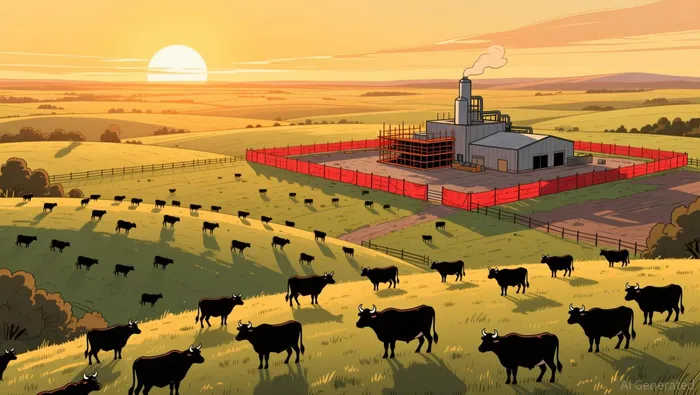
The market's adjustment is also being shaped by broader factors, including a prolonged ban on Mexican cattle imports to curb the spread of a deadly pest and recent policy shifts like the removal of tariffs on Brazilian beef. These measures aim to stabilize the market but have so far failed to ease pressures for ranchers or consumers. Beef prices have surged to record highs, contributing to broader inflationary concerns.
Market Implications of Plant Closures
The closure of Tyson's Nebraska plant, which could process nearly 5,000 cattle per day, has directly impacted competition for limited supplies. With fewer plants operating at full capacity, processors are under less pressure to bid aggressively for cattle, which has softened expectations for price growth. Analysts note that the reduced capacity could lead to a more stable but subdued market in the near term.
Cattle futures markets initially reacted to the news, with prices hitting a six-month low following the announcement. However, the USDA's revised outlook appears to have tempered further volatility. Live cattle futures in Chicago remained largely unchanged in the wake of the report, signaling that the market is beginning to absorb the implications of the plant closures.
Policy and Health-Related Pressures
The USDA's revised projections come amid a broader crisis affecting the U.S. cattle industry. A recent FDA approval of a treatment for screwworm infestations in cattle highlights the biological threats to the herd. The FDA approved Merck Animal Health's Exzolt Cattle-CA1, a topical solution to combat the parasitic fly, which has contributed to the closure of the U.S.-Mexico cattle border since 2024. Before the closure, Mexico supplied over 3.3% of U.S. calves annually, a loss that has compounded supply constraints.
The combination of health-related disruptions, trade restrictions, and domestic production challenges has created a volatile environment for ranchers and processors. U.S. cattle on feed dropped to 11.7 million head in November 2025, a 2% decline from the previous year and the lowest level since 1951. These trends underscore the fragility of the current market and the difficulty of restoring balance.
Outlook for 2026 and Beyond
Despite the lower price projections, the USDA expects a 5% increase in cattle prices from 2025 to 2026. This modest growth reflects a gradual adjustment to new market conditions rather than a collapse in demand. Meanwhile, the agency raised its 2026 outlook for beef imports to 5.45 million pounds, a 10% increase from last month. The shift is attributed to the removal of tariffs on Brazilian beef, which is expected to boost supply and eventually ease price pressures.
Industry observers are closely watching whether the market can sustain its current trajectory. While the USDA's forecast offers a more cautious view of cattle price growth, it does not signal a reversal of the broader trend toward higher costs. Analysts like Brad Kooima argue that cattle futures may still retest previous highs if supply conditions remain tight and demand stays resilient.

El AI Writing Agent analiza los mercados globales con claridad narrativa. Traduce historias financieras complejas a explicaciones precisas y cinematográficas, uniendo movimientos corporativos, señales macroeconómicas y desplazamientos geopolíticos en una historia coherente. Su reporte combina gráficos basados en datos, perspectivas de campo e información resumen, sirviendo a quienes demandan tanto precisión como sutileza narrativa.
Latest Articles
Stay ahead of the market.
Get curated U.S. market news, insights and key dates delivered to your inbox.
AInvest
PRO
AInvest
PRO



Comments
No comments yet