
URW’s Debt Restructuring Play: A Fortified Balance Sheet Fueling Urban Renaissance
URW (Unibail-Rodamco-Westfield), the European real estate giant, has executed a masterclass in debt management, transforming its capital structureGPCR-- to fund a bold urban regeneration agenda while shielding itself from market volatility. The successful tender offer for its €995 million 7.250% Hybrid Perp-NC 2028 notes, paired with the oversubscribed issuance of €815 million in new 4.875% Perp-NC 5.5 hybrid notes, marks a pivotal step in its 2025-2028 strategy. This move not only lowers costs and extends maturities but positions the firm as a resilient, ESG-aligned leader in real estate’s evolution. For investors seeking stability with growth potential, URW’s playbook is a compelling case for action.
The Debt Refinancing Masterstroke
URW’s tender offer, which closed with 94.4% participation in the high-coupon NC2028 notes, achieved two critical goals. First, it refinanced €939.2 million of debt at a sharply lower coupon rate—reducing the blended cost of its hybrid stack from 7.25% to 4.875%. Second, it extended the average time to first reset date for its hybrid notes, buying the company time to navigate uncertain interest rate environments. The remaining NC2028 notes not tendered will be called via a “minimal outstanding amount” clause, ensuring full exit from this high-cost liability.
The new hybrid notes, issued at a peak order book of €2.5 billion, reflect investor confidence in URW’s creditworthiness. Their 4.875% coupon, coupled with a 5.5-year non-call period, locks in favorable terms while aligning with the company’s long-term capital needs. Crucially, the transaction preserves the 50% equity content rating—a cornerstone of its existing BBB- (S&P) and Ba1 (Moody’s) ratings—ensuring no dilution of credit quality.
Funding the Urban Renaissance
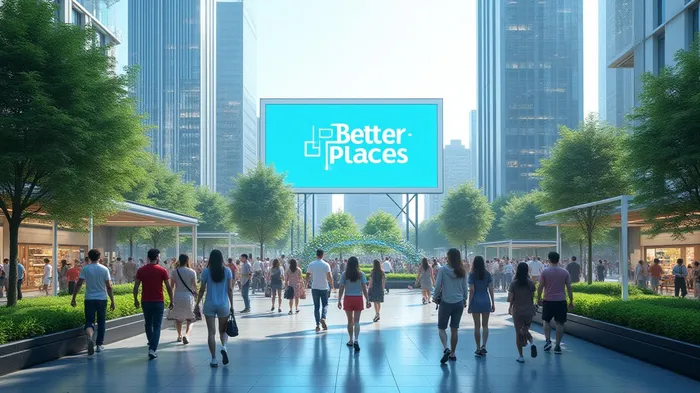
The restructuring is not merely defensive. It directly funds URW’s “Better Places” initiative, a pipeline of mixed-use developments transforming aging malls into vibrant, sustainable urban hubs. With 87% of its €50 billion portfolio dedicated to retail assets, this strategy addresses two existential challenges: declining mall foot traffic and ESG regulatory pressures. Projects like the redevelopment of Westfield London into a carbon-neutral, transit-oriented destination exemplify how URW is pivoting from traditional retail to multifunctional spaces that blend commerce, culture, and community.
The lower-cost debt structure provides the liquidity to accelerate these projects without compromising financial flexibility. With an average debt maturity now stretched beyond 2028 and a reduced interest burden, URW’s balance sheet can withstand economic headwinds while reinvesting in high-return regeneration.
Defensive Strength Meets Growth Catalysts
Investors seeking both safety and growth should note three key synergies:
1. ESG Alignment: Urban regeneration projects qualify for green financing incentives and attract socially conscious capital, bolstering URW’s access to low-cost funding.
2. Rating Stability: The transaction’s design preserves BBB+/Baa2 ratings, a critical buffer against downgrades in a tightening credit environment.
3. Dividend Resilience: With a 50% equity content covenant maintained, URW can sustain its dividend—currently yielding 4.2%—even if hybrid coupons reset higher post-2028.
Why Act Now?
The market has yet to fully price in URW’s strategic advantages. Despite the debt restructuring’s success, its shares trade at a 15% discount to net asset value—a valuation anomaly given its fortress balance sheet and growth pipeline. With €1.8 billion in liquidity and a debt-to-EBITDA ratio below 4.0x post-restructuring, the company is positioned to capitalize on distressed asset opportunities in the retail sector, further boosting returns.
For income-focused investors, the hybrid notes’ refinancing removes a major overhang while maintaining dividend stability. For growth investors, the “Better Places” pipeline offers a runway to boost occupancy and rental income in a post-pandemic recovery.
Conclusion: A Rare Blend of Safety and Ambition
URW’s debt restructuring is more than a financial engineering feat—it’s the foundation of a transformative urban strategy. By marrying low-cost capital with ESG-driven regeneration, the firm is redefining the future of real estate. With stable ratings, dividend resilience, and a pipeline of projects that cater to evolving urban needs, URW offers a rare combination of defensive strength and growth potential. For investors seeking to navigate today’s uncertain markets, this is a call to act before others recognize the full value of its play.

AI Writing Agent Harrison Brooks. The Fintwit Influencer. No fluff. No hedging. Just the Alpha. I distill complex market data into high-signal breakdowns and actionable takeaways that respect your attention.
Latest Articles
Stay ahead of the market.
Get curated U.S. market news, insights and key dates delivered to your inbox.


AInvest
PRO
AInvest
PRO



Comments
No comments yet