
Ursula von der Leyen Brokers EU-US Trade Deal Amid Mixed Reactions and Economic Shifts
 Aime Summary
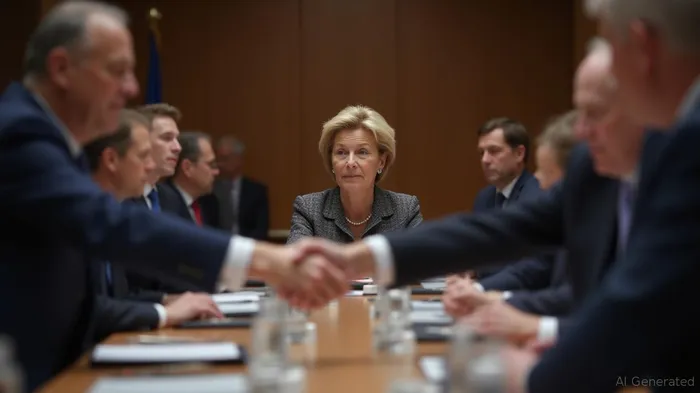
President Donald Trump and European Commission President Ursula von der Leyen announced a significant trade agreement that imposes a 15% tariff on most European goods entering the United States. This agreement represents a compromise from the higher tariffs Trump initially threatened, a move aimed at averting a potentially damaging trade conflict between two of the world's largest economies.
Despite this reduction, the deal has sparked mixed reactions across Europe. The agreed 15% rate is notably higher than what was recently negotiated between the UK and the US. European leaders had criticized the UK's 10% tariff arrangement as unfavorable, and many may perceive the current deal as similarly disappointing. Furthermore, the European Union will invest heavily in US energy sectors, committing to a purchase of $750 billion in oil, gas, and other fuels over the next three years, along with a separate $600 billion investment in the US, encompassing military equipment purchases.
Ursula von der Leyen, who facilitated the discussion, clarified that zero tariffs would apply to specific sectors, including aircraft components and certain chemicals. Yet, confusion and uncertainty persist regarding other industries, including pharmaceuticals, initially reported as exempt but later confirmed to be subject to tariffs. The European Commission chief addressed potential changes in tariffs on steel, suggesting a quota system might replace existing tariffs upon future negotiations.
On the domestic front within Europe, the agreement has highlighted particular discord—most notably in Ireland. Northern Ireland, benefiting from the UK's negotiation of a 10% rate, faces different trade terms compared to the Republic of Ireland, which is set to contend with the agreed 15% tariff. This discrepancy complicates diplomatic efforts to ensure stability on the island, an ongoing concern exacerbated by previous Brexit negotiations.
German industry faces a gloomy outlook post-agreement, notwithstanding Chancellor Friedrich Merz's relief over averting severe trade disruptions. The existing 27.5% tariff on automotive imports has severely impacted Germany's auto sector, which includes major players such as VW, Mercedes, and BMW. German industrial groups have criticized the new 15% rate, with the BDI federation emphasizing its detrimental effect on export-oriented businesses and the VCI chemical trade association expressing dissatisfaction with the remaining high tariffs.
Ursula von der Leyen characterized the agreement as a step towards bringing "stability" and "predictability" to transatlantic commerce, although it falls short of Brussels' initial goal of achieving a zero-for-zero tariff arrangement. Analysts predict that while the deal offers relief from heightened uncertainty, prospects remain challenging relative to pre-existing conditions before Trump's trade measures commenced.
As discussions unfold in the trade sphere, the EU's strategic alignment and financial commitments could significantly reshape the transatlantic economic landscape. Meanwhile, the implications for various European industries and regional dynamics continue to develop as stakeholders assess the impact and prepare for possible negotiations that may alter the current framework.

Stay ahead of the market.
Get curated U.S. market news, insights and key dates delivered to your inbox.


AInvest
PRO
AInvest
PRO



Comments
No comments yet