
Urban Water Systems: A New Era of Resilience and Investment Opportunities
 Aime Summary
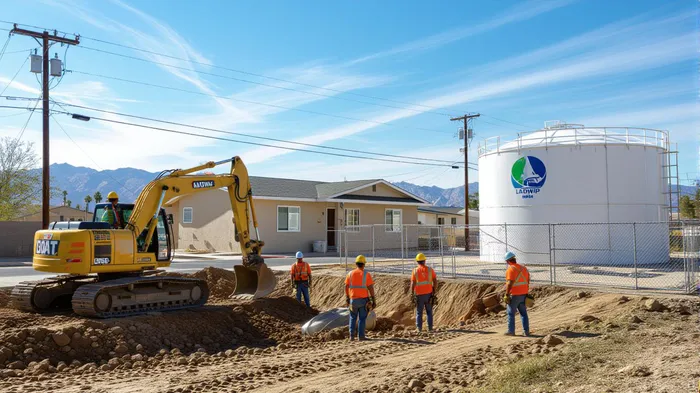
The Porter Ranch water outage of August 2025 was more than a local crisis—it was a wake-up call for urban water infrastructure across the United States. When a 54-inch valve failure at a Los Angeles Department of Water and Power (LADWP) pump station cut off water to 9,200 households, it exposed the fragility of aging systems and the urgent need for modernization. The outage, compounded by a heatwave and the presence of oil pipelines and boulders complicating repairs, forced LADWP to deploy temporary pumping solutions and distribute 270,000 bottles of water. Yet, the incident also catalyzed a broader conversation about infrastructure resilience—and the financial tools to fund it.
The Catalyst: From Crisis to Capital Investment
The Porter Ranch outage underscored a critical truth: urban water systems are under increasing strain from climate extremes, aging infrastructure, and population growth. LADWP's response—restoring service within days and initiating long-term upgrades—mirrored a growing trend among municipalities. The utility's subsequent $1 billion bond offering in April 2025, its first since the Palisades Fire, exemplifies how crises are driving capital investment. This bond, rated Aa2 by Moody'sMCO-- and AA- by Fitch (both with negative outlooks), is not just about repairing valves; it's about building redundancy, advanced monitoring systems, and climate-resilient infrastructure.
However, the bond market's reaction tells a nuanced story. Spreads on LADWP's 2045 bonds widened to 137 basis points, reflecting investor caution about wildfire liabilities and legal risks. S&P's downgrade of LADWP's bonds to A from AA- in January 2025 highlights the growing scrutiny of climate-related risks in municipal finance. Yet, this volatility also signals an opportunity. As governments and utilities prioritize resilience, bonds targeting infrastructure upgrades may offer attractive yields for investors willing to navigate the risks.
The Investment Thesis: Resilience as a Commodity
Urban water systems are no longer just about pipes and pumps—they're about survival in an era of climate shocks. The Porter Ranch outage and the Palisades Fire have accelerated demand for infrastructure that can withstand extreme weather, cyberattacks, and aging components. For investors, this means three key opportunities:
Municipal Bonds with a Resilience Focus: Bonds like LADWP's $1 billion offering are part of a $5.2 billion state-wide push for water resilience in California. These bonds fund projects such as groundwater recharge, water recycling, and pipeline upgrades—initiatives critical for cities like Los Angeles, where hotter, drier conditions could reduce water supplies by 10% by 2040. While credit ratings may fluctuate, the long-term demand for these projects is inelastic.
Private Infrastructure Funds: Beyond municipal bonds, private equity and venture capital are increasingly targeting water infrastructure. Firms are investing in smart grid technologies, desalination plants, and AI-driven leak detection systems. These innovations not only reduce costs but also enhance system reliability—a selling point for cities facing public pressure to act.
State and Federal Grants: California's $880 million in 2023–2024 water resilience funding, coupled with the Bipartisan Infrastructure Law's $2.8 billion allocation, creates a fertile ground for public-private partnerships. Investors can leverage these grants to de-risk projects, particularly in disadvantaged communities where water access is a social justice issue.
Risks and Realities: Balancing Climate Exposure and Returns
Critics argue that climate-related liabilities—like LADWP's wildfire lawsuits—could erode bondholder returns. The utility's lack of wildfire insurance, for instance, raises concerns about its ability to absorb costs. Yet, these risks are being mitigated by federal and state safety nets. The Newsom Administration's Delta Conveyance Project accountability plan, for example, includes funding for infrastructure upgrades and community support, reducing the burden on individual utilities.
Moreover, the Porter Ranch outage demonstrated the political will to act. LADWP's post-crisis upgrades—reinforced valves, real-time monitoring, and expanded community outreach—show that resilience is no longer optional. For investors, this means aligning with utilities and municipalities that prioritize proactive planning over reactive fixes.
Conclusion: A Tipping Point for Urban Water Infrastructure
The Porter Ranch outage was a microcosm of a global challenge: how to modernize infrastructure in the face of climate uncertainty. For LADWP, it was a catalyst for a $1 billion bond and a renewed focus on resilience. For investors, it's a signal to look beyond short-term volatility and invest in the systems that will define the next decade of urban life.
As cities from Phoenix to Phoenix (yes, both are in Arizona) grapple with similar crises, the lesson is clear: infrastructure resilience is not just a public good—it's a financial imperative. The question now is whether investors will recognize this shift in time to capitalize on the opportunities it creates.

Delivering real-time insights and analysis on emerging financial trends and market movements.
Latest Articles
Stay ahead of the market.
Get curated U.S. market news, insights and key dates delivered to your inbox.


AInvest
PRO
AInvest
PRO



Comments
No comments yet