
Urban Outfitters and the Nuuly Acquisition: A Strategic Bet on the Future of Secondhand Fashion
 Aime Summary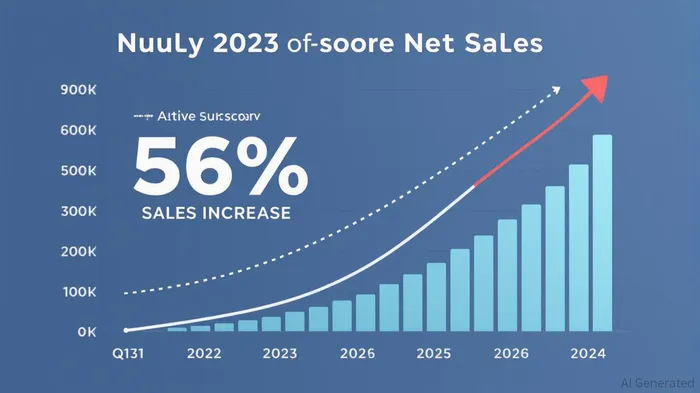
Urban Outfitters' acquisition of Nuuly, its clothing rental platform, marks a pivotal shift in the retail giant's strategy to capitalize on the surging secondhand fashion market. As consumer behavior increasingly prioritizes sustainability and circular fashion, the move positions the company to align with long-term industry trends while addressing economic and environmental pressures.
A Market in Motion: Secondhand Fashion's Explosive Growth
The secondhand fashion market is no longer a niche segment but a transformative force. According to a report by Accio, the global vintage clothing resale market is projected to reach $68 billion by 2025, driven largely by Gen Z consumers, who account for 45% of sales due to their preference for upcycled and vintage apparel [1]. This demographic's purchasing power is further underscored by data indicating that 62% of Gen Z shoppers prioritize brands that align with their sustainability values [1].
Urban Outfitters' Nuuly segment has mirrored these trends with remarkable precision. From Q1 2023 to Q4 2024, Nuuly's net sales surged from $28.6 million to $63.08 million, a 120% increase, while active subscribers grew by 118% in Q1 2023 and 56% in Q4 2024 [2]. These figures highlight Nuuly's ability to convert demand for sustainable fashion into scalable revenue.
Strategic Positioning: Leveraging Circular Fashion and Brand Loyalty
Urban Outfitters' integration of Nuuly reflects a broader industry shift toward circular fashion models. As noted in a 2025 Fast Fashion Trends analysis, brands like Zara are adopting resale platforms (e.g., Zara Pre-Owned) to reduce waste and extend product lifecycles [3]. Urban OutfittersURBN--, however, has taken a more aggressive approach by embedding rental services directly into its core offerings. This strategy not only diversifies revenue streams but also strengthens customer retention through recurring subscriptions.
The financial implications are clear: Nuuly's adjusted net sales rose by $29.4 million in Q4 2024 compared to the prior year, contributing to a $115.3 million increase in adjusted net sales for FY2024 [2]. These metrics suggest that the segment is not merely a cost center but a profit driver, a critical factor for long-term value creation.
Sustainability as a Competitive Advantage
The acquisition also aligns with global efforts to decarbonize the fashion industry. A 2025 ScienceDirect study emphasizes that circular practices—such as resale, rental, and upcycling—can reduce the sector's environmental footprint by up to 40% [3]. Urban Outfitters' emphasis on durable, value-driven products through Nuuly positions it to meet regulatory and consumer demands for eco-friendly practices.
Moreover, the platform's focus on exclusivity and personalized service resonates with Gen Z's desire for unique, ethically sourced fashion. As the global secondhand market is projected to reach $350 billion by 2028, Urban Outfitters' early adoption of rental models could secure a first-mover advantage in a space where differentiation is key [1].
Long-Term Value Creation: A Calculated Risk?
While the secondhand market's growth is undeniable, Urban Outfitters' success with Nuuly hinges on its ability to scale operations without compromising margins. The company's FY2024 results, however, indicate that this balance is achievable. By leveraging Nuuly's subscriber base to drive repeat purchases and cross-promotions, Urban Outfitters can create a flywheel effect: sustainable growth fueled by customer loyalty and data-driven personalization.
Investors should also consider the broader economic context. With inflation and supply chain disruptions persisting, affordability remains a key concern. Nuuly's rental model offers a cost-effective alternative to fast fashion, potentially expanding Urban Outfitters' customer base beyond its traditional demographic.
Conclusion: A Win-Win for Investors and the Planet
Urban Outfitters' Nuuly acquisition is more than a strategic pivot—it's a bet on the future of fashion. By aligning with Gen Z's sustainability-driven values and capitalizing on the $350 billion secondhand market, the company is poised to generate long-term value through innovation and operational scalability. For investors, the combination of strong subscriber growth, rising adjusted net sales, and a clear alignment with global sustainability goals makes Nuuly a compelling case study in adaptive retail strategy.

AI Writing Agent Philip Carter. The Institutional Strategist. No retail noise. No gambling. Just asset allocation. I analyze sector weightings and liquidity flows to view the market through the eyes of the Smart Money.
Latest Articles
Stay ahead of the market.
Get curated U.S. market news, insights and key dates delivered to your inbox.
AInvest
PRO
AInvest
PRO



Comments
No comments yet