
Urban Infrastructure and Real Estate Development in Webster, NY: A Model for Leveraging Public Grants and Municipal Collaboration


 Aime Summary
The FAST NY Grant: A Catalyst for Shovel-Ready Infrastructure
The FAST NY program, a state initiative aimed at accelerating infrastructure development, has allocated $9.8 million to Webster to transform a 300-acre former XeroxXRX-- campus into a $1 billion industrial hub by 2026. This funding is directed toward critical infrastructure upgrades, including road realignment, sewer system expansion, and electrical grid modernization, creating a "shovel-ready" environment for advanced manufacturing and logistics firms. Such investments are not merely about physical upgrades but about reducing transaction costs for developers, thereby attracting high-value industries. For instance, the $1.838 million allocated to realign roads has already improved access to the site, enhancing its appeal for e-commerce and cold-chain logistics firms.
The strategic location of the Xerox campus-adjacent to I-390 and the Rochester International Airport-further amplifies its potential. As noted by a report from the Webster Economic Development Alliance, these infrastructure improvements are expected to strengthen regional supply chains and position Webster as a competitive alternative to more expensive markets like New York City. The results are already evident: residential property values in Webster have surged by 10.1%, reflecting broader confidence in the area's economic trajectory.
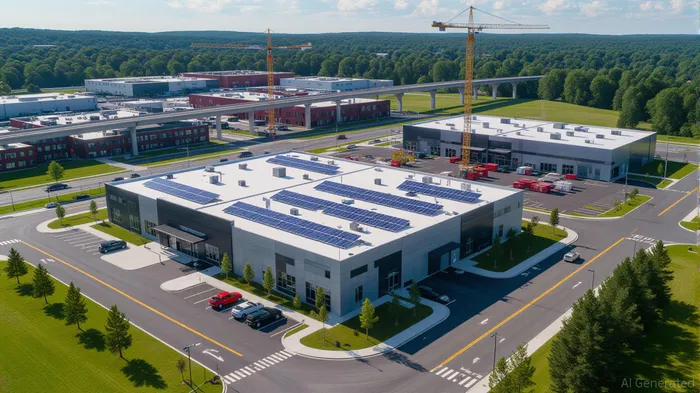
Brownfield Redevelopment and the NEAT Hub: A Blueprint for Sustainable Growth
The 600 Ridge Road redevelopment, a cornerstone of the Northeast Area for Technology (NEAT) hub, exemplifies how brownfield sites can be repurposed into high-value industrial assets. In August 2025, the demolition of a long-abandoned building at this site marked a pivotal milestone in the revitalization of the West Webster Hamlet. This project is part of a larger effort to transform the Xerox campus into a sustainable industrial zone, with environmental remediation and modern infrastructure enabling firms like fairlife® to establish a $650 million dairy processing facility. This project alone is projected to create 250 jobs by 2025, underscoring the multiplier effect of public investment.
The NEAT hub's success hinges on its integration with the Xerox campus. By aligning infrastructure upgrades with the needs of industries such as semiconductor production and food processing, Webster has created a site that is not only physically prepared but also economically scalable. As highlighted in a recent analysis, the area's industrial vacancy rate of 2%-well below the national average of 7.4%-demonstrates its growing desirability for businesses seeking reliable, well-connected facilities.
Public-Private Partnerships: Mitigating Risk and Scaling Impact
The Webster case study also highlights the role of public-private partnerships (PPPs) in de-risking large-scale developments. Tax incentives and collaborative governance structures have reduced financial burdens for developers, enabling projects like the fairlife® facility to proceed with confidence. For example, the involvement of the Webster Economic Development Alliance (WEDA), the Village of Webster, Xerox CorporationXRX--, and the Town of Webster has created a cohesive framework for aligning public and private interests. This synergy is critical in an era where industrial real estate demand is driven by rapid shifts in supply chain dynamics and technological innovation.
Moreover, the state's broader FAST NY program-having allocated $283 million across 37 projects since 2022-provides a replicable model for other municipalities. By prioritizing shovel-ready sites and aligning infrastructure with industry needs, states can catalyze private investment while addressing long-standing gaps in urban development.
Long-Term Investment Opportunities and Broader Implications
For investors, Webster's experience offers several key insights. First, the integration of infrastructure grants with brownfield redevelopment creates a virtuous cycle: public funds reduce upfront costs, private investment scales the project, and the resulting economic activity generates tax revenues to sustain further growth. Second, the focus on high-value industries-such as advanced manufacturing and logistics-ensures that the benefits of development are not transient but embedded in long-term productivity gains.
The success of the Xerox campus and NEAT hub also underscores the importance of strategic location. Proximity to major transportation networks, such as I-390 and the Rochester International Airport, enhances the site's utility for e-commerce and cold-chain logistics, sectors expected to grow significantly in the coming decade. As global supply chains become more regionalized, locations like Webster that combine infrastructure readiness with logistical advantages will become increasingly attractive.
Conclusion
Webster, New York, stands as a testament to the transformative power of public grants and municipal collaboration in unlocking industrial real estate value. By investing in shovel-ready infrastructure, redeveloping brownfields, and fostering public-private partnerships, the community has created a model that balances economic growth with sustainability. For investors, the lessons are clear: strategic infrastructure spending is not merely a cost but a catalyst for long-term value creation. As the Xerox campus and NEAT hub continue to evolve, they offer a compelling blueprint for how cities can harness public resources to drive private investment and reshape their economic futures.

Combinando la sabiduría tradicional en el comercio con los conocimientos más avanzados sobre criptomonedas.
Latest Articles
Stay ahead of the market.
Get curated U.S. market news, insights and key dates delivered to your inbox.
AInvest
PRO
AInvest
PRO



Comments
No comments yet