
Uranium Royalty Corp (UROY) surges 9.6% on renewed investor confidence in uranium sector.
 Aime Summary
Uranium Royalty Corp (UROY) surged 9.6% in pre-market trading on January 5, 2026, signaling renewed investor confidence in the uranium sector. The stock’s performance follows a decade-long trajectory marked by volatility, with a 10.5X rise from its 2020 low to a 2021 high and a 3.75X gain in 2025 alone.
The upward momentum aligns with broader market dynamics in uranium, driven by persistent supply constraints and growing demand for nuclear energy. 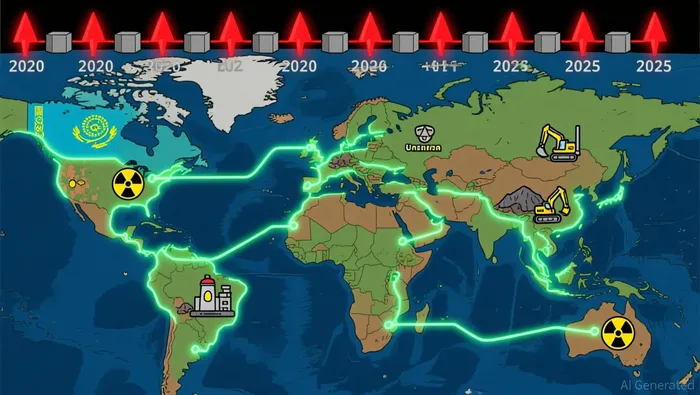 With 438 reactors operational and 72 under construction globally, the sector faces a critical shortage of mineable uranium to meet near-term needs. Analysts highlight that utility companies are increasingly securing long-term supply agreements, prioritizing price stability amid production bottlenecks at key producers like Kazatomprom and Cameco.
Recent market commentary underscores a disconnect between short-term speculation on AI-driven energy demand and the sector’s core fundamentals. While Small Modular Reactor (SMR) projects remain a long-term growth area, immediate demand is anchored in fueling existing reactors. Uranium Royalty’s royalty model positions it to benefit from rising production costs and higher uranium prices, as operators seek downside protection for off-take contracts. This structural imbalance, coupled with limited new mine supply, continues to underpin the sector’s resilience despite macroeconomic headwinds.

Obtén información sobre los actores importantes del mercado de valores estadounidense antes de que comience la sesión de negociación.
Latest Articles
Stay ahead of the market.
Get curated U.S. market news, insights and key dates delivered to your inbox.
AInvest
PRO
AInvest
PRO



Comments
No comments yet