
Uranium Markets Ignite as Geopolitical Tensions Disrupt Supply Chains: Strategic Plays in Mining Equities
The Israeli airstrikes on Iranian nuclear facilities in June 2025, confirmed by the International Atomic Energy Agency (IAEA), have sent shockwaves through global uranium markets. The attack crippled critical infrastructure at Natanz, Isfahan, and Fordow, raising fears of prolonged supply disruptions. With Iran's uranium-enrichment capacity damaged and nine nuclear scientists killed, the geopolitical calculus for uranium—a strategic commodity underpinning nuclear energy and weapons—has shifted abruptly. This article explores how the confluence of military actions, historical precedents, and corporate resilience could catalyze opportunities in uranium-related equities.
The Iranian Supply Shock: Immediate and Long-Term Impacts
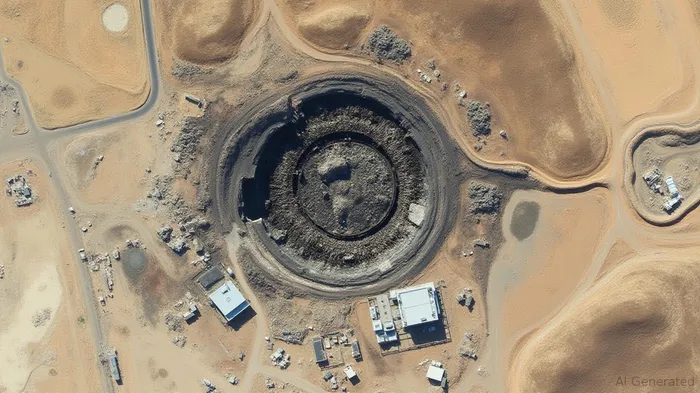
The IAEA's June report detailed severe damage to Iran's above-ground facilities, including the destruction of Natanz's 60%-enriched uranium production line and power infrastructure. While underground centrifuge halls remain intact, the loss of electricity risks rendering thousands of centrifuges unusable. At Isfahan, the Uranium Conversion Facility—a linchpin for turning raw uranium into feedstock—suffered structural damage, potentially halting Iran's ability to scale production for years. Even Fordow, though undamaged, faces reputational harm as a covert site, complicating its role in future enrichment.
The IAEA warns of “radiological and chemical contamination” at Natanz, suggesting cleanup and reconstruction could take years. With Iran's uranium stockpiles now constrained, global supply risks tighten. Iran was producing ~3,000 kg of low-enriched uranium annually pre-strike; its absence could reduce global supply by up to 1.5%, a material shift in a market where demand for nuclear fuel is already growing at 2.5% annually.
Historical Precedents: Geopolitics and Uranium's Volatile Past
This disruption mirrors two critical precedents that reshaped uranium markets:
1. Post-Fukushima Decline (2011): The Japanese disaster triggered a global retreat from nuclear energy, halving uranium prices to $45/lb by 2012.
2. Russia-Ukraine War (2022–present): Russia's dominance in midstream enrichment (40% global capacity) and conversion (20%) forced Western nations into a scramble for alternatives, pushing spot prices to $50/lb in 2023 before sanctions and stockpiling efforts stabilized them.
The current Iranian disruption adds a new layer of risk. Unlike Russia, Iran's role is more niche—enrichment rather than midstream—but its removal could accelerate a “scarcity premium.” Analysts at Sprott estimate uranium prices could hit $100/lb by 2026, up from $76/lb today, as utilities hedge against further supply shocks.
Strategic Plays: Uranium Miners with Resilience and Reserves
Investors should prioritize firms with robust production, diversified geographies, and strategic stockpiles. Below are five companies positioned to capitalize:
1. Cameco (CCJ) – The Athabasca Basin Giant
- Why Invest: Canada's McArthur River and Cigar Lake mines—90% of global high-grade uranium reserves—are operating at full capacity post-2018 shutdowns.
- Data Point:
- Edge: Partnerships with Brookfield-owned Westinghouse provide downstream integration, while its $721M Q3 2025 revenue (up 75% YoY) signals cost discipline.
2. Uranium Energy Corp (UEC) – U.S. Energy Security Play
- Why Invest: UEC's U.S.-based ISR (in-situ recovery) projects and DOE-backed reserves position it to benefit from the “Prohibiting Russian Uranium Imports Act.”
- Data Point:
- Edge: Restarted Christensen Ranch in Wyoming and plans to restart South Texas operations align with U.S. decarbonization goals.
3. NexGen Energy (NXE) – Athabasca's Next-Gen Producer
- Why Invest: Its Rook I project in Canada's Athabasca Basin holds 2.7 million pounds of inventory, acquired in 2024 to capitalize on post-sanction demand.
- Data Point:
- Edge: A 600-meter uranium discovery in 2024's drill campaign hints at untapped reserves.
4. BHP (BHP) – Scale and Diversification
- Why Invest: Its Olympic Dam mine in Australia—world's largest uranium deposit—is a low-cost producer with $100M in 2025 revenue from higher uranium prices.
- Data Point:
- Edge: Diversified into nuclear propulsion R&D for shipping, future-proofing its role in the energy transition.
5. Denison Mines (DMLNF) – High-Grade Project Exposure
- Why Invest: Its Wheeler River project in Athabasca aims to produce via in-situ recovery by 2027–2028, with 22.5% equity in Orano's McLean Lake mill.
- Data Point:
- Edge: Strategic partnerships with Foremost Clean Energy and proximity to existing infrastructure reduce execution risk.
Risks and Considerations
- Geopolitical Escalation: A broader Iran-Israel conflict could disrupt global energy markets, temporarily pressuring equities.
- Regulatory Hurdles: Permitting delays in Canada and the U.S. could slow project timelines.
- Price Volatility: Uranium's cyclical nature means oversupply from Kazakhstan or Russian sanctions easing could cap gains.
Investment Thesis
The Iranian supply shock has crystallized a multi-year tailwind for uranium prices. Investors should overweight Cameco (CCJ) for its scale and Canadian dominance, UEC (UEC) for U.S. policy tailwinds, and NexGen (NXE) for high-growth reserves. These firms are not only hedged against supply disruptions but are also key beneficiaries of a global pivot toward energy independence and nuclear baseload power.
Historically, a simple strategy of buying these stocks when quarterly revenue growth exceeds 50% year-over-year has proven profitable.

Stay ahead of the market.
Get curated U.S. market news, insights and key dates delivered to your inbox.


AInvest
PRO
AInvest
PRO



Comments
No comments yet