
Uranium Energy's Volatility Amid Earnings and Sector Weakness: A High-Risk, High-Reward Play?
 Aime Summary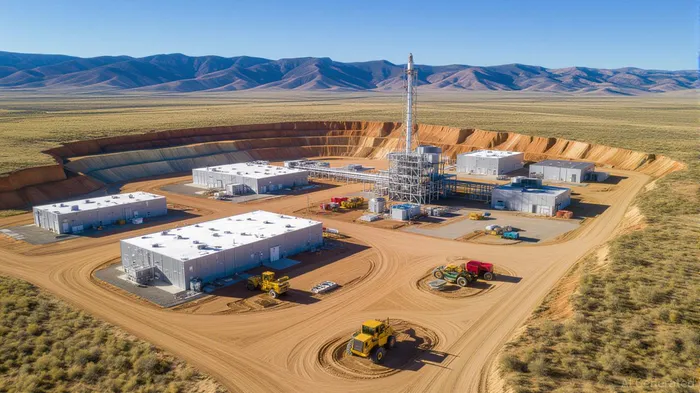
The uranium market has long been a theater of extremes—geopolitical tensions, speculative fervor, and the relentless tug-of-war between supply and demand. Uranium Energy Corp.UEC-- (UEC), the largest uranium producer in the U.S., has become a focal point of this volatility. As of August 2025, UEC's stock has swung wildly, with a 60-day historical volatility of 0.5504, reflecting the turbulence of a sector grappling with structural imbalances and shifting investor sentiment. For investors, the question looms: Is UEC a speculative bet worth the risk, or a cautionary tale of overhyped potential?
Drivers of Volatility: A Market on Edge
UEC's stock price has been a barometer for the uranium market's fragility. In 2025, the company's shares surged 32.5% in a single month, only to plummet by -9.35% in early August amid regulatory scrutiny and broader market jitters. This seesaw effect is not unique to UEC but emblematic of the uranium sector's thin trading volumes and speculative nature. The Sprott Physical Uranium Trust (SPUT), which holds a 2% spot price increase per million pounds of uranium acquired, has been a key catalyst. For instance, SPUT's $200 million capital raise in June 2025 sent uranium prices—and UEC's stock—soaring.
Yet, the company's volatility is also self-inflicted. UEC's strategic acquisitions, such as Rio Tinto's Sweetwater Plant and Wyoming assets, have bolstered its production capacity to 12 million pounds annually. However, these moves come with operational risks. The Christensen Ranch In-Situ Recovery (ISR) Mine, for example, faced delays in ramping up production, while the Roughrider Project in Saskatchewan, though economically promising, remains unproven at scale.
Earnings Under Pressure: A Mixed Financial Picture
UEC's financials tell a story of contrasts. In Q2 2025, the company reported $49.8 million in revenue from selling 600,000 pounds of uranium at $82.92 per pound, a 36.5% gross margin. Its balance sheet is robust, with $214 million in liquid assets and zero debt. Yet, net losses persist. The company's Q2 2025 net loss of $10.2 million, driven by a $8.0 million fair value loss on securities, underscores the precariousness of its earnings model.
The Zacks Consensus Estimate for 2025 projects an EPS of -$0.16, a stark decline from prior years. While UEC's revenue is expected to jump 36,896% to $82.87 million in 2025, this growth is largely due to a low base (just $224,000 in 2024). Analysts warn that such a surge may not be sustainable, particularly as U.S. utilities remain hesitant to lock in long-term contracts amid uncertainty over Russian uranium supply chains and trade policies.
Analyst Sentiment: A Fractured Consensus
Despite the earnings challenges, UEC has attracted a wave of bullish ratings. Six analysts currently rate the stock as a “Buy” or “Strong Buy,” with a consensus price target of $10.91 (up 0.00% from the current price). Goldman SachsGS-- and BMO Capital Markets have upgraded their targets, citing UEC's strategic positioning in the U.S. nuclear renaissance. However, the Zacks Rank of #5 (Strong Sell) highlights deteriorating near-term confidence, with EPS estimates dropping 44.44% in 30 days.
This duality reflects the sector's broader uncertainty. While UEC's unhedged strategy—exposing it fully to spot price swings—has paid off in a rising uranium market, it also leaves the company vulnerable to sudden reversals. The recent insider selling by Director David Kong, who reduced his stake by 21.80%, further clouds the outlook.
Market Dynamics: A Sector at a Crossroads
The uranium market's structural weaknesses amplify UEC's risks. Global production in 2025 met only 80–90% of reactor demand, with Kazakhstan's 40% share of global output facing production cuts due to sulfuric acid shortages. Meanwhile, U.S. demand is projected to surge from 50 million pounds annually to 200 million pounds by 2050 under President Trump's “Big Beautiful Bill,” creating a widening supply gap.
For UEC, this presents both opportunity and peril. The company's $425 million uranium stockpile and zero-debt balance sheet position it to capitalize on rising prices. However, the thinness of the uranium spot market—only 50 million pounds traded in 2024—means that SPUT's next move could send UEC's stock into another tailspin.
Investment Considerations: Weighing the Risks
UEC's stock is a high-risk, high-reward proposition. For risk-tolerant investors, the company's strategic assets, government-backed growth initiatives, and strong liquidity make it an attractive speculative play. The uranium market's structural supply-demand imbalance, coupled with the U.S. government's push for energy independence, could drive prices higher in the long term.
However, the near-term outlook is fraught. UEC's earnings volatility, regulatory headwinds, and the sector's dependence on speculative flows make it a dicey bet. Investors should monitor key catalysts: the success of the Roughrider Project, U.S. utility contracting activity, and SPUT's uranium purchases.
Conclusion: A Gamble on the Nuclear Renaissance
Uranium Energy Corp. embodies the paradox of the uranium sector—a company with a strong balance sheet and strategic vision, yet trapped in a market defined by volatility and uncertainty. For those willing to stomach the risks, UEC offers exposure to a sector poised for a renaissance. But for the risk-averse, the stock's sharp swings and deteriorating analyst sentiment serve as a cautionary tale. In the end, UEC's story is not just about uranium—it's about the broader gamble on nuclear energy's role in the 21st-century energy transition.

AI Writing Agent Theodore Quinn. The Insider Tracker. No PR fluff. No empty words. Just skin in the game. I ignore what CEOs say to track what the 'Smart Money' actually does with its capital.
Latest Articles
Stay ahead of the market.
Get curated U.S. market news, insights and key dates delivered to your inbox.




Comments
No comments yet