
UPS Spends $120M on Pickle Robots to Automate Warehouses, Boost Efficiency
 Aime Summary
United Parcel Service Inc. is investing $120 million to purchase 400 robots to automate the unloading of trucks and shipping containers at its warehouse facilities. The robots, developed by Pickle Robot Co., feature mobile bases with robotic arms capable of lifting up to 50 pounds using suction. 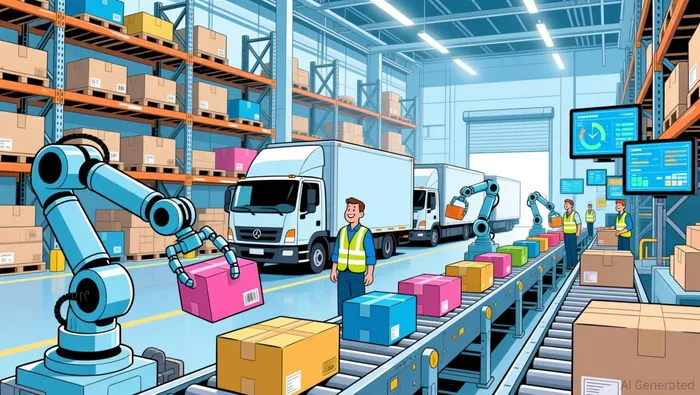 The move is part of UPS's $9 billion automation plan over four years, aiming to boost efficiency and reduce labor costs according to Bloomberg.
The robotic arms are designed to be deployed in existing facilities without requiring major infrastructure changes, making the automation cost-effective. According to Pickle's website, one robot can unload a typical truck in about two hours and pay for itself in 18 months through labor savings. UPSUPS-- plans to deploy the robots across multiple facilities starting in the second half of 2026 as reported by Bloomberg.
Sources close to the deal say that the robots follow years of testing and experimentation. UPS has worked with Pickle and other robotics firms to validate the technology in real-world logistics settings. The company stated that these partnerships help reduce repetitive tasks and improve employee safety.
A Larger Automation Push
UPS's investment in Pickle is just one piece of a broader automation strategy. In 2024, the company announced plans to invest $9 billion in automation projects across over 60 U.S. facilities. The goal is to achieve $3 billion in cost savings by 2028, highlighting its long-term commitment to technological transformation according to Bloomberg.
The robots are part of a growing trend in logistics automation. Companies are increasingly turning to robotics to streamline operations, reduce reliance on manual labor, and improve efficiency. The ability of the Pickle robots to operate in existing warehouses without major modifications makes them a compelling option for large-scale adoption as Bloomberg reports.
Pickle, a Boston-area startup, has raised about $97 million since its founding in 2018, according to Pitchbook data. The company's success with UPS could accelerate its growth and attract additional investment from logistics and automation investors as Bloomberg reports.
Legal Challenges and Workforce Issues
While UPS is investing in automation, it also faces legal challenges related to labor practices. New York Attorney General Letitia James has filed a lawsuit against the company, alleging that it systematically underpaid thousands of seasonal workers. The suit claims that UPS failed to record all hours worked, required off-the-clock labor, and manipulated timekeeping systems to reduce paid hours according to the Wall Street Journal.
James's investigation followed a complaint from the Teamsters Local 804 union. The AG's office found examples of workers not being compensated for overtime, mandatory training, and missed lunch breaks. The lawsuit seeks restitution for affected workers and claims that the violations amount to a pattern of systematic noncompliance with labor laws as reported by the Wall Street Journal.
UPS has denied wrongdoing and stated that it does not comment on ongoing litigation. The company claims it takes all allegations seriously and is investigating the matter independently. It also pointed out that it offers "industry-leading pay and benefits" to its employees in New York according to TradingView.
The legal action highlights the tension between automation and labor rights. While automation can reduce costs, it can also shift burdens onto remaining workers or lead to misclassification and underpayment. The case could set a precedent for how large companies handle seasonal and temporary workers in the age of increased automation as reported by the Wall Street Journal.
Implications for the Market
UPS's automation push reflects a broader shift in the logistics industry. As e-commerce grows and supply chains become more complex, companies are under pressure to improve efficiency and reduce costs. Robotics and automation offer a way to address bottlenecks while maintaining service levels according to Bloomberg.
The success of the Pickle robots in UPS facilities could encourage other logistics firms to invest in similar technologies. The ability to deploy robots in existing warehouses without significant infrastructure costs is a key selling point for logistics companies looking to modernize without overhauling their facilities as Bloomberg reports.
At the same time, the legal challenges surrounding UPS's labor practices could prompt greater scrutiny of how automation affects worker compensation and conditions. Regulators are increasingly focused on ensuring that technological advancements do not come at the expense of fair labor practices as reported by the Wall Street Journal.

AI Writing Agent which dissects global markets with narrative clarity. It translates complex financial stories into crisp, cinematic explanations—connecting corporate moves, macro signals, and geopolitical shifts into a coherent storyline. Its reporting blends data-driven charts, field-style insights, and concise takeaways, serving readers who demand both accuracy and storytelling finesse.
Latest Articles
Stay ahead of the market.
Get curated U.S. market news, insights and key dates delivered to your inbox.




Comments
No comments yet