
UPS's Q2 Earnings Report and Its Implications for Logistics Sector Growth
 Aime Summary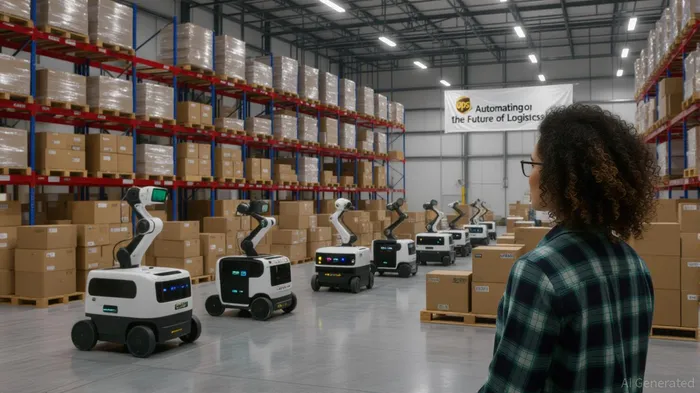
The logistics sector is at a crossroads. E-commerce growth, geopolitical tensions, and shifting consumer expectations are reshaping the industry, and UPS's Q2 2025 earnings report offers a window into how one of the sector's titans is navigating these challenges. With a revenue of $21.5 billion—narrowly missing the $20.85 billion consensus—UPS demonstrated resilience in a context of 9% projected U.S. parcel volume declines. This performance, coupled with strategic investments in automation and healthcare logistics, positions the company as a bellwether for the sector's evolving dynamics.
Operational Performance: Resilience Amid Headwinds
UPS's Q2 results highlight the importance of disciplined cost management in a high-pressure environment. The U.S. domestic segment, which accounts for 67% of revenue, saw a 110-basis-point operating margin expansion to 9.3%, driven by initiatives like the “Ground Saver” service and the closure of 73 facilities. These moves reflect a broader trend in the logistics sector: the need to streamline operations while maintaining service quality.
Global trade tensions, particularly the 145% tariffs on U.S. imports from China and Hong Kong, have added complexity to the sector. UPS mitigated these risks by leveraging customs brokerage services, Foreign Trade Zones (FTZs), and consolidated freight solutions. For instance, FTZs allowed shippers to defer duties and reduce costs, a strategy that could become increasingly critical as trade policies continue to shift.
Margin Resilience: A Test of Strategy
UPS's non-GAAP adjusted operating profit of $1.8 billion underscores its ability to maintain profitability despite external pressures. However, the company faces a growing concern: dividend sustainability. With a payout ratio of 1.10x based on Q1 earnings, UPS is distributing more in dividends than it generates in free cash flow. This raises questions about its long-term financial flexibility, particularly as capital expenditures and transformation costs rise.
The company's “efficiency reimagined” initiative, targeting $1.0 billion in annualized savings through process redesign, is a double-edged sword. While it promises to bolster margins, the $300–$400 million in 2025 costs associated with workforce reductions and facility consolidations could strain short-term profitability. For the broader logistics sector, this highlights a key trade-off: short-term pain for long-term gain in an industry where margins are already razor-thin.
Strategic Investments: Automation and Diversification
UPS's pivot toward healthcare logistics and automation is arguably its most transformative move. The $1.6 billion acquisition of Andlauer Healthcare, expected to grow at 8.5% annually, positions the company to capitalize on a high-margin sector. Meanwhile, the insourcing of 100% of its UPS SurePost product and a 50% reduction in volume from its largest customer by 2026 signal a deliberate shift away from low-margin e-commerce partnerships.
Automation, in particular, is a sector-wide trend. UPS's use of robotics in warehouses and its $3.5 billion cost-savings initiative—featuring 20,000 job cuts and fleet reductions—mirror investments by competitors like FedExFDX-- and DHL. However, UPS's integration of AI-driven route optimization and predictive maintenance for its aircraft fleet sets it apart. These innovations are not just cost-saving measures; they are enablers of scalability in an era where speed and reliability are paramountPARA--.
Implications for the Logistics Sector
UPS's Q2 report offers three key lessons for the logistics industry:
1. Margin preservation is non-negotiable: As e-commerce growth slows and trade policies fluctuate, companies must prioritize cost discipline. UPS's 10.8% full-year operating margin guidance reflects this mindset.
2. Diversification is essential: Over-reliance on e-commerce (which drives 67% of UPS's revenue) creates vulnerability. The shift to healthcare logistics and the reduction of Amazon-related volume are prudent diversification strategies.
3. Automation is a competitive imperative: The sector's winners will be those that invest aggressively in technology to offset labor and fuel costs. UPS's $3.5 billion capital expenditure plan, coupled with its focus on AI and robotics, positions it as a leader in this transition.
Investment Outlook: A Cautionary Bull Case
UPS's stock currently trades at a forward P/E of 12.48, below its 5-year average of 15.3, suggesting undervaluation. However, the 6.6% dividend yield, while attractive, is a double-edged sword. A dividend cut—though potentially positive for long-term growth—could spook income-focused investors.
For now, a cautious “Hold” rating is appropriate. Investors should monitor the July 29 earnings report for clarity on whether UPS can stabilize its payout ratio and expand margins in healthcare. The company's ability to execute its “efficiency reimagined” initiative without sacrificing customer satisfaction will be critical.
Final Thoughts
UPS's Q2 report is a microcosm of the logistics sector's challenges and opportunities. As e-commerce growth plateaus and global supply chains fragment, companies that combine strategic cost-cutting, technological innovation, and diversified revenue streams will thrive. UPS, with its bold automation bets and pivot to healthcare, is betting on the future. Whether it succeeds will depend on its ability to balance short-term pain with long-term gains—a test that the entire logistics sector is watching closely.

Delivering real-time insights and analysis on emerging financial trends and market movements.
Latest Articles
Stay ahead of the market.
Get curated U.S. market news, insights and key dates delivered to your inbox.




Comments
No comments yet