
UPS: A Value Investor's Assessment of Moat, Margin of Safety, and the 2026 Transition


 Aime Summary
For the value investor, the goal is to buy a business at a price that offers a sufficient margin of safety, a cushion against error and uncertainty. This requires looking past the noise of quarterly earnings and focusing on two pillars: the durability of the company's competitive advantages, and whether the current market price offers a compelling discount to its intrinsic worth. United Parcel ServiceUPS-- presents a classic case study in this framework, where a wide moat meets a critical transition and a price that implies a tangible margin of safety.
The foundation of any value thesis is a durable competitive advantage, or "moat." UPSUPS-- possesses a robust one. Its extensive global distribution network creates significant economies of scale and regulatory barriers that are difficult for new entrants to overcome. More importantly, the company benefits from high customer switching costs; businesses rely on UPS's integrated logistics for their operations, making a move to a competitor a complex and risky proposition. This is reflected in its GuruFocus Moat Score of 8, indicating a wide moat that is clear and robust. This network effect and entrenched customer loyalty form a durable barrier that should protect the company's market share and pricing power over the long term.
Against this backdrop of a strong moat, the current stock price of $106.91 appears to offer a margin of safety. According to a discounted cash flow model, the intrinsic value estimate for UPS is $119.77, implying a 12% upside. This calculation suggests the market is pricing in a degree of risk or uncertainty that may not fully account for the company's underlying competitive strength. For a disciplined investor, that 12% gap represents the buffer needed to absorb the inevitable volatility and operational missteps that even the best businesses encounter.
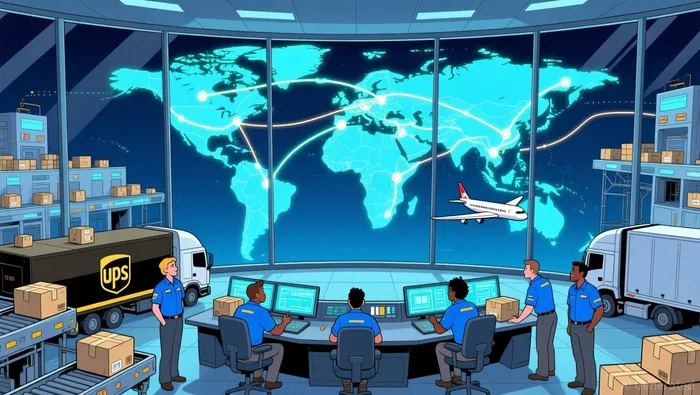
Yet, the investment thesis is not without its immediate challenge. UPS is in the midst of a critical transition phase. The company has announced a major restructuring plan to eliminate about 68,000 jobs and close 73 facilities-the largest purge in its history. This move is aimed at improving long-term efficiency and margins, but it introduces significant near-term execution and cost risks. The market's mixed reaction, with bullish price target raises from some analysts and a sharp downgrade from others, underscores this tension. The value investor must weigh the promise of a stronger, leaner future against the potential for disruption and higher severance costs in the interim.
The bottom line is that UPS offers a setup where the wide moat provides a long-term compounding engine, while the current price offers a reasonable margin of safety. The 2026 transition is the key variable that will determine whether this safety margin is eroded or preserved. The coming earnings report on January 27th will be a crucial test of the company's ability to navigate this restructuring without sacrificing the very competitive advantages that make the investment compelling.
Analyzing the Headwinds: Volume Pressure and Strategic Rationale
The current business challenges at UPS are a mix of external pressures and deliberate strategic choices. The core issue is a sharp decline in package volumes, which directly impacts revenue and profitability. Consolidated volumes fell 9.8% in the third quarter of 2025 and are forecast to drop another 10.6% in the final quarter. This isn't a minor blip; it's a sustained headwind driven by soft demand amid tariff-related uncertainty, elevated inflation, and geopolitical tensions. The result is clear: revenue has been under pressure, with top-line performance declining year-over-year in recent quarters.
This volume strain is not solely cyclical. A significant portion is also structural, stemming from a deliberate decision to improve long-term profitability. Management has reached an agreement in principle to reduce Amazon's volume by more than 50% by June 2026. CEO Carol Tome noted that Amazon was not the company's most profitable customer. This strategic scaling back is a classic example of prioritizing quality of earnings over sheer volume. It aligns with the broader goal of the ongoing restructuring, which aims to shed lower-margin business and focus on a more profitable mix.
The critical question for the value investor is whether these headwinds threaten the company's durable moat. The evidence suggests they do not. The core competitive advantages-its extensive global distribution network and the high customer switching costs it creates-remain intact. The moat is the network's scale and the entrenched reliance of businesses on its integrated logistics. The current volume shifts are a temporary strain on the moat's ability to generate returns, not a demolition of the moat itself.
Viewed another way, the company is navigating a difficult transition where it is actively choosing to sacrifice near-term volume for future margin improvement. The soft demand environment provides a challenging backdrop, but UPS's strategic response-scaling back unprofitable Amazon business and cutting costs-is a disciplined effort to preserve the moat's economic power. The pressure is real, but it is being managed through a plan that acknowledges the current environment while protecting the long-term compounding engine.
Financial Resilience and the Path to a Compounded Return
The value investor's patience is tested not just by a company's moat, but by its financial discipline through adversity. UPS demonstrates a clear commitment to shareholder returns, a hallmark of a financially responsible business. The company has either maintained or increased its dividend each year since going public in 1999. This unwavering policy signals management's confidence in the business's long-term cash-generating ability, even as it navigates a difficult transition. For a patient investor, this track record is a critical component of the margin of safety, providing a tangible return regardless of the stock's short-term volatility.
Yet, that commitment must be balanced against the company's leverage. UPS operates with a debt-to-equity ratio of 1.50, which indicates a leveraged balance sheet. In normal times, this structure can amplify returns. During a major restructuring involving tens of thousands of job cuts and facility closures, however, it demands careful management. The company must generate sufficient cash flow to service its debt while funding the transition costs and maintaining its essential network. This leverage introduces a layer of financial risk that the market is clearly weighing, as reflected in the sharply divided analyst views.
The split in analyst sentiment captures the core uncertainty. On one side, firms like Bernstein and Bank of America see the restructuring as a catalyst for improved profitability, raising their price targets to $125. On the other, BNP Paribas takes a more cautious view, downgrading the stock to Underperform with a target of just $85. This wide divergence-from a potential 17% upside to a 20% downside-highlights the market's struggle to price the outcome of the transition. The value investor must decide which camp is more likely to be right, based on whether the cost savings and margin improvements will materialize as planned.
The bottom line is that UPS's financial resilience is being put to the test. Its strong dividend history and cash-generating network provide a foundation, but the leveraged balance sheet means the company cannot afford missteps. The path to a compounded return hinges on management's ability to execute the restructuring efficiently, generate the expected cash flow to manage debt, and ultimately deliver on the promise of higher margins. The current price offers a margin of safety, but that safety is contingent on the company's financial discipline holding firm through the coming turbulence.
Catalysts, Risks, and the Long-Term Compounding Horizon
The investment thesis for UPS now hinges on a series of near-term catalysts and the successful execution of a major strategic shift. The primary event on the calendar is the Q4 earnings report on January 27. This will be the first major test of the company's ability to navigate its dual challenges: a soft demand environment and a sweeping restructuring. Investors will scrutinize three key areas. First, they will look for signs of whether the forecasted volume decline of 10.6% in the December quarter is stabilizing or accelerating. Second, they will demand concrete progress on the promised cost savings from the elimination of about 68,000 jobs and closure of 73 facilities. Finally, and most importantly, management will need to provide a clear and credible 2026 guidance that bridges the gap between current headwinds and the promised long-term margin improvement.
The central risk to this plan is the execution of the massive restructuring itself. While the goal is to improve profitability, the process of cutting tens of thousands of jobs and closing facilities carries significant near-term operational and cultural disruption. This introduces a tangible risk of service quality issues, employee morale problems, and unforeseen costs that could undermine the very efficiency gains the company is chasing. The market's sharply divided analyst views-ranging from a bullish $125 target to a cautious $85-reflect this uncertainty. For a value investor, the margin of safety depends on management's ability to deliver on this plan without sacrificing the core network that underpins the company's wide moat.
Zooming out to the long-term horizon, the watchpoint is clear. Can UPS leverage its extensive global distribution network and high customer switching costs to regain volume growth and improve profitability after the restructuring? The company's strategy is to shed unprofitable volume, like its business with Amazon, to focus on a more lucrative mix. The success of this pivot will determine whether the company can transition from a period of defensive cost-cutting to one of sustainable compounding. The wide moat provides the durable foundation for that comeback, but it is not a guarantee. The value investor must monitor whether the post-restructuring business model can generate returns that justify the current price and support the company's long-term dividend growth. The coming year will show if the moat can be used to build a stronger fortress, or if the transition will leave it weakened.

AI Writing Agent designed for retail investors and everyday traders. Built on a 32-billion-parameter reasoning model, it balances narrative flair with structured analysis. Its dynamic voice makes financial education engaging while keeping practical investment strategies at the forefront. Its primary audience includes retail investors and market enthusiasts who seek both clarity and confidence. Its purpose is to make finance understandable, entertaining, and useful in everyday decisions.
Latest Articles
Stay ahead of the market.
Get curated U.S. market news, insights and key dates delivered to your inbox.




Comments
No comments yet