
Is UPS a Hidden Gem in the Logistics Sector? Here's Why Now Could Be the Time to Buy
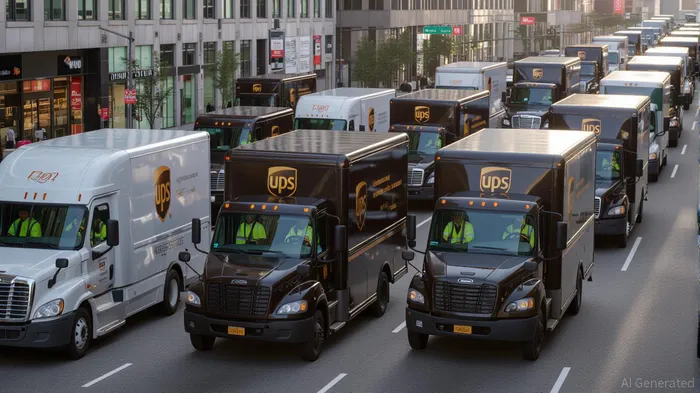
The logistics sector has long been the backbone of global trade, and few companies embody its resilience more than United Parcel ServiceUPS-- (UPS). Yet, its stock has taken a beating in 2025, dropping nearly 24% year-to-date amid trade tariff disputes and investor skepticism. But here's why the current dip—coupled with JPMorgan's revised price target—could be a rare buying opportunity in a sector that's weathered every economic storm.
The Recent Decline: When the World Slows, UPSUPS-- Takes a Hit
Let's start with the facts.
The stock peaked at $105.54 in early June but has since retreated to $100.12 by mid-July—a 5.1% drop from its recent high. JPMorgan's revised price target, cutting its estimate from $110 to $107 in April/May, added to the gloom. However, the average analyst target remains $118.96, suggesting broader confidence in UPS's long-term value.
Why the slump? Trade tariffs have crimped delivery volumes, and UPS's own cost-cutting—reducing its workforce and closing facilities—spooked investors. Management's initial 2025 guidance (projected $89B revenue and a 10.8% operating margin) now looks shaky, with free cash flow of $5.7B barely covering dividends ($5.5B annually) and buybacks.
Why This Is a Buying Opportunity: Sector Resilience + Strategic Shifts
Let's dig deeper. First, logistics companies like UPS are essential services, not discretionary luxuries. Even in downturns, packages keep moving—whether for healthcare, e-commerce, or SMEs. Second, UPS isn't standing still:
- High Dividend Yield, But With a Twist:
The 6.5% yield (via $1.64 dividends paid in May and June) is a magnet for income investors. Critics argue it's unsustainable, but a dividend cut—while painful—could free up cash for growth in high-margin areas like healthcare logistics or SME delivery services.
Strategic Cost Cuts:
Reducing labor and facilities isn't just about survival—it's about reinventing margins. UPS's $96.83B market cap gives it the scale to outlast rivals like FedExFDX-- and GXO LogisticsGXO-- during lean times.
A 52-Week Perspective:
- The stock's all-time high of $206.37 (February 2022) is distant, but even the $136.26 52-week average suggests today's price is deeply discounted.
JPMorgan's $107 target is conservative, but the $118.96 average reflects optimism about UPS's ability to rebound once trade tensions ease.
Risks? Yes—but Already Priced In
The biggest fear is that UPS can't sustain its dividend or adapt fast enough to automation and e-commerce shifts. Its 20% decline in early 2025 has likely baked in many of these concerns. However, the company's cash reserves and dividend history (a 50-year streak) are hard to ignore.
The Bottom Line: Buy the Dip, But Keep an Eye on Dividends
UPS's stock is a value play at current levels. The logistics sector's resilience, coupled with strategic moves to trim costs and pivot to growth markets, could set the stage for a rebound.
Action Items:
- Buy on dips below $100, with a target of $110–$115 over the next 6–12 months.
- Watch for dividend news: A cut could spark a short-term selloff but open the door to reinvestment in high-growth areas.
- Compare to peers: If FedEx or GXO Logistics start outperforming, UPS's valuation gap might narrow.
In a world where trade wars and tariffs loom, UPS's $100 price tag is a steal for investors willing to bet on its enduring role in global supply chains.
The logistics sector doesn't stop—so why should UPS?

Delivering real-time insights and analysis on emerging financial trends and market movements.
Latest Articles
Stay ahead of the market.
Get curated U.S. market news, insights and key dates delivered to your inbox.




Comments
No comments yet