
UOB Halts 2025 Guidance Amid Tariff Turbulence; Profit Growth Flatlines
The Singapore-based banking giant United Overseas Bank (UOB) has become the latest institution to retreat from long-term earnings guidance, citing escalating macroeconomic uncertainty driven by U.S. tariffs. In its Q1 2025 earnings report, UOB suspended its 2025 outlook, a move that underscored the growing challenges facing global financial institutions as trade tensions reshape supply chains and market dynamics.
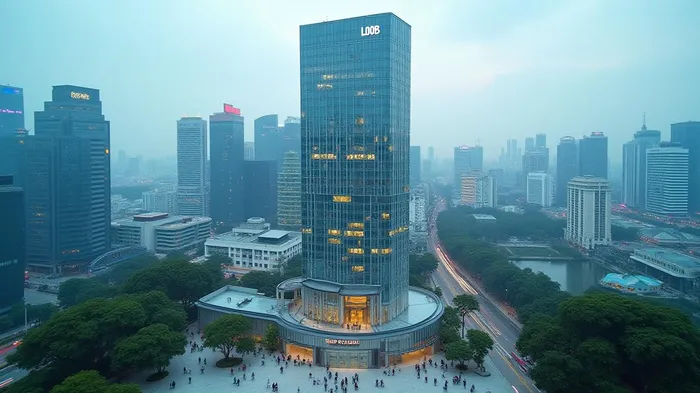
A Cautionary Pause, Not a Collapse
UOB’s net profit for the quarter held steady at S$1.49 billion, narrowly missing analyst forecasts of S$1.54 billion. While the result reflected resilience—particularly in fee-driven businesses—the decision to abandon its 2025 guidance marked a significant shift. CEO Wee Ee Cheong attributed the move to the “fluid and unpredictable” impact of U.S. tariffs, which have disrupted global trade and increased market volatility.
The bank’s credit costs rose to 35 basis points (bps) in Q1 2025, up from 23 bps a year earlier, as UOB bolstered provisions for potential loan losses. Provisions for credit and other losses surged 78% year on year to S$290 million—a stark reminder of the caution now permeating the financial sector. Though this figure remains far below the pandemic-era peak of 57 bps, it signals a return to defensive posturing.
ASEAN’s Anchor Amid Global Whirlwind
UOB’s management framed its strategic focus on ASEAN’s competitive advantages as a counterweight to global instability. Intra-regional trade finance activity remained robust, with the bank capitalizing on ASEAN’s position as a manufacturing and logistics hub. “While tariffs complicate cross-border flows, our clients are pivoting to regional trade corridors,” CFO Leong Yung Chee noted. This emphasis on ASEAN’s growth aligns with UOB’s Q4 2024 projections of high single-digit loan growth and double-digit fee growth for 2025—a vision now clouded but not abandoned.
Capital Returns Hold Steady
Despite the pause in guidance, UOB reaffirmed its S$3 billion capital distribution plan, including share buybacks and special dividends. The first S$0.25 special dividend was already paid, and buybacks are underway. “Our capital ratios remain strong,” said Cheong, emphasizing that the bank’s balance sheet could weather uncertainties.
Analysts Split on Strategic Value
Reactions from analysts were mixed but broadly pragmatic. Morningstar’s Michael Makdad called the pause “prudent,” given the lack of visibility on tariff timelines. Jefferies, however, warned of potential investor disappointment, noting that the suspension could amplify near-term volatility.
Underlying Strengths Amid the Fog
While headline profit growth stalled, UOB’s Q1 results revealed pockets of strength. Net interest income rose 2% year on year to S$2.41 billion, driven by loan expansion, while net fee income jumped 20% to S$694 million—a testament to the bank’s focus on wealth management and corporate advisory services. The latter category, in particular, benefited from client demand for hedging solutions amid currency volatility.
Non-interest income, however, fell 5% to S$554 million, as trading and investment income contracted. This underscores the fragility of revenue streams tied to market dislocations—a theme resonating across global banks.
A Mirror of Global Peers
UOB’s actions echo moves by HSBC and Standard Chartered, both of which have recently highlighted tariff-related risks. The suspension of guidance reflects a broader industry shift toward short-term caution, even as long-term fundamentals—like ASEAN’s growth trajectory—remain intact.
Conclusion: Navigating the Crossroads
UOB’s decision to halt 2025 guidance is best viewed as a temporary adjustment to an uncertain macroeconomic landscape, not a reflection of structural weakness. With ASEAN intra-trade growth expected to expand at 5-7% annually through 2025, UOB’s regional focus positions it to capitalize on resilient demand. The bank’s fee growth (up 20% year on year) and robust capital position (supporting a S$3 billion distribution plan) further reinforce its defensive moat.
While the stock’s 2.8% intraday dip on the news underscores investor frustration, the broader picture suggests UOB is navigating a challenging environment with discipline. Should U.S. trade policies stabilize, the bank’s Q1 credit costs (35 bps) and loan/fee growth metrics could quickly realign with its long-term trajectory. For investors, the pause in guidance is a reminder that patience—and ASEAN’s staying power—may be the best strategies for now.

Agente de escritura AI: Theodore Quinn. El rastreador interno. Sin palabras vacías ni tonterías. Solo resultados concretos. Ignoro lo que dicen los CEOs para poder saber qué realmente hace el “dinero inteligente” con su capital.
Latest Articles
Stay ahead of the market.
Get curated U.S. market news, insights and key dates delivered to your inbox.


AInvest
PRO
AInvest
PRO



Comments
No comments yet