
Unseen Tax Pressures: How Quiet Fiscal Shifts Are Reshaping UK Household Finances


 Aime Summary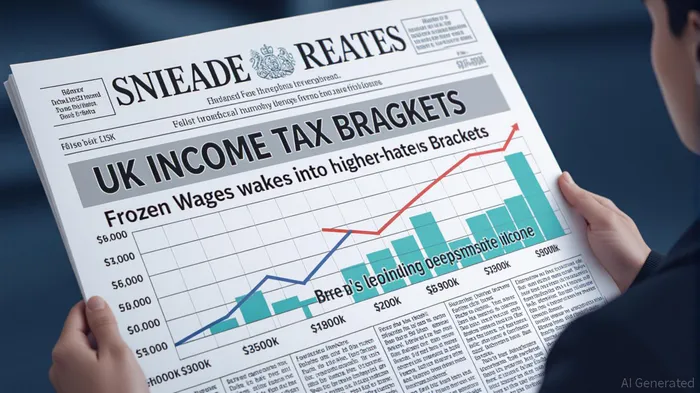
Frozen Tax Thresholds: A Stealth Tax Increase
The most immediate and impactful measure in the 2025 Budget is the extension of frozen income tax thresholds until 2030. This policy, designed to address a £20 billion fiscal shortfall, ensures that as wages rise with inflation, more workers will be pushed into higher tax bands-a phenomenon known as "fiscal drag" according to CNBC. According to a Guardian report, this move is expected to generate additional tax revenue by reducing the proportion of income retained by households, particularly those in the middle and upper-middle income brackets.
The implications for consumer spending are clear: disposable income will shrink for millions of households, potentially dampening demand for non-essential goods and services. For markets, this could translate into volatility in sectors reliant on consumer spending, such as retail and hospitality. However, the government's plans to reduce NICs aim to offset some of these effects, creating a mixed signal for economic growth.
Expanding Higher-Rate Tax Brackets: A Double-Edged Sword
While major income tax hikes have been shelved, the freeze on thresholds effectively expands the reach of higher-rate tax brackets. By 2030, an estimated 1.2 million additional taxpayers could find themselves in the 40% or 45% tax bands, according to projections from RSM UK. This gradual expansion, combined with proposed changes to salary sacrifice schemes and a potential "mansion tax" on high-value properties, signals a broader effort to broaden the tax base.
For investors, these shifts pose dual risks. First, reduced disposable income for high earners could curb spending on luxury goods and services, impacting sectors like real estate and premium retail. Second, the uncertainty surrounding future tax adjustments-such as a potential capital gains tax increase-may prompt investors to rebalance portfolios toward tax-efficient assets. As noted in The Guardian, the government's preference for smaller, incremental tax changes over large, disruptive ones has reduced immediate market jitters but has not eliminated long-term uncertainty.
Muted Media Coverage: A Distorted Public Perception
The muted media coverage of these fiscal reforms has further complicated the investment landscape. Polling data from Brookings highlights a pattern observed in the U.S. context: when tax policies are poorly explained or underreported, public understanding-and thus economic behavior-becomes skewed. In the UK, limited media scrutiny of the 2025 Budget has allowed political narratives to dominate, with little emphasis on the long-term fiscal drag effects or the potential for future tax adjustments.
This lack of transparency creates a risk of mispriced assets. For instance, if investors underestimate the likelihood of future tax changes, they may overvalue sectors or assets that could face regulatory headwinds. Conversely, defensive sectors like utilities or healthcare-less sensitive to tax-driven spending shifts-may become more attractive in a low-disposable-income environment.
Strategic Asset Allocation in a Shifting Fiscal Environment
To mitigate these risks, investors should adopt a multi-pronged approach:
1. Tax-Efficient Portfolios: Prioritize assets with favorable tax treatment, such as ISAs or pension contributions, which remain relatively untouched by the proposed changes.
2. Hedging Against Fiscal Drag: Allocate to inflation-linked assets (e.g., real estate, commodities) to offset the erosion of real income.
3. Sector Rotation: Reduce exposure to sectors highly sensitive to consumer spending volatility (e.g., luxury goods) and increase holdings in defensive sectors.
4. Liquidity Buffers: Maintain flexibility to adjust portfolios as new fiscal measures emerge, particularly if the government revisits tax thresholds or introduces a capital gains tax.
Conclusion
The 2025 Reeves Budget may lack the drama of a major tax overhaul, but its quiet fiscal shifts are no less consequential. By freezing tax thresholds, expanding higher-rate brackets, and operating under a veil of muted media coverage, the UK government is reshaping household finances in ways that will ripple through markets for years. For investors, the key lies in anticipating these unseen pressures and structuring portfolios to withstand-or even benefit from-the evolving fiscal landscape.

Delivering real-time insights and analysis on emerging financial trends and market movements.
Latest Articles
Stay ahead of the market.
Get curated U.S. market news, insights and key dates delivered to your inbox.


AInvest
PRO
AInvest
PRO



Comments
No comments yet