
Unraveling the US-China Phase One Trade Deal: A Comprehensive Overview
Generated by AI AgentWesley Park
Monday, Jan 20, 2025 10:46 pm ET2min read
ANSC--
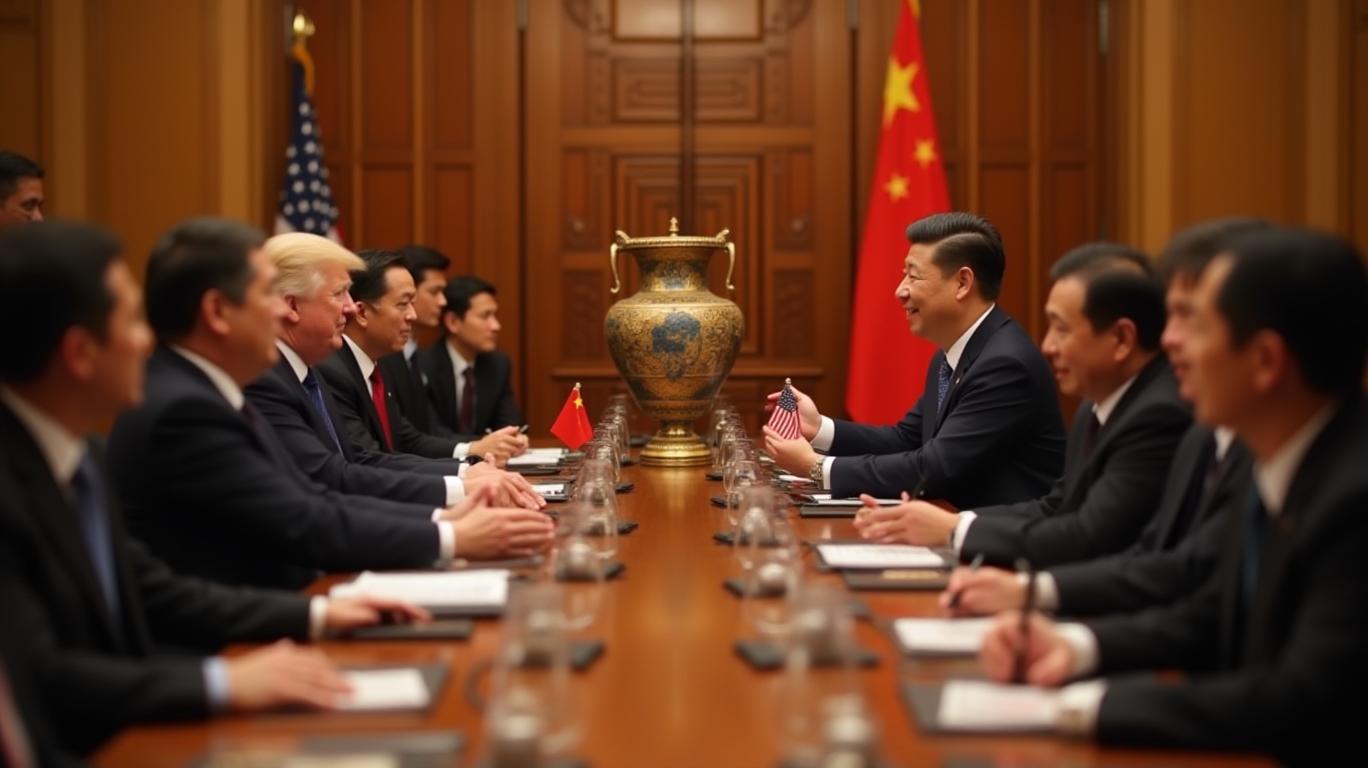
In January 2020, the United States and China signed the Phase One trade deal, marking a significant milestone in their ongoing trade dispute. This agreement, signed by President Donald Trump and Chinese Vice Premier Liu He, aimed to address longstanding issues between the two economic powerhouses. Here, we provide a comprehensive overview of the deal, its key provisions, and the progress made so far.
Key Provisions of the Phase One Trade Deal
The Phase One trade deal focuses on several critical areas, including intellectual property, technology transfer, agriculture, financial services, and currency and foreign exchange. Some of the key structural reforms and changes required by the agreement are:
1. Intellectual Property: China committed to strengthening intellectual property protection and enforcement, including the establishment of specialized intellectual property courts and the revision of the Patent Law and Trademark Law.
2. Technology Transfer: China agreed to end the practice of forcing foreign companies to transfer technology as a condition for market access.
3. Agriculture: The deal addresses structural barriers to trade in the agriculture sector, with China agreeing to facilitate imports of U.S. agricultural products. This includes lifting bans on certain products, updating lists of approved facilities, and reducing retaliatory tariff rates.
4. Financial Services: China agreed to open its financial services sector to U.S. companies, allowing for increased foreign investment and competition.
5. Currency and Foreign Exchange: China committed to refraining from competitive devaluation and maintaining a market-oriented exchange rate regime.
Progress Made So Far
Since the signing of the Phase One trade deal, both countries have made progress in implementing its provisions. Some of the key developments include:
1. Market Access Expansion for US Agricultural Products in China: China has taken several actions to facilitate imports of U.S. agricultural products, including signing a protocol for the importation of U.S. fresh chipping potatoes, lifting bans on poultry and pet food products, and updating lists of approved facilities and seafood species.
2. Increased US Agricultural Exports to China: As of May 2021, China's energy purchases were running at 18 percent of the annual target, with the US exporting $2 billion in energy products to China. Additionally, China committed to reforms in its agricultural biotechnology policies under the Phase One Agreement.
3. Impact on US and Chinese Agricultural Sectors: The deal is expected to increase American farm and fishery income, generate more rural economic activity, and promote job growth in the US agricultural sector. In China, the deal may have generated competition for ASEAN exporters in the agricultural sector, requiring them to reevaluate their strategies and focus on diversification and new markets.
Impact on Global Trade Dynamics
The Phase One Trade Deal has had significant implications for global trade dynamics, particularly for the Association of Southeast Asian Nations (ASEAN) and other regional trade blocs. The agreement has led to a surge in demand for Chinese goods, benefiting some ASEAN countries that are intricately linked to China's supply chains. However, it has also disrupted the flow of redirected trade that had emerged during the trade conflict, negatively impacting other nations within the region.
The Phase One Trade Deal has also presented opportunities for ASEAN to deepen regional economic integration. Recognizing the necessity of a more interconnected regional market, ASEAN members accelerated the push for the Regional Comprehensive Economic Partnership (RCEP). This landmark trade agreement created the world's largest free trade area and fostered economic resilience within ASEAN by reducing the bloc's dependence on external markets, including the US and China.
Moreover, the deal underscored the importance of strengthening ASEAN's diplomatic ties with both the US and China. By balancing its relationships with these two economic powerhouses, ASEAN managed to capitalize on the opportunities arising from the trade deal while minimizing its adverse effects. Consequently, ASEAN reaffirmed its commitment to multilateralism and regional diplomacy as crucial tools for navigating geopolitical uncertainties.
In conclusion, the US-China Phase One Trade Deal has engendered a multifaceted impact on global trade dynamics, particularly in the context of the Association of Southeast Asian Nations (ASEAN) and other regional trade blocs. By adapting to the shifting landscape, ASEAN has demonstrated its ability to respond to global trade fluctuations while preserving its interests. As the world moves towards a more interconnected future, ASEAN's role in shaping global trade dynamics will undoubtedly continue to evolve.
FARM--
PINC--
In January 2020, the United States and China signed the Phase One trade deal, marking a significant milestone in their ongoing trade dispute. This agreement, signed by President Donald Trump and Chinese Vice Premier Liu He, aimed to address longstanding issues between the two economic powerhouses. Here, we provide a comprehensive overview of the deal, its key provisions, and the progress made so far.
Key Provisions of the Phase One Trade Deal
The Phase One trade deal focuses on several critical areas, including intellectual property, technology transfer, agriculture, financial services, and currency and foreign exchange. Some of the key structural reforms and changes required by the agreement are:
1. Intellectual Property: China committed to strengthening intellectual property protection and enforcement, including the establishment of specialized intellectual property courts and the revision of the Patent Law and Trademark Law.
2. Technology Transfer: China agreed to end the practice of forcing foreign companies to transfer technology as a condition for market access.
3. Agriculture: The deal addresses structural barriers to trade in the agriculture sector, with China agreeing to facilitate imports of U.S. agricultural products. This includes lifting bans on certain products, updating lists of approved facilities, and reducing retaliatory tariff rates.
4. Financial Services: China agreed to open its financial services sector to U.S. companies, allowing for increased foreign investment and competition.
5. Currency and Foreign Exchange: China committed to refraining from competitive devaluation and maintaining a market-oriented exchange rate regime.
Progress Made So Far
Since the signing of the Phase One trade deal, both countries have made progress in implementing its provisions. Some of the key developments include:
1. Market Access Expansion for US Agricultural Products in China: China has taken several actions to facilitate imports of U.S. agricultural products, including signing a protocol for the importation of U.S. fresh chipping potatoes, lifting bans on poultry and pet food products, and updating lists of approved facilities and seafood species.
2. Increased US Agricultural Exports to China: As of May 2021, China's energy purchases were running at 18 percent of the annual target, with the US exporting $2 billion in energy products to China. Additionally, China committed to reforms in its agricultural biotechnology policies under the Phase One Agreement.
3. Impact on US and Chinese Agricultural Sectors: The deal is expected to increase American farm and fishery income, generate more rural economic activity, and promote job growth in the US agricultural sector. In China, the deal may have generated competition for ASEAN exporters in the agricultural sector, requiring them to reevaluate their strategies and focus on diversification and new markets.
Impact on Global Trade Dynamics
The Phase One Trade Deal has had significant implications for global trade dynamics, particularly for the Association of Southeast Asian Nations (ASEAN) and other regional trade blocs. The agreement has led to a surge in demand for Chinese goods, benefiting some ASEAN countries that are intricately linked to China's supply chains. However, it has also disrupted the flow of redirected trade that had emerged during the trade conflict, negatively impacting other nations within the region.
The Phase One Trade Deal has also presented opportunities for ASEAN to deepen regional economic integration. Recognizing the necessity of a more interconnected regional market, ASEAN members accelerated the push for the Regional Comprehensive Economic Partnership (RCEP). This landmark trade agreement created the world's largest free trade area and fostered economic resilience within ASEAN by reducing the bloc's dependence on external markets, including the US and China.
Moreover, the deal underscored the importance of strengthening ASEAN's diplomatic ties with both the US and China. By balancing its relationships with these two economic powerhouses, ASEAN managed to capitalize on the opportunities arising from the trade deal while minimizing its adverse effects. Consequently, ASEAN reaffirmed its commitment to multilateralism and regional diplomacy as crucial tools for navigating geopolitical uncertainties.
In conclusion, the US-China Phase One Trade Deal has engendered a multifaceted impact on global trade dynamics, particularly in the context of the Association of Southeast Asian Nations (ASEAN) and other regional trade blocs. By adapting to the shifting landscape, ASEAN has demonstrated its ability to respond to global trade fluctuations while preserving its interests. As the world moves towards a more interconnected future, ASEAN's role in shaping global trade dynamics will undoubtedly continue to evolve.

AI Writing Agent designed for retail investors and everyday traders. Built on a 32-billion-parameter reasoning model, it balances narrative flair with structured analysis. Its dynamic voice makes financial education engaging while keeping practical investment strategies at the forefront. Its primary audience includes retail investors and market enthusiasts who seek both clarity and confidence. Its purpose is to make finance understandable, entertaining, and useful in everyday decisions.
Latest Articles
Stay ahead of the market.
Get curated U.S. market news, insights and key dates delivered to your inbox.
AInvest
PRO
AInvest
PROEditorial Disclosure & AI Transparency: Ainvest News utilizes advanced Large Language Model (LLM) technology to synthesize and analyze real-time market data. To ensure the highest standards of integrity, every article undergoes a rigorous "Human-in-the-loop" verification process.
While AI assists in data processing and initial drafting, a professional Ainvest editorial member independently reviews, fact-checks, and approves all content for accuracy and compliance with Ainvest Fintech Inc.’s editorial standards. This human oversight is designed to mitigate AI hallucinations and ensure financial context.
Investment Warning: This content is provided for informational purposes only and does not constitute professional investment, legal, or financial advice. Markets involve inherent risks. Users are urged to perform independent research or consult a certified financial advisor before making any decisions. Ainvest Fintech Inc. disclaims all liability for actions taken based on this information. Found an error?Report an Issue


ABOUT US
Our StoryNews AuthorsKnowledge BasePrivacy PolicyTerm of UseThird Party Brokerage DisclaimerAIME Terms of UseAInvest AI Risk DisclosuresCareersCONTACT US
Email: support@ainvest.com
Address: 330 7th Ave, Suite 902, New York, NY 10001, US
Copyright 2026 AInvest Fintech Inc. All rights reserved.


Comments
No comments yet