
Unpacking Warren Buffett $1.6 Billion UnitedHealth Play and 13F Filing Shifts
 Aime Summary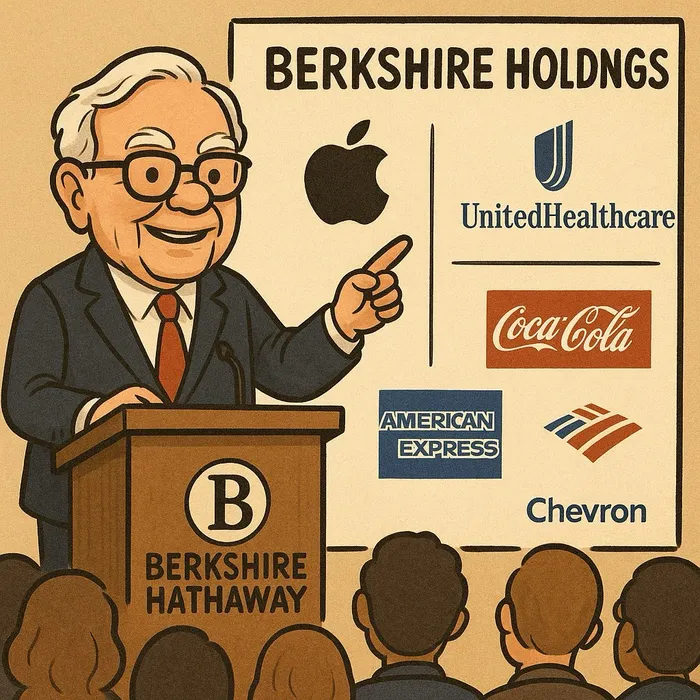
Warren Buffett's latest 13F filing landed like a thunderclap on Wall Street, unveiling a bold $1.6 billion wager on UnitedHealth GroupUNH-- amid the insurer's cascade of scandals and operational woes. As shares of the healthcare behemoth surged over 10% in after-hours trading, investors parsed the Oracle of Omaha's moves for clues to his enduring strategy: buying quality at a discount, even when the market flinches. Berkshire Hathaway's second-quarter disclosures, filed Thursday, paint a picture of calculated tweaks—trimming mega-stakes in tech and banking titans while dipping into resilient sectors like housing and steel. Yet, the headline grabber remains Buffett's stealthy accumulation in UnitedHealthUNH--, a position shrouded in secrecy since late last year to sidestep copycat buying sprees.
Betting Big on Beleaguered Healthcare
UnitedHealth Group, the nation's largest health insurer, has been battered by a perfect storm of crises, making Buffett's entry a classic contrarian play. The company reported its first earnings miss in over a decade this April, hammered by soaring medical costs that blindsided Wall Street. Shares cratered in response, compounding grief from the shocking murder of executive Brian Thompson in Manhattan last year. Leadership upheaval followed: a new CEO at the helm and plans to oust the CFO, all while navigating regulatory scrutiny and investor skepticism.
Enter Berkshire, snapping up 5 million shares valued at $1.6 billion by quarter's end. This isn't a whim—Buffett's team sought regulatory approval for confidential buildup starting in the fourth quarter of 2024, allowing them to amass the stake without inflating the price. The disclosure ignited immediate optimism, with UnitedHealth's stock leaping as much as 9.6% post-market, a testament to the Buffett halo effect. Analysts see this as a vote of confidence in the firm's long-term dominance, despite near-term headwinds. UnitedHealth's vast network and data-driven efficiencies could rebound sharply in a stabilizing economy, aligning with Buffett's preference for moat-protected giants trading below intrinsic value.
This move echoes Berkshire's history of pouncing on distressed assets. Recall the 2008 financial crisis, when Buffett injected capital into Goldman SachsGS-- at fire-sale terms. Here, UnitedHealth's troubles may have created a similar opening, with the stock down sharply from its peaks. Yet, risks abound: persistent cost inflation and potential antitrust battles could prolong the pain. Buffett, ever the long-termist, appears unfazed, betting the company's scale will prevail.
Trimming the Titans: Apple, Banks, and Exits
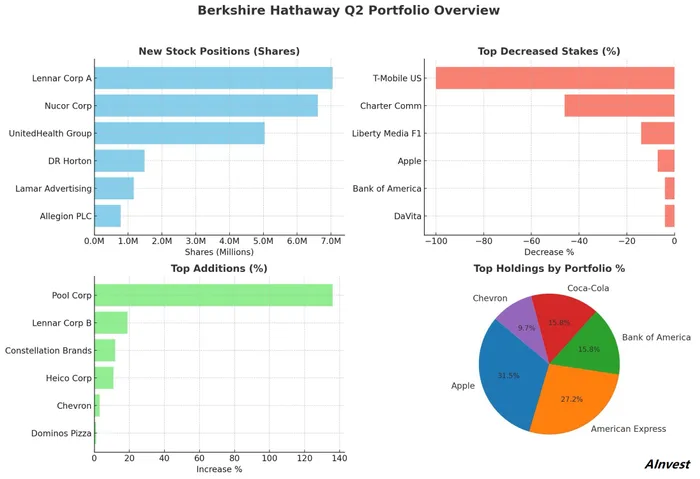
Berkshire's portfolio adjustments reveal a subtle rebalancing, shedding weight in overvalued darlings while preserving core convictions. The conglomerate continued paring its mammoth AppleAAPL-- stake, offloading 20 million shares and reducing its 300 million-share position by about 7%. Even so, Apple remains Berkshire's crown jewel at $57.4 billion, comprising 22% of the equity portfolio—a far cry from its peak dominance but still a ringing endorsement of Tim Cook's innovation engine. The sales, which began last year, have fueled speculation of tax considerations or diversification, though Buffett has stayed mum.
Banking exposure took another hit, with 26 million Bank of AmericaBAC-- shares sold, trimming the 630 million-share holding by 4% to an 8% stake worth $28.6 billion (11% of the portfolio). This extends a pattern from the first quarter, when Berkshire exited CitigroupC-- entirely and cut Capital OneCOF--. No rationale surfaced, but rising interest rates and regulatory pressures on lenders may have prompted caution. Still, Bank of America endures as a top holding, underscoring Buffett's faith in its consumer franchise.
Exits and reductions elsewhere cleared the deck. Berkshire dumped its entire $1 billion T-MobileTMUS-- position—the quarter's sole complete divestment—and halved its Charter CommunicationsCHTR-- stake by 46%, perhaps signaling wariness toward telecom volatility. Smaller cuts included a 14% trim in Liberty Media's Formula 1 arm and 4% reductions in DaVitaDVA-- and Bank of America. On the flip side, untouched stalwarts like Coca-ColaKO-- ($28.3 billion, 11%) and American ExpressAXP-- ($48.4 billion, 19%) affirmAFRM-- Buffett's buy-and-hold ethos for timeless brands.
Not all was subtraction: Berkshire bolstered ChevronCVX-- by 3 million shares (up 3%), pushing the energy giant to $17.5 billion and 6.8% of the portfolio. This nods to Buffett's bullishness on oil amid geopolitical tensions, even as green energy transitions loom.
Building in Builders: Home and Industrial Plays
A fresh theme emerges in Berkshire's forays into housing and materials, betting on America's enduring demand for homes and infrastructure. The firm initiated modest new positions in homebuilder D.R. HortonDHI--, alongside hikes in competitor Lennar—boosting its stake from 150,000 to 7 million shares, a 19% jump for Lennar's Class B. This doubles down on the sector's resilience, despite high mortgage rates crimping affordability. Homebuilders have thrived on supply shortages, and Buffett's moves suggest he anticipates a softening Fed sparking a rebound.
Industrials got a nod too, with new stakes in security firm Allegion, outdoor advertiser Lamar AdvertisingLAMR--, and steel producer Nucor—all seeing after-hours pops on the news. Nucor's addition, previously under wraps, complements a 11% increase in aerospace parts maker HeicoHEI--. These picks evokeEVOK-- Buffett's affinity for cyclical but essential businesses, poised to benefit from economic normalization.
Food and beverage holdings saw incremental love, with 12% added to Constellation BrandsSTZ--, 1% to Domino's Pizza, and a whopping 136% surge in Pool Corporation—a recent entrant signaling confidence in consumer leisure spending. Meanwhile, the troublesome Kraft HeinzKHC-- stake held steady, despite a $3.8 billion impairment charge earlier this year, hinting at patience for turnaround.
Portfolio Pulse and Broader Implications
At quarter's close, Berkshire's equity book—excluding its vast operating businesses—tilts heavily toward proven winners: Apple at the summit, followed by American Express, Bank of America, Coca-Cola, and Chevron. This concentration, about 70% in the top five, reflects Buffett's conviction investing, shunning diversification for depth in exceptional companies.
Yet, the filing arrives amid transitions at Berkshire itself. Shares have slid 11% since Buffett's May announcement of stepping down as CEO by year's end, though they're up 6% year-to-date. Successor Greg Abel inherits a fortress balance sheet, with cash piles enabling opportunistic strikes like UnitedHealth.
For markets, these disclosures rippleXRP-- far. Buffett's imprimatur can move stocks, as seen in UnitedHealth's spike and gains for new picks. But they also spotlight themes: healthcare's undervalued potential, housing's structural tailwinds, and caution on frothy tech and banks. In an era of AI hype and rate uncertainty, Buffett's playbook—patient, value-driven—remains a beacon. As one analyst quipped, "When Warren buys the dip, the dip often buys back." Whether UnitedHealth proves another masterstroke or a rare misstep, this 13F reinforces why Berkshire's moves command such rapt attention.

Stay ahead of the market.
Get curated U.S. market news, insights and key dates delivered to your inbox.
AInvest
PRO
AInvest
PRO



Comments
No comments yet