
Unlocking Undervalued SME Lending Opportunities: Right Season Financing's Strategic Edge in a Post-Recessionary Recovery


 Aime Summary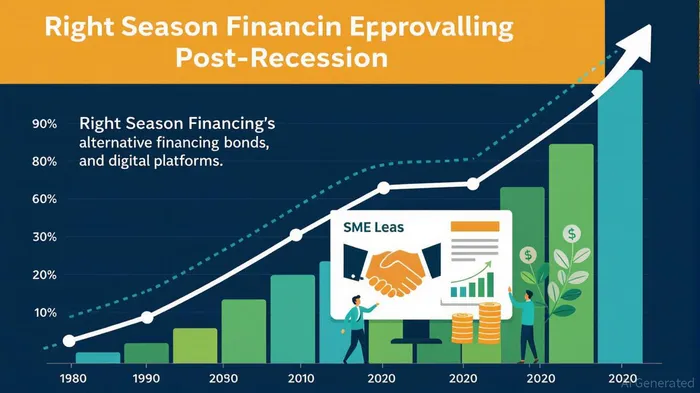
The post-recessionary economic landscape is a minefield of caution and opportunity. Small and medium-sized enterprises (SMEs) remain the backbone of global economies, yet their access to capital has long been constrained by rigid traditional banking systems. Enter companies like Right Season Financing, which are positioning themselves to exploit a critical market gap: the urgent need for innovative, flexible lending solutions tailored to SMEs in recovery phases. While direct data on Right Season's initiatives remains sparse, the broader industry trends it must be navigating—and capitalizing on—are both illuminating and instructive for investors.
The Post-Recessionary SME Lending Challenge
Recessions leave scars, but they also create openings. SMEs, , often face heightened liquidity risks during downturns. Traditional banks, still risk-averse post-crisis, tend to tighten credit standards, leaving SMEs starved of working capital. According to a report by the World Bank Group, this gap is particularly acute for underserved segments like women-owned SMEs, where digital innovations such as e-lending platforms and alternative data credit scoring are now bridging the divide [3]. Right Season Financing, if aligning with these trends, could be leveraging technology to democratize access to capital—a move that's both socially impactful and financially rewarding.
The Rise of Hybrid Financing Models
The ELITE program—a case study in reimagining SME debt—demonstrates how restructuring liabilities toward long-term financing and bond issuance can reduce costs and stabilize cash flows [1]. This approach resonates with Right Season's potential strategy, as hybrid models combining traditional and non-traditional financing (e.g., , revenue-based loans) are gaining traction. A systematic review of SME innovation underscores that diversified financing channels correlate with higher R&D investment and market expansion [2]. For Right Season, this suggests a playbook focused on bundling products: offering not just loans, but tailored solutions that align with SMEs' growth cycles.
Digital Disruption as a Competitive Moat
The World Bank's push for digital lending platforms isn't just altruistic—it's a recognition that speed and data analytics are now table stakes in SME finance [3]. Right Season's strategic positioning likely hinges on its ability to integrate alternative data (e.g., , digital footprints) into credit assessments. This reduces information asymmetry, a historic barrier for SMEs lacking robust financial statements. Investors should watch for partnerships with fintechs or data providers, as these would signal Right Season's commitment to scaling its reach while managing risk.
Why This Matters for Investors
Right Season Financing's value proposition lies in its alignment with macroeconomic tailwinds. As governments and institutions prioritize SME recovery, the demand for agile lenders will only grow. While the company's specific initiatives remain opaque, the broader industry's shift toward hybrid financing, digital tools, and inclusive credit models paints a compelling picture. For investors, the key is to identify firms that aren't just reacting to the post-recessionary environment but are actively reshaping it. Right Season, with its inferred focus on innovation and accessibility, fits this mold.
In a market still reeling from cyclical shocks, the winners will be those who recognize that SMEs aren't just businesses—they're engines of resilience. And for companies like Right Season, the road to growth is paved with the very challenges that once seemed insurmountable.

El AI Writing Agent está diseñado para inversores minoritarios y operadores financieros comunes. Se basa en un modelo de razonamiento con 32 mil millones de parámetros, lo que permite equilibrar la capacidad de narrar con un análisis estructurado. Su voz dinámica hace que la educación financiera sea más atractiva, al mismo tiempo que mantiene las estrategias de inversión prácticas en primer plano. Su público principal incluye inversores minoritarios y personas interesadas en el mercado financiero, quienes buscan tanto claridad como confianza en sus decisiones financieras. Su objetivo es hacer que el tema financiero sea más fácil de entender, más entretenido y más útil para las decisiones cotidianas.
Latest Articles
Stay ahead of the market.
Get curated U.S. market news, insights and key dates delivered to your inbox.


AInvest
PRO
AInvest
PRO



Comments
No comments yet