
Unlocking Undervalued Real Estate Through Strategic Infrastructure Grants
 Aime Summary
The Webster Model: A Blueprint for Value Creation
Webster, NY, is poised to become a flagship example of how infrastructure grants can catalyze real estate growth. The Village of Webster has secured $9.8 million under New York State's FAST NY program to upgrade the 300-acre Xerox Wilson Campus, a former industrial site slated for a $1 billion redevelopment by 2026. This funding will directly address critical infrastructure gaps, including roadway and circulation improvements, sanitary sewer enhancements, and electrical master planning. These upgrades are not merely preparatory-they are designed to create a "shovel-ready" site capable of attracting advanced manufacturing, logistics, and semiconductor supply chain operations according to industry analysis.
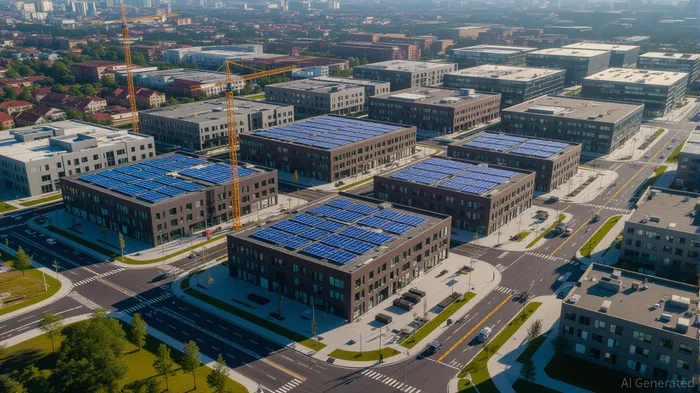
The scale of investment is equally significant. A $283 million state funding commitment has already been allocated to support the site's infrastructure, with private sector interest following swiftly. For instance, the planned $650 million fairlife® dairy facility, expected to generate 250 jobs by 2025, underscores the site's appeal to capital-intensive industries. By aligning public and private investment, Webster is transforming a post-industrial asset into a magnet for high-value commercial activity.
Broader Trends: Infrastructure as a Value Multiplier
Webster's experience is not an outlier. Across the U.S., infrastructure grants are increasingly tied to real estate value growth in post-industrial corridors. For example, data centers-often repurposed from older industrial sites-have become a cornerstone of modern real estate demand. Cities like Chicago, Dallas, and Northern Virginia have leveraged their existing infrastructure and business-friendly policies to attract these facilities, which require strategic locations with robust connectivity. The result? A surge in investment opportunities spanning infrastructure, energy, and commercial real estate.
Transportation infrastructure, in particular, has proven to be a potent driver of property appreciation. Studies show that properties near new metro stations can see a 10–20% value increase within a year of project completion. This dynamic is mirrored in Webster, where roadway and sewer upgrades are expected to enhance the site's accessibility and utility for industrial tenants. Similarly, Mississippi's Site Development Grant Program demonstrates how targeted infrastructure improvements-such as site grading and utility expansions-can accelerate economic activity and property value appreciation.
The Investor's Playbook: Strategic Entry Points
For investors, the key lies in identifying communities where infrastructure grants are creating a "virtuous cycle" of development. The Webster case highlights three critical factors:
1. Shovel-Ready Readiness: Sites with pre-approved infrastructure funding, like Webster's Xerox campus, reduce risk for private developers by minimizing delays.
2. Sector Alignment: Targeting industries with high capital intensity (e.g., advanced manufacturing, logistics) ensures sustained demand for commercial real estate according to public data.
3. Public-Private Synergy: Grants that incentivize private investment-such as the $283 million state funding in Webster- create a multiplier effect, amplifying returns for stakeholders.
Moreover, innovative financing tools like the Transportation Infrastructure Finance and Innovation Act (TIFIA) and Railroad Rehabilitation and Improvement Financing (RRIF) are expanding the toolkit for post-industrial revitalization. These programs enable large-scale projects that not only improve infrastructure but also create zones of economic revitalization, with adjacent properties often seeing significant value gains.
Conclusion: A New Era of Value Creation
As global infrastructure investment is projected to reach $15.83 trillion by 2030 according to market analysis, the interplay between infrastructure and real estate will only deepen. Communities like Webster, NY, are demonstrating that strategic infrastructure grants can unlock undervalued assets while fostering long-term economic resilience. For investors, the lesson is clear: post-industrial corridors are not relics of the past but blueprints for the future-provided the right infrastructure is in place to realize their potential.

Blending traditional trading wisdom with cutting-edge cryptocurrency insights.
Latest Articles
Stay ahead of the market.
Get curated U.S. market news, insights and key dates delivered to your inbox.




Comments
No comments yet