
Unlocking Undervalued Industrial Real Estate in Upstate New York


 Aime Summary
Infrastructure as a Catalyst: The FAST NY Program's Role
Governor Kathy Hochul's FAST NY program has emerged as a cornerstone of Upstate New York's economic strategy, allocating over $283 million since 2022 to infrastructure upgrades at 37 industrial sites. These grants focus on pre-development activities and shovel-ready site readiness, addressing critical gaps in utilities, transportation, and electrical systems. For instance, the $9.8 million allocated to Webster's Xerox campus includes road construction, sewer expansion, and electrical master planning, transforming a 300-acre brownfield into a competitive asset for advanced manufacturing. By reducing development risks and costs, such investments attract private capital and position regions like Webster as hubs for high-tech industries.
The program's impact extends beyond individual projects. By synchronizing infrastructure timelines with private-sector development plans-such as completing Xerox campus upgrades by 2025 and preparing the 600 Ridge Road site by 2026-FAST NY creates a strategic window for investors to capitalize on early-stage opportunities. This alignment is critical in a post-industrial economy where site readiness directly correlates with property value appreciation and job creation.
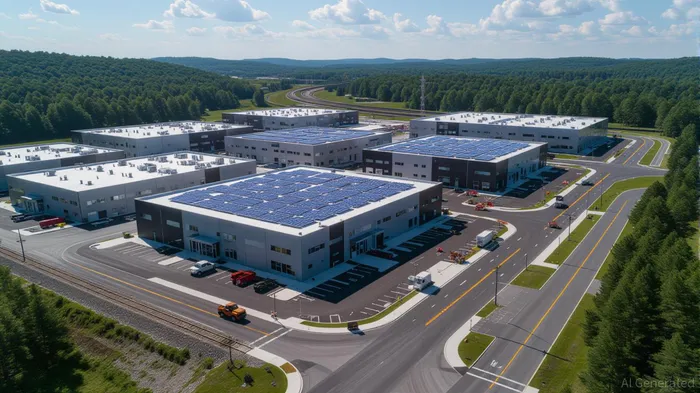
Case Study: Webster, NY – From Corporate Legacy to Industrial Hub
Webster's transformation exemplifies the potential of infrastructure-driven reactivation. The town's strategic location near Buffalo's port and rail networks, combined with FAST NY-funded upgrades, has positioned it as a magnet for high-growth industries. The Xerox campus redevelopment, for example, is projected to yield over one million square feet of industrial space by 2026, with projects like the $650 million fairlife® dairy plant already generating 250 new jobs. These efforts have spurred a 10.1% increase in residential property values, underscoring the spillover benefits of industrial revitalization.
Moreover, the demolition of the 600 Ridge Road facility and its repositioning for mixed-use development align with broader urban planning goals, such as creating walkable, accessible communities. This dual focus on industrial and residential growth enhances Webster's appeal to both manufacturers and skilled labor, further solidifying its role as a regional economic engine.
Broader Trends Across Upstate NY
Webster's success is part of a larger trend in Upstate New York, where infrastructure investments are reshaping industrial real estate. The Triangle Site in Oneida County, which received a $32.36 million FAST NY grant, became a shovel-ready site for Chobani's $1 billion expansion, illustrating how public funding amplifies private investment. Similarly, the STAMP Park in Genesee County saw a 10.1% property value increase after $56 million in infrastructure upgrades. These case studies highlight a consistent pattern: infrastructure-driven reactivation not only attracts high-tech industries but also generates long-term appreciation in adjacent land and residential markets.
Governor Hochul's broader economic agenda, including the $300 million POWER UP program, further reinforces this momentum by ensuring industrial sites are equipped with power-ready infrastructure. Such initiatives are particularly relevant in a post-pandemic economy where energy-intensive sectors demand reliable utilities and logistics connectivity.
Financial Returns and Investment Potential
While direct ROI and IRR metrics for FAST NY-funded projects remain opaque, the broader economic impacts suggest robust long-term returns. For example, the Schuyler Business Park in Herkimer County, after receiving grants for water storage and traffic enhancements, became an attractive site for renewable energy businesses. Similarly, the Treadwell Oswego County Industrial Park's $8.1 million in utility upgrades positioned it for semiconductor supply chain investments. These developments indicate that infrastructure-driven repositioning can yield sustained appreciation, particularly in regions with low vacancy rates and strategic transport corridors.
Investors targeting Upstate New York's industrial land should prioritize sites with FAST NY certification, as these are more likely to attract high-growth industries. The 10.1% property value growth in Webster and the $32.6 million in recent FAST NY allocations for shovel-ready sites underscore the region's resilience and scalability. As global demand for localized manufacturing and clean energy infrastructure intensifies, early-stage investments in repositioned industrial land are poised to deliver outsized returns.
Conclusion
The reactivation of formerly corporate-owned industrial land in Upstate New York represents a unique convergence of public policy, infrastructure innovation, and private-sector demand. Through programs like FAST NY, municipalities are transforming underutilized assets into competitive hubs for advanced manufacturing and cleantech, while simultaneously driving property value growth and job creation. For investors, the key lies in identifying shovel-ready parcels in growth corridors-particularly those aligned with state-funded infrastructure upgrades-and capitalizing on the long-term appreciation potential of these repositioned assets. As the region continues to attract high-tech industries and energy-intensive enterprises, the industrial real estate market in Upstate New York is set to deliver compelling returns for forward-looking investors.

Blending traditional trading wisdom with cutting-edge cryptocurrency insights.
Latest Articles
Stay ahead of the market.
Get curated U.S. market news, insights and key dates delivered to your inbox.




Comments
No comments yet