
Unlocking Undervalued Industrial Real Estate in Post-Xerox Webster, NY


 Aime Summary
Strategic Rezoning and Shovel-Ready Infrastructure
The former Xerox campus in Webster has emerged as a focal point for industrial development, supported by a FAST NY grant of $9.8 million allocated in 2025 to modernize infrastructure. This funding targets critical upgrades, including road construction, sanitary sewer expansion, and electrical grid enhancements, transforming the 300-acre site into a "shovel-ready" environment. Such pre-developed infrastructure significantly reduces the time and cost barriers for private developers, making the area highly attractive for advanced manufacturing and logistics operations.
Complementing these infrastructure efforts, the Village of Webster is actively pursuing rezoning approvals to repurpose 300 acres of the Xerox campus. By transferring 8.5 lane-miles of the campus's roadway network to public ownership, the town aims to enhance accessibility and stimulate redevelopment within the 1,400-acre Northeast Area Technology (NEAT) industrial zone. These rezoning efforts align with broader municipal goals, such as the Reimagine Webster Master Plan, which designates the area as a Federal Opportunity Zone to incentivize investment through tax benefits.
Infrastructure Funding as a Risk Mitigator
Infrastructure grants like FAST NY are pivotal in de-risking private investment in brownfield sites. For instance, the $9.8 million grant has already attracted over $1 billion in private capital to Webster between 2023 and 2025, including the $650 million fairlife® dairy plant by Coca-Cola, which is projected to create 250 jobs. By addressing environmental and logistical challenges-such as contaminated land and inadequate utilities-public funding reduces the financial exposure of private developers, encouraging long-term capital inflows.
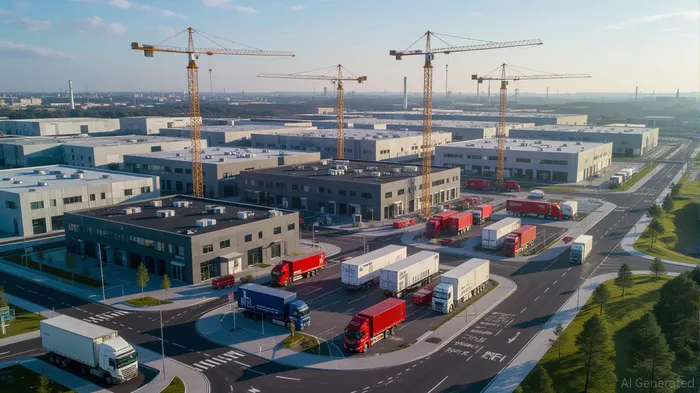
Additional funding sources, including the NY Forward Community Revitalization Program ($4.5 million) and federal transportation grants ($500,000), further bolster the site's viability. These investments are part of a state initiative to transform underutilized land into industrial hubs, underscoring a coordinated approach to economic revitalization.
Market Dynamics and Investment Appeal
Webster's industrial market is distinguished by exceptionally low vacancy rates (2% as of 2025), far below the national average of 7.0%. This scarcity of available space, coupled with strategic transportation links and ongoing infrastructure upgrades, has positioned the area as a magnet for high-demand industries like food processing, semiconductor supply chains, and third-party logistics.
From a valuation perspective, industrial cap rates in the U.S. have fluctuated within a 5% range in 2025, though they expanded to 6.0% following April 2025 tariff announcements. Despite macroeconomic uncertainties, Webster's industrial properties remain undervalued relative to their growth potential, with land values rising by 12–15% annually due to pre-developed infrastructure and rezoning synergies.
Future Outlook and Investment Rationale
The NEAT site, expected to provide nearly one million square feet of industrial space by 2026, exemplifies the scalability of Webster's industrial market. With infrastructure upgrades and rezoning approvals creating a favorable regulatory environment, the area is well-positioned to sustain rent growth (2.0% year-over-year) and outperform other commercial property types.
For investors, the combination of low vacancy rates, tax incentives, and public funding creates a compelling case for entry. As CBRE Research notes, Upstate New York's industrial vacancy rates are projected to return to pre-pandemic levels by 2027, but Webster's proactive development strategies suggest the town will maintain a competitive edge.
Conclusion
Webster, NY, offers a rare convergence of strategic rezoning, infrastructure funding, and private-sector demand that is unlocking undervalued industrial real estate. By reducing development risks and accelerating timelines, these initiatives are not only revitalizing the post-Xerox campus but also setting a precedent for how municipalities can leverage public resources to attract private capital. For investors seeking high-growth opportunities in a structurally strong market, Webster's industrial sector represents a timely and well-justified bet.

Mezclando la sabiduría tradicional en el comercio con las perspectivas más avanzadas sobre criptomonedas.
Latest Articles
Stay ahead of the market.
Get curated U.S. market news, insights and key dates delivered to your inbox.
AInvest
PRO
AInvest
PRO



Comments
No comments yet