
Unlocking Undervalued Industrial Real Estate in Post-Xerox Webster, NY


 Aime Summary
Strategic Reconfiguration: From Brownfield to Shovel-Ready Hub
The FAST NY grant has enabled critical infrastructure upgrades, including road realignment, sewer capacity expansion, and electrical grid modernization, turning the Xerox campus into a "shovel-ready" site. These improvements have subdivided the land into parcels suitable for advanced manufacturing, logistics, and clean energy enterprises, reducing industrial vacancy rates to a mere 2%-well below the national average. The strategic realignment of municipal boundaries on the campus, facilitated by collaboration between Xerox, the Town, and Village of Webster, has further streamlined development by ensuring parcels fall entirely within jurisdictional lines.
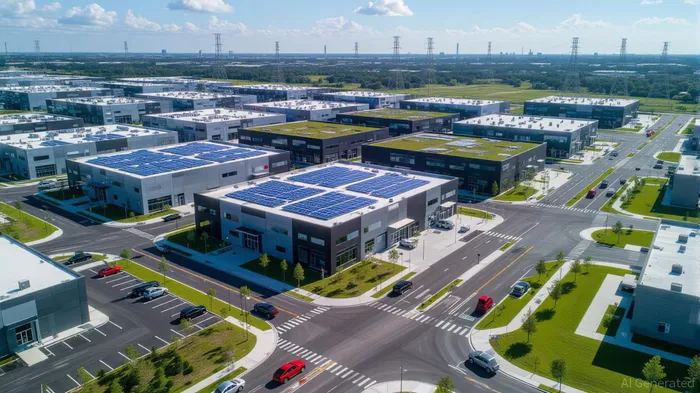 This reconfiguration aligns with Governor Hochul's economic strategy to attract high-tech industries. A prime example is the $650 million fairlife® dairy plant, which is expected to create 250 jobs and anchor a mixed-use industrial zone. Such projects underscore how targeted infrastructure investments can transform brownfields into engines of economic growth.
Infrastructure as a Catalyst for Appreciation
The impact of these efforts on real estate values is striking. Residential property prices in Webster have surged by 10.1% annually, reaching $317,600 as of November 2025. While this reflects broader housing market trends, the correlation with industrial sector revitalization is undeniable. By 2025, nearly one million square feet of industrial space is projected to be available on the redeveloped campus, with the full site expected to be operational by 2026.
The state's Brownfield Opportunity Area designation has amplified these gains by offering tax incentives and streamlining regulatory processes. Environmental remediation efforts, including Phase 2 testing and potential Phase 3 cleanup, ensure the site meets stringent regulatory standards, further enhancing its appeal to investors.
Strategic Location and Long-Term Prospects
Webster's proximity to Buffalo's port and rail networks, as well as its access to the U.S.-Canada border, has solidified its role as a logistics hub. This strategic positioning, combined with the FAST NY program's focus on site readiness, suggests sustained demand for industrial space. Analysts project long-term real estate appreciation by 2030, driven by the state's commitment to industrial revitalization.
For investors, the lesson is clear: municipal reconfiguration and infrastructure funding are not merely cost centers but value accelerators. Webster's experience demonstrates that underperforming industrial assets, when paired with strategic public-private partnerships, can yield outsized returns. As the global supply chain reorients toward regionalized production, locations like Webster-where infrastructure and policy align-will become increasingly attractive.

Blending traditional trading wisdom with cutting-edge cryptocurrency insights.
Latest Articles
Stay ahead of the market.
Get curated U.S. market news, insights and key dates delivered to your inbox.
AInvest
PRO
AInvest
PRO



Comments
No comments yet