
Unlocking Undervalued Industrial Real Estate in Post-Deindustrialized Markets: A Strategic Analysis of Webster, NY's Redevelopment Model


 Aime Summary
Strategic Redevelopment: From Brownfield to Shovel-Ready Hub
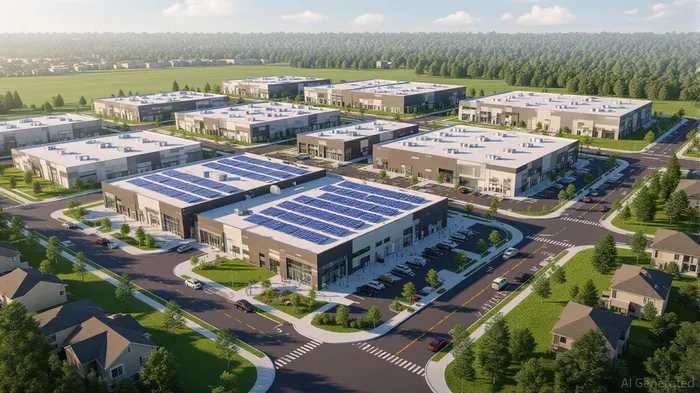
Webster's 300-acre Xerox campus, once a symbol of industrial decline, is being repositioned as a high-tech industrial hub. The FAST NY Grant, administered by Empire State Development, has funded critical infrastructure upgrades, including road redesign, expanded sanitary sewer systems, and electrical planning. These improvements have transformed the site into a "shovel-ready" asset, reducing development timelines and costs for prospective tenants. By 2026, the site is projected to yield nearly one million square feet of industrial space, attracting advanced manufacturing and logistics firms.
Environmental remediation efforts, such as EPA-compliant pump-and-treat groundwater systems, have further enhanced the site's viability. This approach aligns with broader trends in real estate investment, where secondary markets like Webster outperform primary cities due to affordability, skilled labor pools, and strategic infrastructure according to recent analysis. For investors, the Xerox campus exemplifies how brownfield redevelopment can convert liabilities into assets, creating value through both industrial and residential synergies.
Public-Private Partnerships: Mitigating Risk, Amplifying Returns
The success of Webster's redevelopment hinges on robust PPPs. The FAST NY Grant's $9.8 million allocation has been matched by private-sector commitments, such as the $650 million fairlife® dairy facility, which will create 250 jobs and serve as an anchor tenant. By sharing costs and risks, these partnerships enable municipalities to deliver infrastructure upgrades that private developers alone might deem unfeasible.
Governor Kathy Hochul's vision of a "sustainable economic ecosystem" underscores the importance of such collaborations according to local officials. For instance, the Community Access Project-a $283 million state initiative-has funded pedestrian accessibility improvements and multimodal trails, enhancing connectivity between the Xerox campus and Webster's recreation center. These amenities not only attract high-tech firms but also elevate residential property values, which have risen by 10.1% annually in Webster. Investors benefit from a dual-income stream: industrial rents and appreciation in adjacent residential and commercial assets.
Economic Impact: A Model for Scalable Growth
Webster's revitalization has already yielded measurable outcomes. Industrial vacancy rates in the area have plummeted to 2%, while the fairlife project alone is projected to inject $650 million into the local economy. The town's focus on advanced manufacturing-particularly in semiconductors and renewable energy-positions it to capitalize on sector-specific demand.
Moreover, the project's emphasis on "shovel-ready" sites addresses a critical pain point in industrial real estate: construction delays. By pre-developing infrastructure, Webster minimizes the time between tenant commitment and operational readiness, a factor increasingly valued in a market prioritizing speed and efficiency. This model reduces construction risks for investors, making it an attractive proposition in an era of supply chain volatility.
Conclusion: A Blueprint for Future Investments
Webster's experience demonstrates that post-deindustrialized markets can be reactivated through targeted infrastructure investments and PPPs. The Xerox campus reconfiguration, supported by the FAST NY Grant, illustrates how brownfield sites can be repurposed into high-value industrial hubs. For investors, the key takeaway is clear: strategic redevelopment in secondary markets offers a unique opportunity to align with long-term economic trends while mitigating risks through public-sector collaboration.
As demand for advanced manufacturing and logistics space continues to rise, Webster's model provides a replicable framework. By prioritizing shovel-ready sites, environmental remediation, and mixed-use connectivity, investors can unlock undervalued assets and position themselves at the forefront of the next industrial revolution.

Blending traditional trading wisdom with cutting-edge cryptocurrency insights.
Latest Articles
Stay ahead of the market.
Get curated U.S. market news, insights and key dates delivered to your inbox.
AInvest
PRO
AInvest
PRO



Comments
No comments yet