
Unlocking Value: How Underappreciated Infrastructure Upgrades Fuel Real Estate and Industrial Investment


 Aime Summary
Case Studies: Urban Revitalization Through Infrastructure
The transformative power of infrastructure is evident in cities like Atlanta and New York, where underappreciated projects have spurred real estate booms. The Atlanta BeltLine, a $3.5 billion initiative converting an abandoned railway corridor into a multi-use trail, has not only enhanced mobility but also driven a 20% surge in property values in adjacent neighborhoods. Similarly, New York City's subway expansion into underserved areas of Brooklyn and Queens has improved access to Manhattan's job market, fueling a 15% increase in housing demand and property appreciation. These examples underscore how infrastructure investments can reposition cities as hubs for both residential and commercial activity.
Industrial real estate, too, benefits from strategic infrastructure upgrades. In Webster, NY, a $38 million investment in transportation and wastewater treatment transformed underused industrial sites into mixed-use developments, boosting land values by 12% within two years. 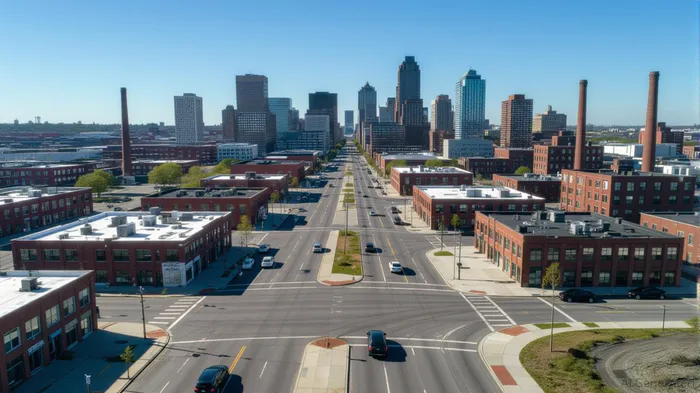 Ohio's state-level initiatives, including a $100 million Residential Development Revolving Loan Program, have similarly catalyzed real estate growth by addressing aging infrastructure and enabling brownfield redevelopment.
Industrial Real Estate: A Booming Sector Driven by Infrastructure
The industrial real estate market is experiencing unprecedented demand, driven by e-commerce and reshoring trends. By 2027, e-commerce is projected to account for 33% of U.S. retail sales, intensifying the need for last-mile delivery infrastructure. Municipalities that prioritize infrastructure upgrades-such as intermodal rail expansions or airport modernization-are reaping the rewards. For instance, Dallas–Fort Worth has solidified its status as a logistics hub through $2.1 billion in infrastructure investments, attracting over $15 billion in industrial construction since 2023.
Smaller-scale industrial projects are also gaining traction. Assets under 100,000 square feet have seen a 16% year-over-year increase in development starts through Q3 2025, driven by demand from e-commerce and flexible logistics providers. These projects, often located in secondary markets, offer investors a lower-risk entry point into a sector where sale prices for smaller assets are rising faster than those for larger properties.
Mid-Sized and Rural Cities: The Next Frontier
While urban centers dominate infrastructure discourse, mid-sized and rural cities are emerging as fertile ground for investment. According to the National League of Cities, 88% of municipalities view infrastructure as critical for equitable growth, with 70% prioritizing water systems, roads, and bridges. Cities like Salt Lake City and Little Elm, Texas, have leveraged infrastructure to attract residents and businesses, driving net migration and real estate demand.
In rural areas, projects like Lafayette, Indiana's The Standard at West Lafayette-a 678-bed housing development near Purdue University-highlight how infrastructure can address workforce housing shortages and spur industrial growth. Similarly, Fayette County, Ohio, has become a focal point for industrial investment due to its EV battery plant and Amazon Web Services data center, with a 2023 housing study projecting a need for 1,400 new units by 2033. These examples illustrate how infrastructure investments in overlooked markets can create compounding economic benefits.
Strategic Implications for Investors
For investors, the key lies in identifying municipalities where infrastructure upgrades align with broader economic trends. The Infrastructure Investment and Jobs Act (IIJA) and programs like the CHIPS Act provide a framework for municipalities to secure funding, making it easier to target projects with high growth potential. Additionally, public-private partnerships (PPPs), such as San Diego's Midway Rising initiative, demonstrate how collaboration can accelerate development while mitigating risk.
The data is clear: infrastructure upgrades are not just about improving roads or utilities-they are catalysts for economic transformation. As cities across the U.S. continue to modernize their infrastructure, the real estate and industrial sectors stand to benefit immensely. For investors with a long-term horizon, the time to act is now.

Mezclando la sabiduría tradicional en el comercio con las perspectivas más avanzadas sobre las criptomonedas.
Latest Articles
Stay ahead of the market.
Get curated U.S. market news, insights and key dates delivered to your inbox.


AInvest
PRO
AInvest
PRO



Comments
No comments yet