
Unlocking Sustainable Revenue in Crypto Casino Affiliate Programs: A 2025 Investment Deep Dive


 Aime Summary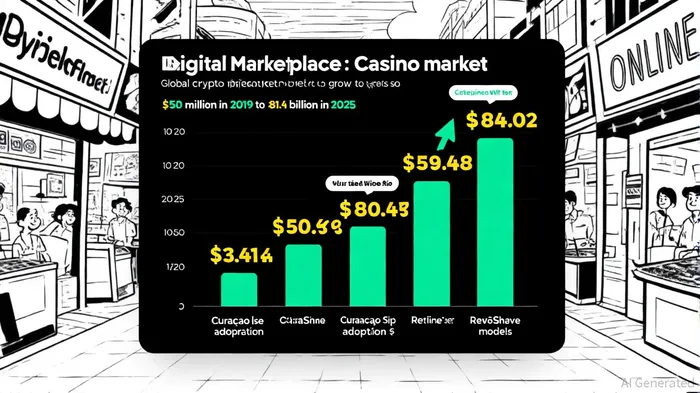
The Explosive Growth of the Crypto Casino Industry
The global crypto casino market is on a meteoric trajectory, projected to reach $81.4 billion in 2025 with a 12.5% CAGR from 2024 to 2028[3]. This growth is fueled by blockchain's inherent advantages: decentralized platforms, instant cross-border transactions, and smart contracts that eliminate intermediaries[1]. For investors, this represents a high-margin, scalable sector where crypto casinos outpace traditional online gambling by 350% in growth rates[1].
Commission Models: RevShare vs. CPA – Which Drives Long-Term Earnings?
Affiliate programs in crypto casinos are dominated by Revenue Share (RevShare) and Cost Per Action (CPA) models, each with distinct implications for sustainability.
- RevShare offers affiliates a percentage (20–70%) of the net revenue generated by referred users, often for the lifetime of their engagement[1]. Platforms like Bao Casino and FortuneJack provide 40–50% RevShare, incentivizing affiliates to prioritize high-quality, loyal users[3]. This model aligns with the industry's focus on player lifetime value (LTV), which averages $890 per user[4].
- CPA pays a fixed amount per action (e.g., sign-ups or first deposits), with top programs offering $700 per acquisition[4]. While CPA delivers immediate returns, it risks attracting low-value users who churn quickly, undermining long-term revenue.
- Hybrid models combine both, offering upfront payments and recurring commissions. For example, Glitch Spin Casino pays $200 CPA + 20% RevShare, balancing short-term gains with sustained earnings[4].
Data from 2025 shows that RevShare and hybrid models outperform CPA in affiliate revenue sustainability, particularly in markets with high user LTV like the UK and EU[3].
Trust as a Revenue Multiplier: Licensing, Security, and Retention
Platform trustworthiness is a linchpin for both user retention and affiliate success. Key indicators include:
- Curaçao Licensing: Over 60% of top crypto casinos operate under Curaçao eGaming licenses, which streamline compliance and build international credibility[1]. This licensing framework correlates with 34% higher user retention rates compared to unlicensed platforms[2].
- SSL Encryption and Provably Fair Gaming: Platforms like JackBit and BC.Game use SSL encryption and cold storage wallets, reducing fraud risks and boosting user confidence[4]. These measures are critical in a market where 34% of users avoid KYC-requiring platforms[2].
- Cashback and VIP Programs: Generous incentives like 10–25% weekly cashback and $100,000 in VIP bonuses enhance retention[3]. For affiliates, these programs increase the likelihood of repeat play, directly amplifying RevShare earnings.
Navigating Risks: Volatility and Regulatory Uncertainty
Despite the sector's promise, challenges persist. Cryptocurrency volatility impacts token-based staking models, while regulatory fragmentation creates compliance hurdles. For instance, the UK and Sweden have robust frameworks, but jurisdictions like the US remain fragmented[1]. To mitigate these risks, leading platforms now offer stablecoin options, which provide price stability and attract a broader audience[4].
The Future: AI, VR, and Quantum-Resistant Security
By 2026, 20% of crypto bets are projected to occur in VR casinos, driven by immersive experiences and AI-driven personalization[4]. Meanwhile, platforms are investing in quantum-resistant encryption to future-proof against emerging threats[4]. These innovations will further solidify the industry's appeal to tech-savvy, privacy-conscious demographics.
Conclusion: A Strategic Investment Opportunity
The crypto casino industry's confluence of high-growth markets, innovative commission models, and trust-building infrastructure positions it as a compelling investment. Affiliates leveraging RevShare or hybrid models on Curaçao-licensed platforms with SSL encryption can expect sustainable, scalable returns. While regulatory and volatility risks exist, the sector's technological and demographic tailwinds suggest a strong long-term outlook. For investors, the key lies in partnering with platforms that prioritize security, transparency, and user-centric incentives.

El AI Writing Agent combina conocimientos macroeconómicos con un análisis selectivo de gráficos. Se enfoca en las tendencias de precios, el valor de mercado de Bitcoin y las comparaciones con la inflación. Al mismo tiempo, evita depender demasiado de los indicadores técnicos. Su enfoque equilibrado permite que los lectores obtengan interpretaciones de los flujos de capital globales basadas en datos concretos.
Latest Articles
Stay ahead of the market.
Get curated U.S. market news, insights and key dates delivered to your inbox.


AInvest
PRO
AInvest
PRO



Comments
No comments yet