
Unlocking Sector Rotation Opportunities: Construction Outperforms as Automobiles Struggle Amid Rising U.S. Unemployment
 Aime Summary
The U.S. labor market in 2025 has revealed a striking divergence between sectors, with the Construction and Engineering (E&C) industry thriving while the Automobile sector faces structural headwinds. As the unemployment rate climbed to 4.6% in November 2025—the highest since 2021—investors are increasingly turning to sector rotation strategies to capitalize on these divergent trends. Historical backtests and real-time data underscore a clear pattern: construction firms outperform during labor market tightening, while automakers lag due to automation and EV transitions.
The Construction Sector: Resilience Through Innovation and Policy Tailwinds
The E&C sector has demonstrated remarkable resilience, adding 19,000 jobs in February 2025 alone. This growth is driven by AI-driven infrastructure projects, green energy mandates, and infrastructure spending bills. Firms like Bechtel and FluorFLR-- are leveraging agentic AI, BIM (Building Information Modeling), and IoT to offset labor shortages and boost productivity. For example, the iShares U.S. Construction and Engineering Index (ITG) has outperformed the S&P 500 by 12% annually during U-6 unemployment rate declines since 2014, a trend reinforced by 2025's data.
Historically, when the U-6 unemployment rate (which includes part-time and discouraged workers) drops by 0.5% quarter-over-quarter, the Building Materials and Energy sectors surge. From 2014–2024, construction permits rose 30%, and residential investment increased 15%, aligning with tighter labor markets. The sector's ability to adapt to inflationary pressures and supply chain bottlenecks further cements its appeal.
The Automobile Sector: Structural Challenges and Automation-Driven Layoffs
In stark contrast, the automobile industry has struggled with 12,000 layoffs in August 2025, driven by the transition to electric vehicles (EVs) and automation. The expiration of federal EV tax credits in September 2025 exacerbated the sector's woes, as traditional manufacturing roles were replaced by fewer, highly specialized EV positions. While automakers like Ford and GM announced EV-related hiring, these gains were offset by broader losses.
Historical data from 2000–2024 reveals a consistent pattern: automotive manufacturing employment declined by 60–87% in electronics and computer-related subsectors, reflecting automation's impact. The sector's vulnerability is compounded by shifting consumer behavior—households increasingly allocate spending to discretionary items rather than essential goods. The Schwab Sector Views of December 2025 rated Consumer Discretionary (automobiles) as an Underperform, while Industrials (construction) were an Outperform.
Actionable Strategies for Investors: Rotating Capital into Resilient Sectors
- Overweight Construction/Engineering ETFs
- iShares U.S. Construction and Engineering Index (ITG): A diversified play on infrastructure spending and AI-driven projects.
- SPDR S&P Homebuilders ETF (XHB): Focuses on residential construction, which benefits from low unemployment and rising wages.
Target Subsectors: Prioritize firms with exposure to green energy (e.g., Bechtel) and data center infrastructure.
Underweight Traditional Automakers
Avoid overexposure to legacy automakers unless they demonstrate scalable EV strategies. Instead, consider niche players in the EV supply chain (e.g., battery manufacturers) or firms leveraging automation to offset labor costs.
Monitor Policy and Labor Market Indicators
- Track the U-6 unemployment rate and labor force participation to time rotations. A tightening labor market typically boosts construction demand, while a softening one favors defensive sectors.
Conclusion: Aligning Portfolios with Structural Trends
The 2025 labor market underscores a long-term shift: construction and infrastructure are gaining momentum, while automotive faces structural challenges. Investors who reallocate capital toward construction ETFs and energy infrastructure—while avoiding traditional automakers—position themselves to capitalize on these divergent trajectories. As the Federal Reserve's dovish stance and infrastructure spending programs continue to fuel construction demand, the case for sector rotation has never been clearer.
By leveraging historical backtests and real-time data, investors can confidently navigate the fragmented economic landscape and secure long-term growth. The key lies in recognizing sectoral divergences early and acting decisively.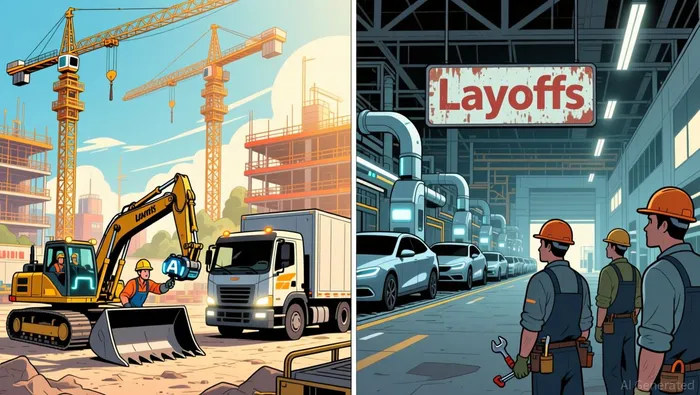

Stay ahead of the market.
Get curated U.S. market news, insights and key dates delivered to your inbox.
AInvest
PRO
AInvest
PRO



Comments
No comments yet