
Unlocking Sector Rotation: Navigating Retail Weakness and Financial Resilience in 2025
 Aime Summary
The U.S. retail sector in August 2025 painted a mixed picture. , the underlying trends reveal a fractured consumer landscape. Discretionary spending surged in categories like EVs and home furnishings, but electronics, building materials, and miscellaneous retailers contracted. For investors, this divergence signals a critical inflection point: how to rotate capital between sectors while mitigating risks in a slowing economy.
The Retail Divide: Winners and Losers
The 0.7% core retail sales gain masked stark divergences. . Meanwhile, , reflecting overstocked inventories and a housing market in transition. This bifurcation mirrors broader economic dynamics: high-income households, flush with savings and tax incentives, are splurging on big-ticket items, while middle- and lower-income consumers tighten belts amid rising costs.
For the , this creates a paradox. While top-line growth in EVs and home goods is robust, the sector's Schwab rating of Marketperform underscores caution. , leaving it vulnerable to earnings volatility. , .
. , many of which face liquidity risks. Investors must distinguish between durable demand (EVs, home automation) and cyclical fads (hobby goods, sporting equipment).
Financial Services: A Tale of Two Forces
The Financial Services sector offers a counterpoint. Rated Marketperform by Schwab, , which has boosted net interest margins for banks. , but risks loom.
. If tariffs trigger a slowdown, consumer borrowing and business credit lines could contract, pressuring banks' loan portfolios. However, the sector's positive Value and Quality ratings suggest resilience. Insurers and mortgage lenders, in particular, may outperform as rate hikes stabilize long-term yields.
Strategic Rotation: Balancing Growth and Safety
For investors, the key lies in asymmetric positioning:
1. Consumer Discretionary: Overweight sub-sectors with structural tailwinds (EVs, home goods) while hedging against cyclical risks. Avoid overexposure to electronics and building materials, where inventory corrections are likely.
2. Financial Services: Favor banks with strong capital ratios and diversified loan books. Consider defensive plays in insurance and asset management, which are less sensitive to rate volatility.
Risk mitigation requires diversification across income levels. High-income discretionary spending (EVs, luxury goods) is resilient, but middle-income sectors (retail, services) remain fragile. .
The Bottom Line
August's retail data confirms a shifting economic landscape. While consumer discretionary sectors like EVs and home furnishings offer growth, their concentration risks and uneven demand patterns demand scrutiny. Financial services, though exposed to macroeconomic headwinds, provide a stabilizing counterweight in a high-rate environment.
Investors should adopt a : allocate 40% to high-conviction discretionary plays (e.g., EV manufacturers, home automation firms) and 60% to interest-rate beneficiaries (e.g., regional banks, insurers). This approach captures growth while insulating against a potential retail sector correction.

In a world of divergent consumer behavior and policy-driven market shifts, agility—not speculation—will define successful portfolios. The August retail report is not a warning but a roadmap: rotate with precision, hedge with discipline, and let data—not fear—guide your next move.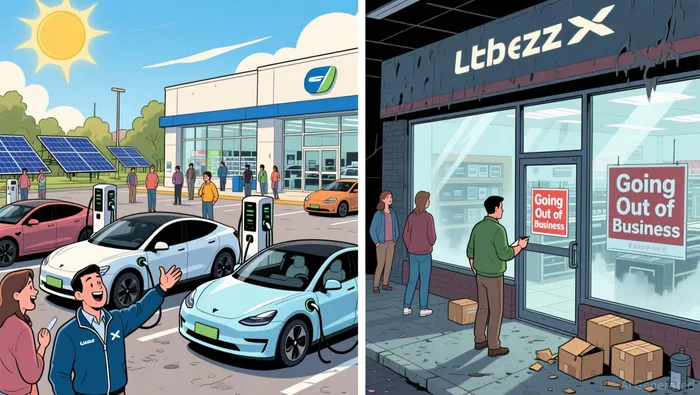

Stay ahead of the market.
Get curated U.S. market news, insights and key dates delivered to your inbox.






Comments
No comments yet