
Unlocking Real-Estate Value in Post-Industrial Campuses: The Xerox Webster Case Study
 Aime Summary
Strategic Land Repurposing: From Brownfield to Shovel-Ready Hub
The Xerox campus's redevelopment hinges on infrastructure modernization to unlock its potential. A $9.8 million FAST NY grant has funded critical upgrades, including road realignment, sewer system expansion, and electrical grid enhancements, transforming the site into a "shovel-ready" platform for advanced manufacturing and logistics according to the project report. These improvements address historical barriers to development, such as outdated utilities and environmental remediation challenges, reducing industrial vacancy rates to 2% by 2025-a stark contrast to the national average of 7.3%.
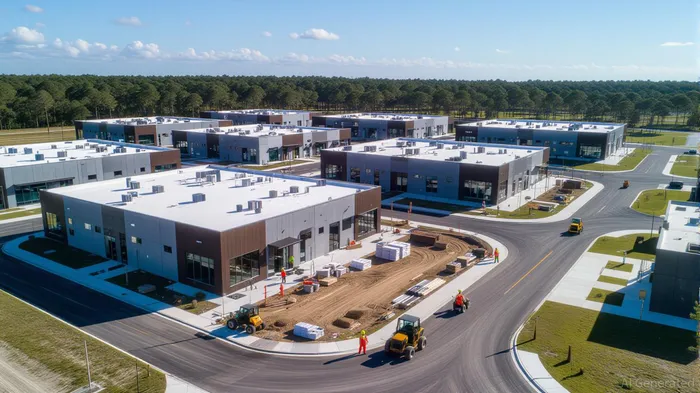 The strategic rezoning of the campus under the Brownfield Opportunity Area (BOA) initiative further amplifies its appeal. By aligning with regional logistics corridors and Buffalo's transportation networks, Webster has attracted institutional investors and private developers, positioning the site as a nexus for industries like semiconductor production, renewable energy, and food processing. The fairlife® dairy plant, a $650 million private-sector project, exemplifies this success, with 250 jobs expected by 2026.
Public-Private Partnerships: A Model for Collaborative Growth
The Xerox campus's revitalization underscores the power of public-private partnerships (PPPs) in driving large-scale redevelopment. The Village of Webster secured $1.838 million in funding for roadway rehabilitation, supplemented by $500,000 in federal grants, to create a robust infrastructure backbone. Xerox itself has contributed $1.8 million to road improvements on the campus, reflecting a shared commitment to the site's future.
Governor Kathy Hochul's vision for a "sustainable economic ecosystem" has further galvanized these efforts. State programs like the NY Forward initiative and the $283 million FAST NY program provide financial incentives and streamlined approvals, reducing risks for private developers. For instance, the Village of Webster's $4.5 million NY Forward grant was strategically allocated in collaboration with community stakeholders, including the School District and Business Improvement District, ensuring alignment with long-term economic goals.
Economic Impact: Jobs, Property Values, and Regional Resilience
The economic ripple effects of the Xerox campus redevelopment are already evident. Industrial demand has surged, with vacancy rates plummeting to 2% and residential property values rising by 10.1% annually. The fairlife® dairy plant alone is projected to generate 250 high-value jobs, while Xerox's operational consolidation has freed up over one million square feet of industrial space for new tenants.
These gains are part of a broader $400 million state initiative to stimulate industrial growth in Upstate New York. By attracting industries such as semiconductors and advanced manufacturing, the region is diversifying its economic base and insulating itself from sector-specific downturns. The success of the Xerox campus also highlights the role of infrastructure in accelerating development timelines, with upgraded utilities and transportation networks reducing the time and cost for new projects.
Future Outlook: Scaling the Webster Model
The Xerox Webster case study offers a replicable blueprint for post-industrial campuses nationwide. By prioritizing infrastructure readiness, fostering PPPs, and aligning with regional economic trends, communities can transform brownfields into engines of growth. However, sustained success will require continued policy support, as outlined in recent analyses of PPP strategies in New York.
As the 2025 timeline approaches, the Xerox campus stands as a testament to what is possible when public and private entities collaborate with a shared vision. For investors, the lessons from Webster are clear: strategic land repurposing, when paired with infrastructure investment, can unlock not just real estate value but also lasting economic resilience.

Blending traditional trading wisdom with cutting-edge cryptocurrency insights.
Latest Articles
Stay ahead of the market.
Get curated U.S. market news, insights and key dates delivered to your inbox.


AInvest
PRO
AInvest
PRO



Comments
No comments yet