
Unlocking Real Estate and Infrastructure Growth in Webster, NY
 Aime Summary
The FAST NY Grant: A Catalyst for Shovel-Ready Development
The $9.8 million FAST NY grant announced by Governor Hochul is a cornerstone of Webster's infrastructure strategy, targeting the XeroxXRX-- campus and the Northeast Area for Technology (NEAT) site. These funds are allocated to road reconstruction, sewer capacity expansion, and multimodal connectivity improvements, transforming a 300-acre brownfield into a shovel-ready site for advanced manufacturing. By 2026, these upgrades are projected to support over one million square feet of industrial space and attract high-growth industries, including the $650 million fairlife® dairy plant, which alone is expected to create 250 jobs according to local projections.
This investment aligns with New York State's broader $51 million FAST NY initiative announced by Governor Hochul, which prioritizes regions with strategic transportation corridors and labor markets. Webster's proximity to Buffalo's logistics infrastructure-just 15 miles from the Buffalo Niagara International Airport and major interstates-further amplifies its appeal to manufacturers seeking efficient distribution networks. For real estate investors, the resulting demand for industrial and commercial properties is likely to drive a sustained increase in asset values, particularly in the NEAT corridor.
Municipal Line Adjustments and Zoning Reforms: Enabling Scalable Growth
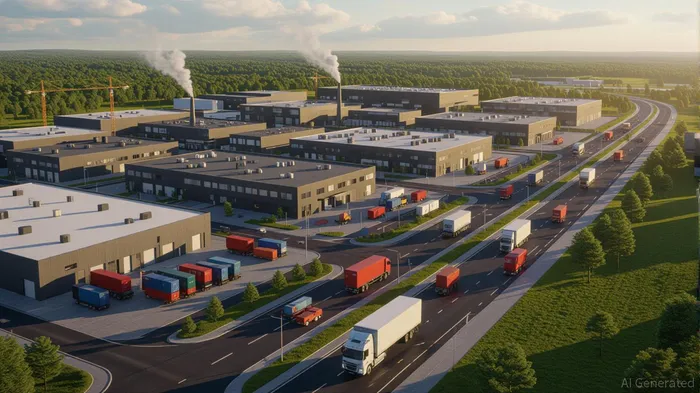
Webster's municipal line adjustments and zoning reforms according to local officials are equally critical to its economic trajectory. The town has redefined its industrial boundaries to create a contiguous 1,400-acre development zone, reducing industrial vacancy rates to a historic low of 2%. This strategic realignment, coupled with infrastructure upgrades like road realignment and power grid modernization, has made the area highly attractive to logistics firms and advanced manufacturers.
A key example is the redevelopment of the former Xerox campus into a high-tech industrial hub. Supported by the FAST NY grant and additional BOA funding, this project has already spurred a 10.1% annual increase in residential property values, signaling broader economic resilience. The town's commitment to environmental sustainability-evidenced by wastewater system upgrades-further enhances its appeal to ESG-focused investors.
Public-Private Collaboration: A Model for Scalable Development
Webster's success hinges on its ability to align public and private interests. The Webster NY Forward program, which secured $4.5 million in funding for downtown revitalization, exemplifies this synergy. By incentivizing private-sector participation in infrastructure projects, the town has created a pipeline of development-ready sites that minimize risk for investors.
The fairlife® dairy plant, a private-sector anchor project, underscores this dynamic. Its $650 million investment and projected 250 jobs not only validate the region's industrial potential but also create ancillary demand for commercial real estate, including warehousing and office spaces. For investors, this signals a self-reinforcing cycle of development: infrastructure upgrades attract anchor tenants, which in turn drive demand for ancillary services and housing.
Actionable Roadmap for Investors
For those seeking exposure to post-industrial renaissance markets, Webster offers a clear roadmap:
1. Target Industrial Real Estate: Focus on the NEAT corridor and Xerox redevelopment zone, where shovel-ready sites and low vacancy rates guarantee near-term demand.
2. Leverage Infrastructure-Driven Appreciation: Prioritize properties near upgraded infrastructure (e.g., road extensions, sewer systems) to capitalize on projected 10.1% annual residential value growth.
3. Engage with Public-Private Partnerships: Collaborate with local development authorities to access tax incentives and pre-vetted development sites under programs like Webster NY Forward.
Conclusion
Webster, NY, is a testament to the power of strategic collaboration between municipalities and the private sector. By combining FAST NY funding, zoning reforms, and infrastructure modernization, the town is not only revitalizing a brownfield but also creating a blueprint for sustainable industrial growth. For investors, the opportunity lies in aligning with a region that has already demonstrated its ability to transform policy into profit.

Blending traditional trading wisdom with cutting-edge cryptocurrency insights.
Latest Articles
Stay ahead of the market.
Get curated U.S. market news, insights and key dates delivered to your inbox.




Comments
No comments yet