
Unlocking Real Estate and Infrastructure Gains in Webster, NY: Strategic Opportunities Post-Xerox Campus Redevelopment


 Aime Summary
Infrastructure as a Catalyst for Value Creation
The cornerstone of Webster's success lies in its infrastructure-led approach. A $9.8 million FAST NY grant, coupled with state and federal funding, has funded critical upgrades to roads, sewer systems, and electrical infrastructure, making the Xerox campus shovel-ready for development. These improvements have not only reduced construction risks but also aligned the site with the standards of industrial hubs in the Sun Belt and Midwest. For instance, the expansion of multi-modal transportation infrastructure-supported by a $500,000 federal grant from Senator Chuck Schumer and Congressman Joseph Morelle-has enhanced connectivity to Buffalo's port and rail systems, a key draw for companies seeking to minimize supply chain costs.
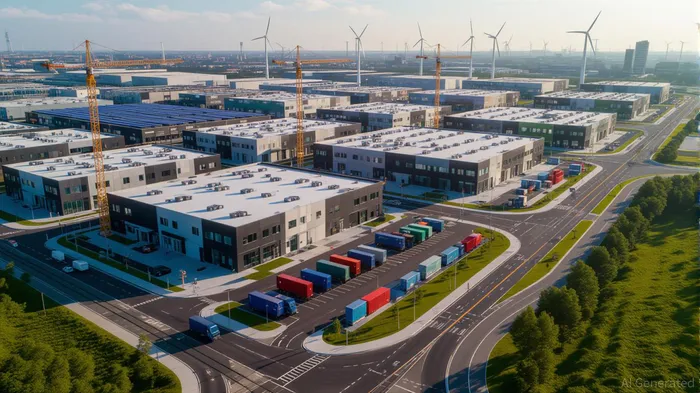 The impact on property values is already evident. Residential real estate prices in Webster rose by 10.1% year-over-year as of November 2025, with commercial property values projected to follow a similar trajectory. This growth is underpinned by the campus's strategic location near the U.S.-Canada border and its integration into Governor Kathy Hochul's vision for a "sustainable economic ecosystem" focused on advanced manufacturing and renewable energy.
Case Studies: Private Investment in a Public-Ready Ecosystem
The fairlife® dairy facility, a $650 million project set to open in late 2025, exemplifies how public infrastructure investments catalyze private-sector action. By securing a 100-acre site on the Xerox campus, the company is poised to create 250 high-paying jobs, leveraging the site's pre-developed infrastructure and proximity to major transport routes. Similarly, the Webster Economic Development Alliance (WEDA) has prioritized attracting semiconductor and food processing industries, sectors that require robust energy and logistics networks-both of which the Xerox campus now provides.
The campus's appeal is further amplified by its inclusion in the state's Brownfield Opportunity Area (BOA) program, which transforms underutilized properties into productive assets. This initiative, combined with the low 2% industrial vacancy rate in Western New York (compared to the national average of 7.3%), has created a scarcity-driven market where demand for industrial land outpaces supply.
Public-Private Partnership Structures: Mitigating Risk, Maximizing Returns
The Xerox campus redevelopment underscores the power of collaborative funding models. State-backed programs like the FAST NY grant and the $283 million Upstate industrial expansion initiative share the financial burden with private developers, reducing regulatory and construction risks. For example, the Community Access Project-a $2.041 million initiative funded by state and federal sources-has improved pedestrian and vehicular connectivity around the campus, enhancing its attractiveness for mixed-use development.
This partnership model aligns with broader economic strategies. Governor Hochul's emphasis on infrastructure as a catalyst for growth has positioned Webster as a test case for how public investment can unlock private-sector potential. By 2025, the region's industrial real estate sector has already seen strong demand, with companies citing affordable energy, a skilled labor force, and tax incentives as key decision drivers.
Conclusion: A Model for Future-Proof Investment
Webster's Xerox campus redevelopment offers a blueprint for how targeted infrastructure spending and public-private collaboration can drive long-term value appreciation. For investors, the combination of pre-developed sites, strategic location, and state-backed incentives presents a low-risk, high-reward opportunity. As national industrial leasing recovers by mid-2026, Webster's shovel-ready assets are poised to outperform, making it a critical node in Upstate New York's evolving economic landscape.
The lessons from Webster extend beyond real estate. They highlight how municipalities can leverage partnerships to transform brownfields into engines of growth, ensuring that communities remain competitive in an era of shifting supply chains and industrial innovation.

Blending traditional trading wisdom with cutting-edge cryptocurrency insights.
Latest Articles
Stay ahead of the market.
Get curated U.S. market news, insights and key dates delivered to your inbox.
AInvest
PRO
AInvest
PRO



Comments
No comments yet