
Unlocking the Potential of Student-Focused Relocation Services: A Strategic Investment in Post-Pandemic College Towns
 Aime Summary
The post-pandemic relocation industry is undergoing a quiet revolution, driven by shifting student housing dynamics, academic patterns, and the rise of flexible living arrangements. For investors, this transformation has created a fertile ground for underserved niche markets, particularly in student-focused moving and storage services. Companies like E-Z Move and My Tucson Movers are capitalizing on these trends by offering tailored solutions for a transient, budget-conscious demographic. This article examines how these businesses are adapting to semester-based mobility and evaluates the long-term investment potential of this evolving sector.
Market Dynamics: From Campus to Off-Campus, and Beyond
The pandemic accelerated a shift in student housing preferences, with universities converting on-campus dorms to single-occupancy units to comply with health guidelines. This led to a 20%–50% de-densification of campus housing, creating a surge in demand for off-campus private housing. Properties within a half-mile of campuses achieved pre-leasing rates of 61.9% in 2025, compared to 53.2% for those farther away. Simultaneously, the rise of hybrid and online education has redefined student relocation patterns. Students now require short-term, flexible housing solutions, such as modular units, co-living spaces, and temporary storage for semester breaks or study abroad periods.
Demographic shifts further amplify this demand. First-generation and low-income students—historically the largest users of student relocation services—have seen a 20% decline in college enrollment since 2020. However, academically focused students from higher-income backgrounds are increasing in number, prioritizing STEM majors and urban-based housing. This creates a dual opportunity: serving a shrinking but resource-rich demographic while addressing the logistical needs of a growing international student population.
Adapting to the New Normal: Strategies of E-Z Move and My Tucson Movers
E-Z Move Tucson, a family-owned moving company, has pioneered student-centric services since 2025. Their offerings include:
- Student discounts for small-scale moves, aligned with academic calendars.
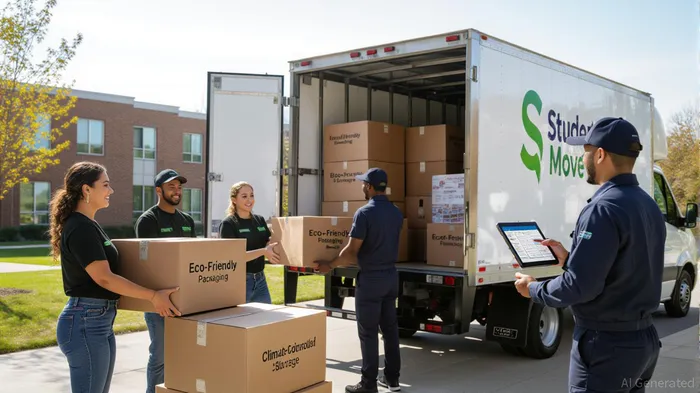
- Eco-friendly packing and storage solutions for semester breaks or study abroad periods.
- Flexible scheduling and unpacking assistance to reduce student stress.
- Climate-controlled storage partnerships with local facilities, ensuring belongings remain secure during transitions.
Similarly, My Tucson Movers has introduced Student Starter Packs, which bundle weekend availability, fast moves, and packing help. Their limited-time discounts (e.g., $25 off moves over $500) and free virtual consultations cater to budget-conscious students. The company is also exploring university partnerships to synchronize move-in/move-out timelines with academic schedules, a critical differentiator in a market where timing is everything.
Both companies are leveraging digital tools to streamline operations. Virtual consultations, IoT-enabled inventory tracking, and AI-driven scheduling platforms enhance efficiency while reducing in-person interactions—a post-pandemic consumer preference.
Financial Metrics and Growth Projections
The U.S. moving industry, though saturated, remains recession-resistant due to consistent demand. The market size reached $21.3 billion in 2023, with a projected 3.68% CAGR through 2027. The self-storage segment, a key component of student-focused services, boasts 41% average profit margins and 92% occupancy rates in 2022. For example, Tucson-based Zooz Moving reported that 60% of its revenue now comes from student relocations, with the average student requiring 3–5 moves during their academic career.
Startups like Student Storage Box and SMARTBOX Solutions are further disrupting the market with AI-driven inventory management and IoT-enabled tracking, improving customer retention and operational efficiency. These innovations are particularly attractive in a sector where tech-savvy students expect seamless digital integration.
Long-Term Investment Potential
The student relocation market is poised for sustained growth due to three key factors:
1. Recurring Revenue Models: Students typically move 3–5 times during their academic careers, creating predictable income streams for companies offering semester-based services.
2. Tech-Driven Scalability: AI and IoT integration reduce operational costs while enhancing customer experience, a critical edge in a competitive market.
3. Global Expansion: International student enrollment in U.S. universities is projected to grow by 15% by 2030, with China and India as top sources. Companies with multilingual support and cross-border logistics capabilities can tap into this demand.
However, investors must remain cautious. The moving industry is highly fragmented, with 16,851 U.S. companies competing for market share. Success hinges on differentiation—whether through eco-friendly practices, university partnerships, or AI-driven logistics.
Strategic Recommendations for Investors
- Prioritize Companies with Recurring Revenue Streams: Firms like E-Z Move and My Tucson Movers that offer semester-based storage and move packages are better positioned for long-term stability.
- Invest in Technology-Enabled Players: Startups leveraging AI and IoT for inventory management and scheduling are likely to outperform traditional competitors.
- Diversify Geographically: Target companies operating in college towns with rising enrollment rates, such as Tucson (University of Arizona) and Austin (University of Texas), where demand is concentrated.
- Monitor Demographic Shifts: As STEM majors and international students grow in number, services tailored to their needs (e.g., temporary housing in urban hubs) will become increasingly valuable.
Conclusion
The student relocation industry, once a niche segment of the broader moving market, is now a strategic investment opportunity. Companies like E-Z Move and My Tucson Movers exemplify how adapting to post-pandemic trends—flexibility, sustainability, and digital integration—can unlock long-term value. For investors, the key lies in identifying businesses that not only address immediate student needs but also position themselves to scale with demographic and technological shifts. As universities continue to prioritize off-campus housing and hybrid learning models, the demand for student-focused moving and storage services will only intensify, making this an underserved market ripe for growth.

Delivering real-time insights and analysis on emerging financial trends and market movements.
Latest Articles
Stay ahead of the market.
Get curated U.S. market news, insights and key dates delivered to your inbox.


AInvest
PRO
AInvest
PRO



Comments
No comments yet