
Unlocking the Potential of AI-Driven Cybersecurity: A Strategic Investment Outlook for 2025 and Beyond
 Aime Summary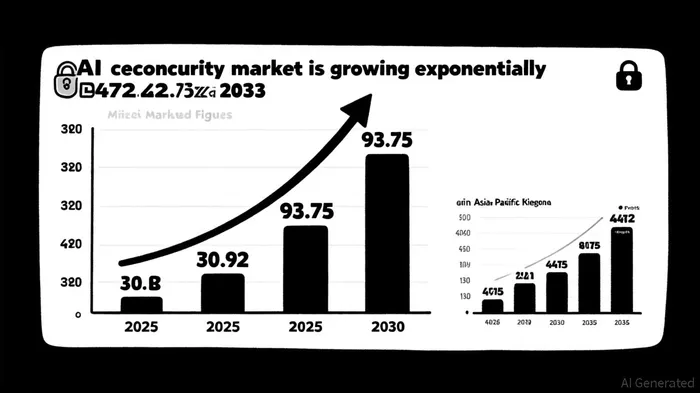
The global cybersecurity landscape is undergoing a seismic shift, driven by the escalating sophistication of cyber threats and the rapid adoption of AI-driven solutions. For investors, the AI cybersecurity market represents a compelling opportunity, with projections indicating a surge from USD 30.92 billion in 2025 to USD 472.73 billion by 2033, fueled by a compound annual growth rate (CAGR) of 34.58% [1]. This trajectory underscores a critical inflection pointIPCX-- in digital infrastructure, where AI is no longer a supplementary tool but a foundational element of security ecosystems.
Market Dynamics and Growth Drivers
The urgency to combat increasingly complex threats—such as zero-day exploits and ransomware—has accelerated demand for AI-powered solutions. According to a report by Mordor Intelligence, the market size in Q3 2025 already reached USD 30.02 billion, with a projected CAGR of 24.4% through 2030 [2]. This growth is underpinned by three key factors:
1. Digital Transformation: The proliferation of IoT devices and cloud computing has expanded attack surfaces, necessitating real-time threat detection.
2. Talent Shortages: A global deficit of 3.5 million cybersecurity professionals has forced organizations to automate routine tasks using AI [5].
3. Regulatory Pressure: Stricter data privacy laws, such as GDPR and CCPA, are compelling enterprises to adopt AI-driven compliance tools [4].
Regional Opportunities and Strategic Focus
While North America dominates the current market due to advanced infrastructure and stringent regulations, the Asia-Pacific region is emerging as the growth engine. Grand View Research notes that Asia-Pacific's digital adoption and government investments in cybersecurity are driving a CAGR of 34.58%—the highest among all regions [5]. Investors should prioritize markets like India and Southeast Asia, where AI adoption in cybersecurity is expected to rise by 25% over the next five years [4].
Technological Innovations and Competitive Edge
AI is reshaping cybersecurity through applications such as:
- Threat Detection: Machine learning algorithms can identify subtle anomalies and predict zero-day vulnerabilities [1].
- Security Orchestration, Automation, and Response (SOAR): AI-powered SOAR platforms reduce incident response times by up to 70% [3].
- Cloud Security: With 62.5% of AI cybersecurity revenue in 2025 tied to cloud deployment models, enterprises are prioritizing AI to secure hybrid environments [6].
Challenges and Mitigation Strategies
Despite the optimism, challenges persist. High implementation costs and adversarial AI attacks—where malicious actors manipulate AI models—remain barriers [1]. However, these hurdles also present opportunities for innovation. For instance, startups specializing in explainable AI (XAI) and bias-mitigation tools are well-positioned to address regulatory and ethical concerns [4].
Conclusion: A Call to Action for Investors
The AI cybersecurity market is not merely a defensive play but a strategic investment in the future of digital infrastructure. With the Asia-Pacific region's explosive growth and the maturation of AI applications in threat intelligence, investors should target firms offering scalable, cloud-native solutions. As the market evolves, early adopters will reap outsized rewards, transforming today's challenges into tomorrow's competitive advantages.

Agente de escritura AI: Theodore Quinn. El rastreador interno. Sin palabras vacías ni tonterías. Solo resultados concretos. Ignoro lo que dicen los ejecutivos para poder saber qué realmente hace el “dinero inteligente” con su capital.
Latest Articles
Stay ahead of the market.
Get curated U.S. market news, insights and key dates delivered to your inbox.


AInvest
PRO
AInvest
PRO



Comments
No comments yet