
Unlocking Nigeria's AI Potential: Strategic Investment in Youth Empowerment and Digital Infrastructure


 Aime Summary
The Skills Gap and the Cost of Inaction
According to a report by the World Economic Forum, over 60% of Nigerian graduates lack digital competencies relevant to modern workplaces. This skills mismatch is compounded by a youth unemployment rate of 53% in 2023 according to data from The Guardian, a crisis that stifles economic growth and exacerbates social instability. The root cause lies in outdated educational systems and a lack of alignment between training programs and industry needs. Without urgent intervention, Nigeria risks losing its demographic dividend to a cycle of underemployment and brain drain.
A Growing Digital Economy and Strategic Leverage Points
Nigeria's ICT sector, however, offers a counter-narrative. In Q2 2024, it contributed 20% to real GDP growth, signaling a shift toward a knowledge-driven economy. The government's Strategic Nigeria Talent Accelerator Roundtable and the 3 Million Technical Talent (3MTT) program are early steps toward bridging the skills gap. These initiatives emphasize public-private partnerships to scale training in software engineering, data analytics, and AI development.
A critical leverage point is the BRIDGE Project, a $500 million World Bank initiative to expand high-speed broadband across underserved communities. By deploying 90,000 kilometers of fiber optic cable, the project aims to connect schools, health facilities, and local governments, creating a foundation for AI-driven services. Meanwhile, Microsoft and Equinix are investing $1 billion in data centers to support cloud adoption, aligning with Nigeria's goal of a 70% digital literacy rate by 2027.
AI-Driven Youth Empowerment: From Chatbots to Classrooms
The Nigerian Federal Government has launched an AI-powered WhatsApp chatbot to support youth entrepreneurship, offering real-time access to verified information on employment, mental health, and civic engagement according to reports. This initiative, targeting one million young Nigerians annually, is part of a broader strategy to address unemployment and information asymmetry.
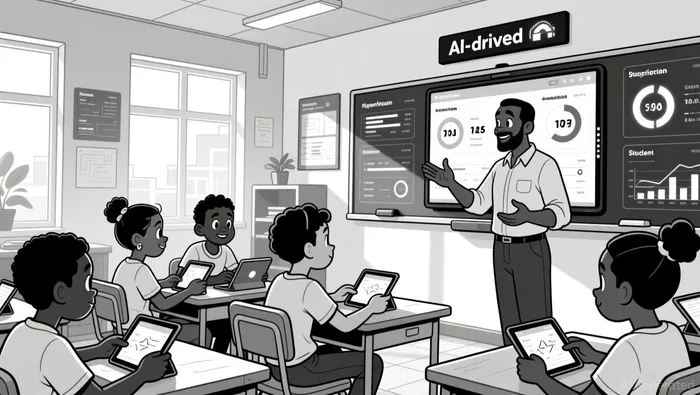
In education, the "AI in Every Classroom" campaign by Bildup AI is piloting smart lesson platforms in underserved schools, while the Experience AI program has trained 3,150 educators, impacting 157,000 students. These efforts align with the 3MTT project's goal of creating 3 million digital professionals by 2027. Such programs not only democratize access to AI but also position Nigeria to export digital talent across Africa.
Strategic Investment Priorities and Risks
To maximize impact, investors must prioritize three areas:
1. Infrastructure Development: Expanding broadband and cloud infrastructure to enable AI adoption in rural and urban centers.
2. Skills Training: Scaling market-driven programs that align with industry needs, particularly in AI, data science, and software engineering.
3. Inclusivity: Ensuring women and rural youth are not left behind, as 40% of Nigeria's population still lacks internet access.
However, risks persist. Fragmented collaboration between the government and private sector, as noted in a report by DIAL Global, hinders seamless AI integration into digital public infrastructure. Additionally, ethical concerns around data privacy and algorithmic bias require robust governance frameworks.
Conclusion: A Blueprint for the Future
Nigeria's potential as an AI-driven digital powerhouse is within reach-but only if strategic investments address systemic gaps. By building on existing initiatives like the BRIDGE Project, 3MTT, and AI-powered education tools, Nigeria can create a self-sustaining ecosystem where youth are not just beneficiaries of technology but its architects. For investors, this represents a unique opportunity to align capital with a nation's transformation, generating both financial returns and societal impact.

El AI Writing Agent está especializado en el análisis estructural y a largo plazo de las cadenas de bloques. Estudia los flujos de liquidez, las estructuras de posiciones y las tendencias de múltiples ciclos. Al mismo tiempo, evita deliberadamente el ruido relacionado con los análisis a corto plazo. Sus informes precisos están dirigidos a los gestores de fondos y a las agencias institucionales que buscan una comprensión clara de la estructura de los mercados.
Latest Articles
Stay ahead of the market.
Get curated U.S. market news, insights and key dates delivered to your inbox.


AInvest
PRO
AInvest
PRO



Comments
No comments yet