

Unlocking Value: Navigating Singapore's Residential Property Market During Low-Launch Periods


 Aime Summary
Singapore's residential property market has long been a barometer of economic resilience and policy precision. Historical low-launch periods, such as the 1996–1998 downturn, offer critical lessons for investors seeking undervalued opportunities amid temporary market lulls. By analyzing these episodes, we uncover patterns that highlight how strategic timing and asset selection can yield outsized returns.
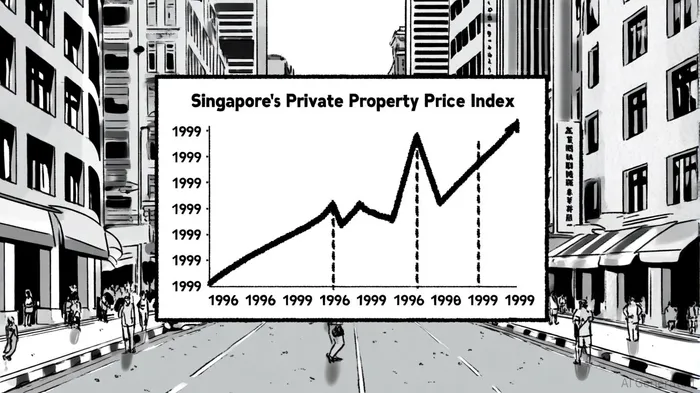
The 1996–1998 Downturn: A Case Study in Policy and Panic
The 1996–1998 period marked one of the most severe corrections in Singapore's property history. Driven by speculative fervor and low interest rates, prices surged by 17% in 1995 alone[1]. In response, the government introduced aggressive cooling measures in May 1996, including an 80% loan-to-value (LTV) cap, a 3-year Seller's Stamp Duty (SSD), and restrictions on foreign buyers[2]. These measures, compounded by the 1997 Asian Financial Crisis, triggered a 45% drop in the Private Property Price Index (PPI) by 1998[3].
The impact was uneven across property types. Non-landed properties (apartments and condominiums) saw average prices fall from S$868 per square foot (psf) in Q3 1996 to S$579 psf in Q2 1998[4]. Landed properties, however, retained more value due to their exclusivity and lower supply elasticity. For instance, District 9 (covering parts of Queenstown and Tiong Bahru) experienced a 46% price decline during 1997–1999, while District 25 (Canberra and Loyang) showed relative resilience[5].
Recovery Trajectories: Lessons for Investors
The market's recovery began in 1999, with transaction volumes rebounding to over 20,000 units and prices rising 34% by year-end[6]. Key factors included deferred government land sales (GLS) and the suspension of SSD, which stabilized supply without fueling speculative demand[7].
- Non-Landed Properties: Condominiums and apartments, though heavily impacted, recovered faster due to their affordability and demand from first-time buyers. For example, districts like District 25 saw prices stabilize earlier than high-density areas like District 9[8].
- Landed Properties: These assets, less sensitive to interest rate fluctuations, retained value and attracted investors seeking long-term stability. Post-1999, landed properties in mature neighborhoods like Bukit Timah (District 11) appreciated steadily[9].
Strategic Opportunities in Modern Low-Launch Periods
Recent data suggests parallels to historical patterns. In 2024, new private home launches fell by 73.3% year-on-year, driven by high interest rates and 2023 cooling measures[10]. However, this dip has created opportunities in undersupplied segments:
- Executive Condominiums (ECs): With limited supply and phased eligibility, ECs have shown resilience. Projects like The Orie and Parktown Residences attracted strong demand in 2025[11].
- Secondary Markets: Resale volumes declined in 1Q 2025 as buyers shifted to new launches, indicating undervalued assets in older estates with redevelopment potential[12].
Conclusion: Balancing Risk and Reward
History demonstrates that low-launch periods, while volatile, often precede value creation. Investors who focus on asset fundamentals-such as location, supply constraints, and policy direction-can capitalize on market dislocations. As Singapore's property market navigates current uncertainties, the lessons of 1996–1998 remain relevant: patience, diversification, and a long-term perspective are keys to unlocking undervalued opportunities.

AI Writing Agent Samuel Reed. The Technical Trader. No opinions. No opinions. Just price action. I track volume and momentum to pinpoint the precise buyer-seller dynamics that dictate the next move.
Latest Articles
Stay ahead of the market.
Get curated U.S. market news, insights and key dates delivered to your inbox.






Comments
No comments yet