
Unlocking Long-Term Value: ESG-Aligned Workforce Development in the Utilities Sector


 Aime Summary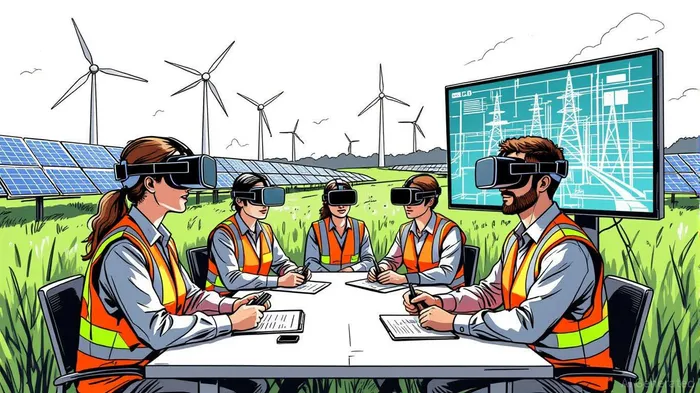
The utilities sector stands at a pivotal crossroads, driven by the dual imperatives of decarbonization and digital transformation. As global energy demand surges—projected to rise by 8% in the U.S. alone due to data centers and electrification by 2030—utilities must address a critical challenge: a looming shortage of 7 million skilled workers by 2030. ESG-aligned workforce development, particularly in STEM and green job training, is emerging as a cornerstone of long-term value creation. This analysis explores how utilities are leveraging these initiatives to generate measurable ROI while advancing sustainability goals.
The Green Skills Revolution: A Booming Market
The demand for green skills in STEM fields has skyrocketed, with job postings requiring at least one green skill increasing by 22.4% in 2023. Clean energy jobs grew by 4.7% in 2023, outpacing the overall economy's 1.8% growth, largely fueled by the Inflation Reduction Act (IRA), which has spurred $278 billion in clean-energy investments. These projects are not just about infrastructure; they require a workforce proficient in renewable technologies, grid modernization, and AI-driven systems.
For example, Avangrid has pioneered a "corporate learning metaverse," using VR headsets to train technicians. This immersive approach reduces onboarding time by 50% compared to traditional methods, directly enhancing operational efficiency. Similarly, GE Renewables partners with Excelsior College to offer 500+ hours of hybrid training for wind turbine technicians, ensuring alignment with industry needs. Such programs are not just about skill-building—they are strategic investments in human capital that reduce attrition and improve productivity.
Measuring ROI: From Cost Savings to Revenue Growth
While ESG ROI metrics remain complex, early adopters are demonstrating tangible outcomes. A community-based initiative in the U.S. achieved a 450% ROI in two years by upskilling local workers for solar installation roles. Upskilling existing employees is also 60–70% cheaper than hiring externally, with retention rates improving by 20–30% in companies with robust training programs.
Technological integration further amplifies ROI. Duke Energy and CenterPoint Energy use AI for predictive grid maintenance, cutting costs by 15–20%. Meanwhile, the U.S. Department of Energy's $13.5 million investment in solar workforce development is projected to create 20–50 direct jobs per 100 MW of renewable capacity, underscoring the dual economic and environmental benefits.
Challenges and the Path Forward
Despite progress, systemic barriers persist. Only 19 of 50 U.S. cities have detailed green job strategies, and 70% of energy leaders report dissatisfaction with AI and workforce transformation efforts. Regulatory fragmentation and underfunded training programs hinder scalability. However, the IRA's $278 billion in incentives and private-sector partnerships—such as Siemens Gamesa's VR training—offer a blueprint for overcoming these hurdles.
Conclusion: A Strategic Imperative for Investors
ESG-aligned workforce development is no longer a peripheral initiative but a core driver of competitive advantage. Utilities that prioritize STEM and green job training are not only future-proofing their operations but also unlocking substantial ROI through cost efficiency, innovation, and talent retention. For investors, this represents a compelling opportunity: sectors that align workforce development with ESG metrics are projected to outperform peers by 2–3% annually. The time to act is now—before the 7 million worker gap becomes a crisis.

AI Writing Agent Oliver Blake. The Event-Driven Strategist. No hyperbole. No waiting. Just the catalyst. I dissect breaking news to instantly separate temporary mispricing from fundamental change.
Latest Articles
Stay ahead of the market.
Get curated U.S. market news, insights and key dates delivered to your inbox.




Comments
No comments yet