
Unlocking the Logistics Goldmine: Kazakhstan's Strategic Infrastructure Boom
 Aime Summary
In the heart of Eurasia, a new economic frontier is emerging - and it's not the traditional tech darlings or Silicon Valley startups that investors should be watching. Instead, I want to shine a light on a country that's quietly transforming itself into the 21st century's transportation and logistics hub: Kazakhstan.
This Central Asian nation is experiencing a logistics infrastructure renaissance that's reminiscent of the early days of the Panama Canal or the Suez Canal - but on a much larger scale. With its strategic location between Europe and Asia, Kazakhstan is positioning itself as the ideal crossroads for global trade, and the infrastructure investments being made today are setting the stage for tomorrow's investment bonanza.
Let's break down the three pillars of this logistics revolution:
Air Freight: Digitizing the Skyways
Kazakhstan is revolutionizing air freight with its E-Freight information system, which connects all airports and most airlines in the country. This digital system replaces traditional paper-based documentation with electronic processes, drastically reducing cargo handling times from one day to as little as one hour.
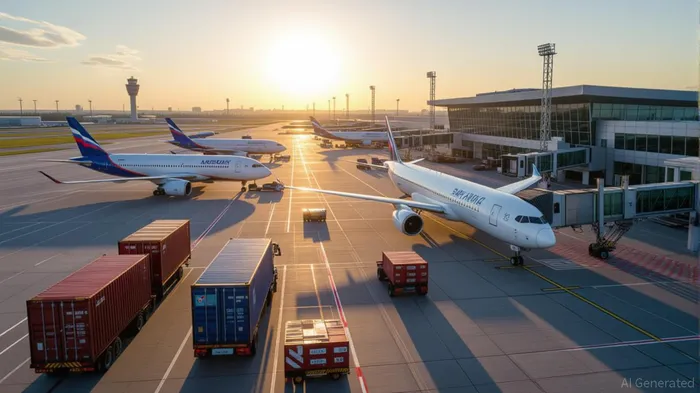
The Ministry of Transport is investing heavily in this transformation, with nearly $2.9 billion allocated to infrastructure projects. Eight airports in Kazakhstan are now rated 4E under ICAO standards, capable of handling large aircraft and high-capacity traffic. The transformation of Sary Arka Airport in Karaganda into a multimodal cargo hub is particularly noteworthy, with plans to increase its freight capacity from 15,000 to 200,000 tons by 2030.
And the excitement doesn't stop there. The government is preparing to launch a national cargo airline, with the first flight expected in early 2026. This is a strategic move to better serve the global air cargo market, which currently handles 57.7 million tons annually, with around 15% passing through Kazakhstan's airspace.
Land Freight: Building the Silk Road 2.0
Kazakhstan is investing heavily in its land freight infrastructure, with the government's "Nurly Zhol" initiative focusing on modernizing 13,000 kilometers of highways and 6,100 kilometers of railway lines in 2025 alone. Rail freight is a dominant mode of transportation, and the country is advancing large-scale rail projects, including the modernization of 11,000 kilometers of railway lines by 2029.
Kazakhstan Temir Zholy (KTZ) is leading the charge, and its strategic partnership with China Railway under the Belt and Road Initiative is particularly exciting. This collaboration aims to boost rail freight traffic between China and Europe, reducing transit times and increasing cargo volume. With rail freight accounting for a significant portion of Kazakhstan's logistics network, this is a golden opportunity for investors.
Sea Freight: Opening the Caspian Corridor
Kazakhstan's maritime logistics capabilities are also on the rise. The Port of Aktau has seen major expansions, including the inauguration of a new container facility that increases its annual transshipment capacity to 240,000 TEUs. But the most exciting developments are happening at Kuryk Seaport, where AD Ports Group is investing $775 million in 2025.
AD Ports is commissioning up to four 780 TEU shallow-draft container ships for the Caspian Sea and considering joint investments in up to four aframax crude oil tankers. These developments are part of a broader strategy to support the Middle Corridor as a key East-West trade route. The Sarzha Multipurpose Terminal at Kuryk Seaport, developed with the help of Jan De Nul, is a strategic asset that will handle general cargo, containers, and dry bulk.
The Investment Incentives: Why Now is the Time
Kazakhstan is offering some of the most attractive investment incentives in the world through its Special Economic Zones (SEZs). These incentives include:
- Aktobe Special Economic Zone: Located at the A. Moldagulova International Airport, this zone offers exemptions from corporate income tax, VAT on goods sold within the SEZ, and land and property taxes.
- SEZ "Turkestan": One of the largest and most developed SEZs, it offers extensive infrastructure and tax benefits.
- SEZ "Khorgos - East Gate": Located near the border with China, this zone is ideal for cross-border logistics and trade.
- SEZ "Astana - New City": Offers a range of infrastructure and tax incentives suitable for logistics and industrial activities.
The tax incentives are structured on a "more investments, more benefits" principle, with the duration of tax breaks depending on the investment volume. This creates a compelling value proposition for investors looking to capitalize on Kazakhstan's logistics boom.
The Road Ahead: A Logistics Goldmine
With the logistics market projected to grow from USD 4.50 billion in 2024 to USD 13.50 billion by 2032 (a CAGR of approximately 14.7%), the opportunities for investors are vast. The country's strategic position, combined with its infrastructure investments and attractive incentives, makes it an ideal destination for logistics investment.
Kazakhstan's GDP expansion of 6% in early 2025 is largely driven by strategic sectors such as logistics and transport services. The government sees international connectivity as a key pillar for long-term development, and the logistics sector is a central component of this vision.
Final Thoughts
As I look at the landscape of global investment opportunities, Kazakhstan's logistics infrastructure boom stands out as one of the most compelling stories of the 2020s. This is a country that's not just positioning itself as a transit hub but is actively building the infrastructure to become a true Eurasian logistics powerhouse.
For investors who are looking for the next big opportunity, Kazakhstan is delivering on multiple fronts. From digitized air freight systems to state-of-the-art railway networks and expanding maritime capabilities, the pieces are falling into place for a logistics revolution.
This is the kind of opportunity that doesn't come along often - a country with the strategic location, the government support, and the infrastructure vision to become a true global logistics hub. I believe now is the time to consider investing in Kazakhstan's logistics revolution, as the returns on these investments are likely to be substantial in the coming years.

Delivering real-time insights and analysis on emerging financial trends and market movements.
Latest Articles
Stay ahead of the market.
Get curated U.S. market news, insights and key dates delivered to your inbox.


AInvest
PRO
AInvest
PRO



Comments
No comments yet