
Unlocking Korean Equity Value: Trade Talks and the Automotive-Tech Opportunity
The U.S.-South Korea trade negotiations, now in a critical phase following Trade Minister Yeo Han-koo's Washington visit, have emerged as a pivotal catalyst for Korean equities. With a potential 25% tariff hike on steel and semiconductors looming until July 9, Seoul's focus on “practical interests” has positioned automotive and tech stocks as prime candidates for near-term upside. A resolution to tariff disputes could unlock suppressed valuations for companies like Hyundai, Samsung, and SK Hynix, while geopolitical risks remain manageable.
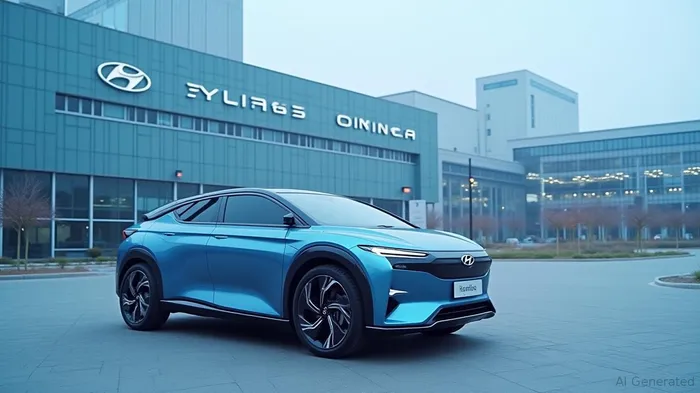
Automotive Sector: Hyundai's Tariff-Driven Turnaround
Hyundai Motor (005380.KS) stands at the forefront of these negotiations. A 25% tariff on South Korean automobiles would cripple its U.S. sales, which account for nearly 20% of its revenue. Yeo's push to extend the 90-day tariff freeze, coupled with offers to relax non-tariff barriers for U.S. agricultural exports, signals a willingness to compromise. If the freeze is extended—or a partial deal on automotive tariffs is struck—the stock could rebound.
Hyundai's shares have underperformed the broader market by 15% since April, when U.S. tariffs were first threatened. A resolution would likely narrow that gapGAP--, with analysts at KBKB-- Securities forecasting a 10-15% upside if tariffs are deferred. Meanwhile, its shift to electric vehicles (EVs) aligns with U.S. climate policies, offering a dual catalyst for growth.
Tech Sector: Semiconductors and the Data Localization Battle
Samsung Electronics (005930.KS) and SK Hynix (000660.KS) are equally exposed to U.S. semiconductor tariffs, which could destabilize global chip supply chains. The U.S. demands for data localization rules and IP enforcement remain contentious, but Seoul's pragmatic approach—such as piloting data flow agreements—could avert a crisis. A tariff freeze would reduce SK Hynix's input costs, while Samsung's foundry business, critical to U.S. tech firms, gains leverage in pricing negotiations.
SK Hynix trades at a 30% discount to its U.S. peers due to tariff fears. A resolution could narrow this gap, unlocking a 20-25% valuation uplift. Samsung, meanwhile, benefits from its diversified portfolio: its semiconductor division (40% of profits) and display business could see margin improvements if trade tensions ease.
Broader Opportunities and Risks
The automotive and tech sectors are not the only beneficiaries. Companies like Kia Motors (000270.KS) and LG DisplayLPL-- (034220.KS) also stand to gain, but their smaller market caps make them riskier bets. Geopolitical risks persist: Trump's potential 2028 presidential run could reignite protectionism, while North Korea's nuclear provocations add volatility. However, Seoul's emphasis on “mutually beneficial” deals with Washington suggests a preference for stability over confrontation.
Investment Strategy: Positioning Ahead of the Deal
Investors should take a sector-specific long position in Korean equities ahead of the July 9 deadline, focusing on:
1. Hyundai Motor: Buy at current levels; target price $80 (up from $68) if tariffs are deferred.
2. Samsung Electronics: Accumulate shares for a potential EV/EBITDA expansion to 6x (from 5.2x).
3. SK Hynix: Consider call options with a strike price at $55, targeting $70 if a freeze is extended.
Avoid overexposure to conglomerates with heavy U.S. dollar debt, such as PoscoPKX-- (005490.KS), until currency risks are clearer.
Conclusion
The U.S.-Korea trade talks are a make-or-break moment for Korean equities. A negotiated freeze or partial deal would remove a major overhang, allowing companies to refocus on growth. While geopolitical tailwinds remain uncertain, the alignment of Seoul's “practical interests” with U.S. industrial priorities suggests a resolution is more likely than a rupture. For investors, this is a rare window to capitalize on undervalued Korean tech and automotive stocks—before the market catches up.
The KOSPI has lagged emerging markets by 8% year-to-date, offering asymmetric upside if trade tensions ease. Now is the time to position for the rebound.

Stay ahead of the market.
Get curated U.S. market news, insights and key dates delivered to your inbox.






Comments
No comments yet