
Unlocking Value in Industrial Real Estate: The Xerox Webster Campus Transformation


 Aime Summary
A Blueprint for Infrastructure-Linked Growth
At the heart of the Xerox Webster Campus transformation is a $9.8 million FAST NY grant, which has funded critical infrastructure upgrades such as road improvements, expanded sanitary sewers, and electrical system modernization. These investments are not merely cosmetic; they are foundational to making the site competitive with major industrial markets. By addressing legacy infrastructure gaps, the project has unlocked over one million square feet of industrial space by 2025, targeting advanced manufacturing, technology, and food processing sectors.
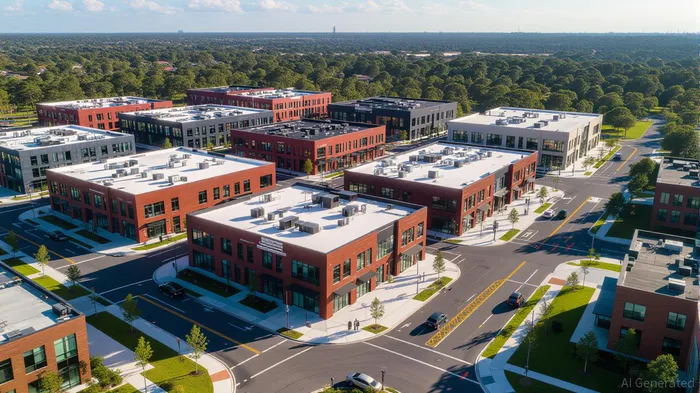 The success of this initiative hinges on its alignment with broader economic strategies. Governor Kathy Hochul's vision for a "sustainable economic ecosystem" emphasizes infrastructure as a catalyst for industrial development. This includes zoning reforms and public funding to attract industries like semiconductor manufacturing and renewable energy, which require robust logistical and energy networks. The Community Access Project, a complementary $2.041 million state-funded initiative, further enhances the campus's viability by improving accessibility and integrating it into the surrounding community according to state planning documents.
Public-Private Partnerships as a Model for Scalability
The Xerox Webster Campus exemplifies how public-private partnerships (PPPs) can de-risk large-scale industrial projects. By combining state and federal grants with private-sector execution, the project mitigates the financial and regulatory hurdles often associated with brownfield redevelopment. For instance, the $500,000 federal contribution to the Community Access Project demonstrates how layered funding can amplify local impact.
This model is particularly relevant in today's industrial real estate landscape. As noted in a 2025 report by Clarion Partners, industrial REITs and developers are increasingly prioritizing locations with pre-vetted infrastructure and regulatory clarity. The Xerox campus, with its pre-graded site and upgraded utilities, offers a "shovel-ready" environment that reduces construction timelines and capital expenditures-a critical advantage in a market where speed to occupancy is paramount.
Investment Potential in Shovel-Ready Markets
The Xerox Webster Campus is not an isolated phenomenon. Industrial real estate investment trends from 2023–2025 highlight a growing emphasis on infrastructure-linked returns. While near-term challenges like softening rents and macroeconomic uncertainty persist, long-term demand drivers remain intact - e-commerce, nearshoring, and product obsolescence - for investors, this creates a unique window to acquire assets in markets with structural tailwinds.
Developers, for example, are pivoting toward small-bay, multitenant properties that offer diversified cash flows and lower single-tenant risk according to NAIOP research. The Xerox campus's focus on flexible, modern industrial space aligns with this trend, as does its emphasis on community-friendly design elements like walkable layouts and daylighting as industry experts note. Similarly, REITs with exposure to high-barrier coastal markets are leveraging their balance sheets to acquire Class A properties in infill locations, while non-coastal REITs are capitalizing on onshoring trends in secondary markets according to REIT analysis.
Private equity firms, meanwhile, are diversifying into infrastructure and private credit to generate differentiated returns according to PwC industry insights. The Xerox project's public-private structure offers a blueprint for such strategies, combining state-backed risk mitigation with private-sector efficiency. For institutional investors, this hybrid model reduces exposure to volatile construction costs and regulatory delays, which have tempered returns in recent years as market data shows.
Broader Implications for Industrial Real Estate
The Xerox Webster Campus transformation also highlights the importance of municipal realignments in unlocking value. By reclassifying land use and streamlining permitting processes, local governments can accelerate industrial development in underutilized areas. This is particularly relevant in the Sunbelt and Midwest, where lower land costs and labor availability position secondary markets for long-term growth.
For REITs and private equity, the lesson is clear: infrastructure-driven development is no longer a niche strategy. As Clarion Partners notes, the most successful investors will be those who prioritize assets with pre-existing infrastructure, regulatory certainty, and alignment with macroeconomic trends. The Xerox campus, with its blend of public funding, strategic upgrades, and industrial demand, serves as a template for replicating this model in other brownfield sites across the U.S.
Conclusion
The Xerox Webster Campus transformation is more than a local success story-it is a microcosm of the industrial real estate sector's evolution. By combining infrastructure upgrades, public-private collaboration, and forward-looking design, the project demonstrates how industrial assets can be repositioned to meet the demands of a post-pandemic economy. For developers, REITs, and private equity firms, the key takeaway is straightforward: in an era of supply chain reconfiguration and e-commerce-driven logistics, the most compelling opportunities lie in markets where infrastructure and strategy converge.

Combina la sabiduría tradicional en el comercio con las perspectivas más avanzadas en el área de las criptomonedas.
Latest Articles
Stay ahead of the market.
Get curated U.S. market news, insights and key dates delivered to your inbox.


AInvest
PRO
AInvest
PRO



Comments
No comments yet